

Soil is the thin layer of loose material covering the land, made of broken-down rock, rotted plant and animal matter, water and air. It forms very slowly as rock weathers and living things add organic matter. This note covers what soil is made of, how it forms, how distinct layers called horizons develop, how soils are classified globally, and a detailed study of an Irish soil: the brown earth.
Soil Composition and Physical Characteristics
A standard fertile loam consists of four components in balance: roughly 45% mineral matter, 5% organic matter, 25% water, and 25% air.
- Mineral matter (45%): Sand, silt, and clay particles produced by the physical and chemical weathering of underlying parent bedrock or deposited glacial drift. This fraction provides the structural skeleton and supplies essential plant nutrients such as calcium, magnesium, potassium, and phosphorus.
- Organic matter (5%): Living roots, earthworms, fungi, and bacteria alongside dead plant litter. Microorganisms break down decaying litter into dark, nutrient-rich humus. Humus can form as mull humus (a crumbly, base-rich, neutral-to-mildly-acidic humus formed under deciduous forest where earthworms actively mix it) or mor humus (an acidic, poorly decomposed surface mat formed under conifers or heather where earthworms are absent).
- Soil water (25%): Water fills pore spaces between particles in three forms: gravitational water, which drains downward under gravity; capillary water, which forms thin moisture films around particles and is taken up by plant roots; and hygroscopic water, which clings so tightly to clay particles that roots cannot absorb it. If a soil loses all capillary moisture, plants wilt; if water fills all pore spaces, the soil becomes waterlogged and anaerobic.
- Soil air (25%): Air occupies pore spaces not filled by water, supplying oxygen to respiring roots and aerobic microbes while venting carbon dioxide.
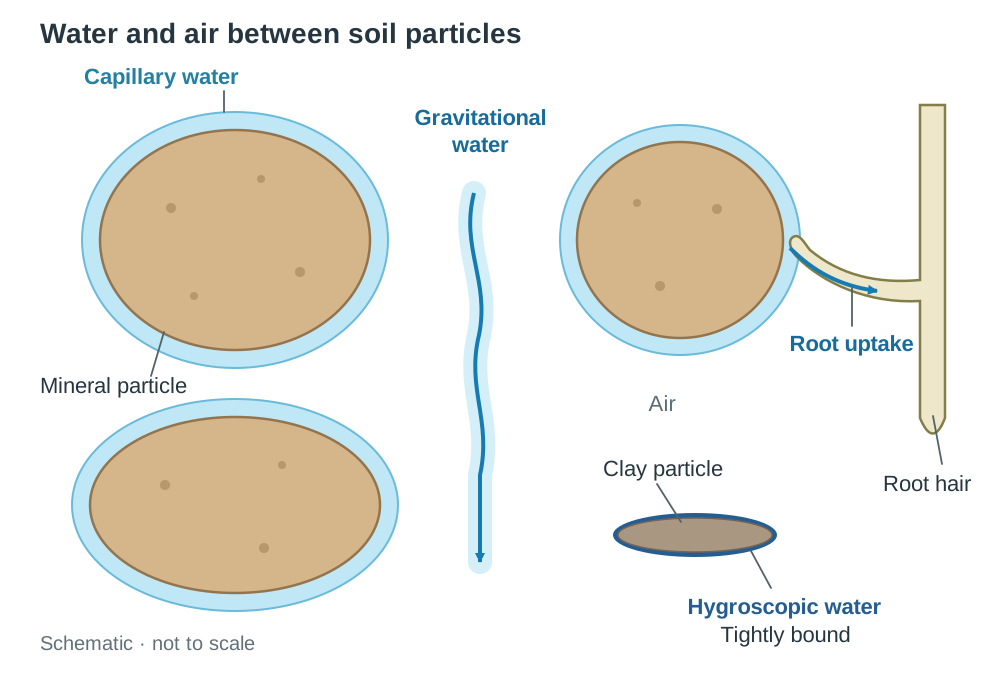
These components determine four physical characteristics:
- Texture: The relative proportion of sand (0.05–2.0 mm), silt (0.002–0.05 mm), and clay (<0.002 mm) particles. For example, a soil sample with 70% sand, 20% silt, and 10% clay feels gritty, drains rapidly, and dries out quickly in summer, making it a sandy soil that requires frequent fertilising because nutrients leach away easily. A balanced loam combines sand, silt, and clay so that drainage and nutrient retention stay in equilibrium.
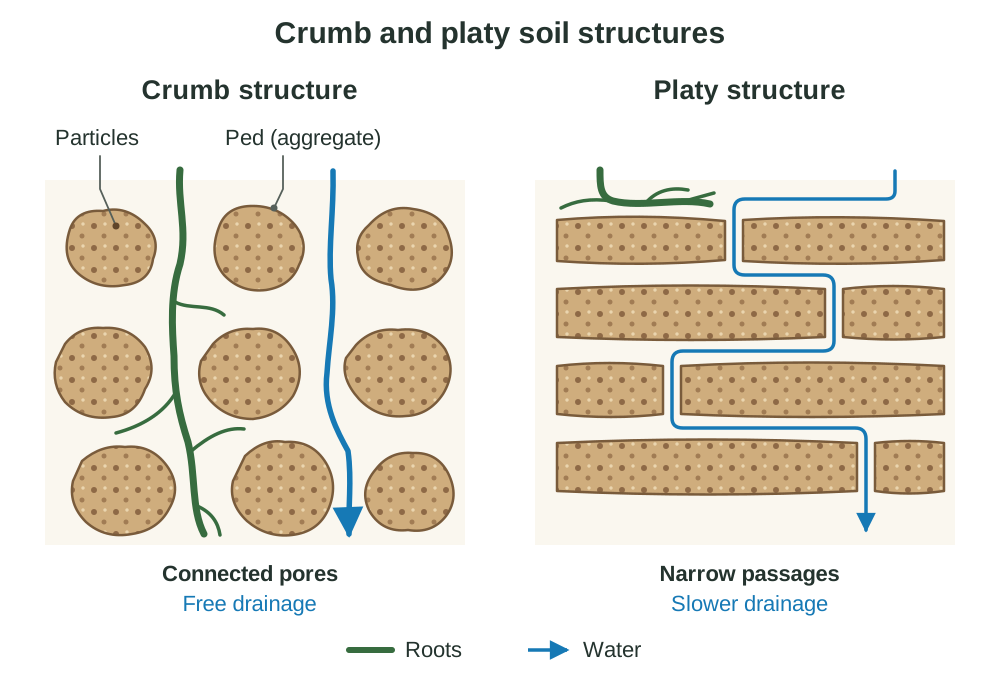
- Structure: The way individual soil particles bind into aggregates called peds. A rounded crumb structure leaves open pore channels so roots, water, and air circulate freely. In contrast, compacted platy structures create horizontal plates that impede vertical drainage and restrict root growth.
- Colour: Dark brown or black indicates high organic humus. Red or warm brown indicates oxidised ferric iron in well-aerated conditions. Mottled pale grey or blue-grey colours indicate waterlogging and anaerobic chemical reduction (gleying).
- pH: A measure of acidity or alkalinity. Most agricultural crops perform best in slightly acidic to neutral soil (pH 6.0–7.0). When pH drops below 5.5, earthworm activity declines and phosphorus becomes chemically locked, requiring farmers to spread ground limestone.
Factors and Processes of Soil Formation
Soil formation (pedogenesis) depends on the interaction of five environmental factors: climate, organisms, relief, parent material, and time.
- Climate: Temperature and precipitation control the speed of weathering and plant decay. High rainfall drives leaching, while warm temperatures accelerate humification.
- Organisms: Plants provide leaf litter, and microorganisms decompose it into humus. Earthworms act as natural aerators and mixers, dragging organic debris into the mineral subsoil.
- Relief: Steep slopes encourage surface runoff and soil creep, leaving thin, stony profiles. Flat hollows collect excess water, causing waterlogging.
- Parent material: The weathered bedrock or glacial drift dictates baseline texture, minerals, and natural pH. Granite yields acidic, sandy soils, whereas limestone produces alkaline, base-rich soils.
- Time: Mature soils require thousands of years of stable conditions to develop distinct layers.
The Seven Syllabus Soil Processes
- Weathering: Mechanical weathering (e.g. freeze-thaw) shatters rock into fragments, while chemical weathering (e.g. carbonation, where slightly acidic rainwater dissolves limestone) breaks down minerals and releases soluble nutrients into the developing soil.
- Soil erosion: The removal of topsoil faster than new soil can form, caused by water (sheet wash and gullying on bare slopes) or wind (such as the 1930s Dust Bowl on the US Great Plains). In Ireland, overgrazing on western hills leads to upland peat erosion.
- Leaching: Downward-percolating rainwater dissolves soluble bases (calcium, magnesium, potassium) and washes them out of the upper soil horizons.
- Humification: Soil bacteria and fungi break down dead organic litter into dark, jelly-like humus that stores nutrients and binds mineral grains.
- Podzolisation: Intense leaching in cold, wet climates under acidic vegetation (pine, heather). Acidic solutions strip iron and aluminium from the upper profile, leaving a bleached ash-grey layer and cementing a hard ironpan below.
- Laterisation: The rapid weathering process of hot, wet tropical climates (Amazon Basin, Congo Basin). Intense leaching strips silica and soluble bases, leaving behind insoluble iron and aluminium oxides that give the soil a deep red colour.
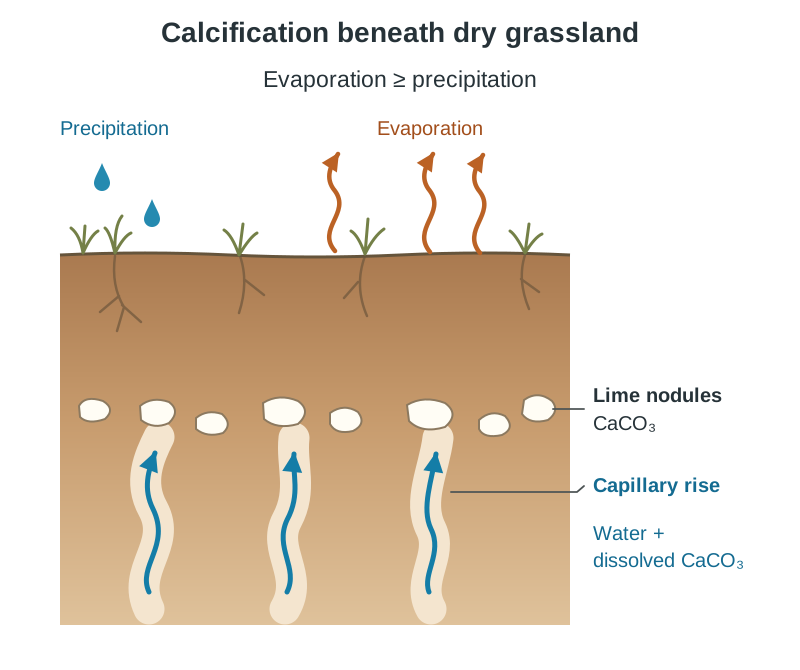
- Calcification: Occurs in dry continental grasslands (Prairies of North America, Steppes of Ukraine) where evaporation exceeds or balances precipitation. Capillary action draws calcium carbonate upward, depositing a white layer of lime nodules.
The Soil Profile
A soil profile is a vertical cross-section through a soil, extending from the ground surface down to solid bedrock. As rainwater percolates downward and organisms mix organic matter, distinct horizontal layers called soil horizons develop. Metric depths vary with site conditions, so values given are typical, approximate depths for mature profiles.
- O Horizon (Organic Layer, approx. 0–5 cm): Fresh and partially decomposed plant litter, leaves, and twigs.
- A Horizon (Topsoil, approx. 5–30 cm): Zone of maximum biological activity and root concentration. Dark brown or black from abundant humus. Downward water movement washes fine clays out of this zone through eluviation.
- E Horizon (Eluviated Layer): Found in podzols and heavily leached soils between the A and B horizons. Severe leaching strips iron, aluminium, and clay, leaving a pale, bleached, ash-grey sandy layer.
- B Horizon (Subsoil, approx. 30–80 cm): Zone of accumulation (illuviation). Suspended clays, iron oxides, and nutrients washed down from above collect here, giving a firmer texture and a lighter brown, reddish, or yellowish colour.
- C Horizon (Weathered Parent Material, approx. 80+ cm): Partially broken bedrock fragments or glacial drift. Contains no humus and shows minimal biological activity.
- R Horizon (Bedrock): Solid, unweathered parent bedrock, such as limestone, granite, or sandstone.
Profile Comparison: Brown Earth versus Podzol
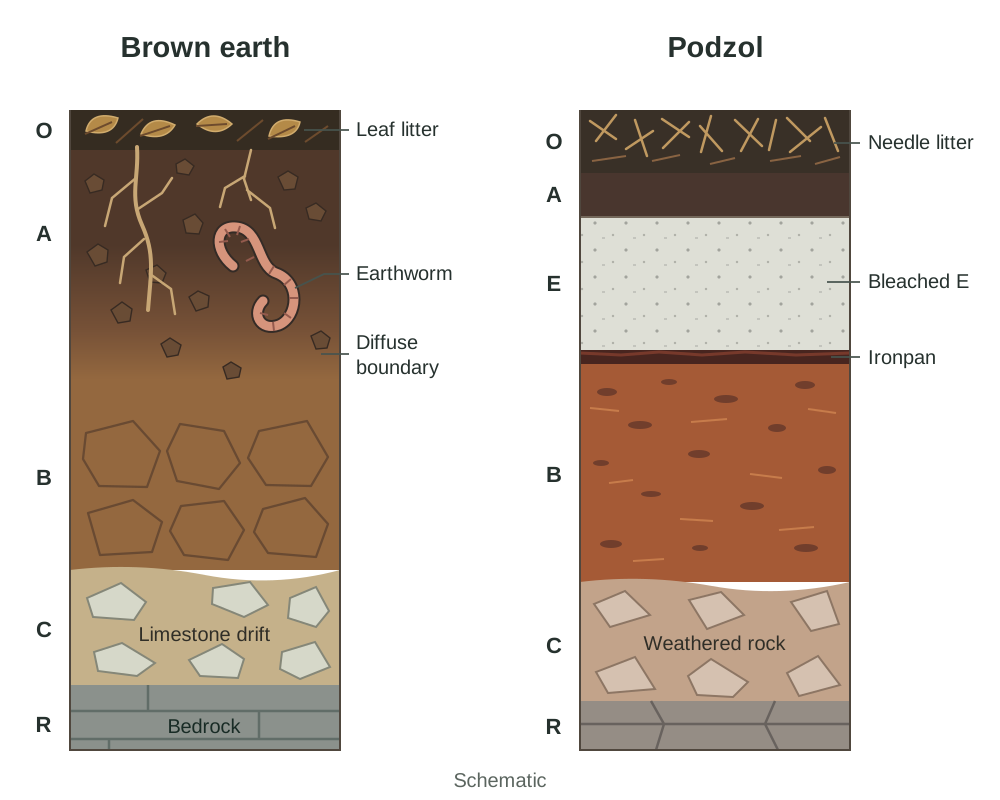
- Brown Earth: O horizon (leaf litter) -> A horizon (dark brown loam, crumb structure, 5–30 cm) -> gradual, diffuse boundary -> B horizon (medium brown loam, blocky peds, 30–80 cm) -> C horizon (limestone drift). Earthworms continuously mix the soil, keeping the transition between A and B gradual.
- Podzol: O horizon (acidic mor humus and pine needles) -> A horizon (thin, dark, acidic) -> sharp boundary -> E horizon (bleached ash-grey sand, 10–25 cm) -> hard, thin ironpan (impermeable reddish-black crust) -> B horizon (dense, rust-brown layer enriched with iron and illuviated humus) -> C horizon (weathered sandstone or granite).
Irish Brown Earths: Formation and Profile
Irish brown earths are mature, fertile zonal soils found across the lowland plains of Leinster, Munster, and parts of the midlands. They form the foundation of Ireland's commercial dairy and tillage farming.
Origin and Parent Material
Most Irish brown earths formed over roughly the last 12,000 years following the Midlandian ice sheet retreat. They developed on glacial till (boulder clay) rich in Carboniferous limestone fragments, which supplies a base-rich mineral skeleton with a balanced loam texture.
Climate Regime
Ireland's cool temperate oceanic climate provides mild winters (averaging 5°C), cool summers (averaging 15°C), and moderate annual rainfall of 800–1000 mm across the lowlands. Precipitation slightly exceeds evaporation, creating a gentle downward movement of water that causes only moderate leaching without stripping essential bases.
Vegetation and Soil Organisms
Brown earths developed under natural broadleaf deciduous forest (oak, ash, hazel). Deciduous trees shed nutrient-rich leaves every autumn, providing a continuous supply of base-rich litter. Mild, moist conditions allow aerobic bacteria and fungi to break this litter down into stable mull humus.
Burrowing earthworms (Lumbricus terrestris) consume organic debris and mineral particles together. This biological mixing (bioturbation) carries humus deep into the soil and aerates the upper profile, producing an open crumb structure and a gradual, diffuse boundary between the A and B horizons rather than a sharp bleached line.
Profile Characteristics
- A Horizon (Topsoil, 0–30 cm): Dark brown, crumb-structured loam, pH 5.5–7.0, high in available nutrients and root density.
- B Horizon (Subsoil, 30–75 cm): Medium brown colour, slightly heavier texture due to modest illuviation of clay, free of any hardpan.
- C Horizon (75+ cm): Weathered yellowish-brown limestone till over solid Carboniferous limestone bedrock.
Irish Variations
- Acid Brown Earths: Form on lowlands and lower slopes where parent material is poor in lime, such as glacial drift derived from granite, shale, or sandstone (e.g. foothills around the Wicklow Mountains, parts of Cork and Kerry). Because parent rocks lack calcium, the pH falls below 5.5, so farmers must apply ground limestone regularly.
- Brown Podzolics: Transitional soils between brown earths and true podzols. They develop on freely draining, lime-poor drift under slightly higher rainfall. Leaching washes iron and aluminium into the upper B horizon, giving it a warm orange-brown colour, but no true bleached E horizon or impermeable ironpan forms.
- Grey-Brown Podzolics: Common in the Irish midlands on limestone-rich glacial till. Moderate leaching carries fine clay particles out of the A horizon down into the B horizon (forming an argillic B horizon), while the soil stays lime-rich and highly fertile.
Global Pattern of Soils: Zonal, Intrazonal, and Azonal
Soils are classified globally into three orders based on whether regional climate, local site conditions, or time controls their development.
| Soil Order | Controlling Factor | Characteristics | Named Examples |
|---|---|---|---|
| Zonal | Regional climate and vegetation belts over long periods | Mature profiles with distinct horizons reflecting broad climatic zones. | Brown earths: Cool temperate oceanic climates under deciduous forest (Ireland, France).<br>Latosols: Hot, wet equatorial climates under rainforest (Amazon Basin).<br>Chernozems: Semi-arid continental grasslands with deep black topsoils (Ukrainian Steppes).<br>Podzols: Cold, wet boreal climates under coniferous taiga (Scandinavia, Canada).<br>Tundra soils: Arctic fringes with permafrost and waterlogged surface layers.<br>Desert soils (aridisols): Arid zones with thin, stony profiles and surface salt crusts. |
| Intrazonal | Local factors (drainage, relief, or parent rock) overriding regional climate | Profile characteristics diverge from the regional climate pattern because local conditions dominate. | Gley soils: Form in hollows or over heavy clay drifts where permanent water saturation causes anaerobic reduction (gleying) and blue-grey mottling.<br>Rendzinas: Shallow, dark, alkaline soils (<30 cm deep) formed directly on limestone bedrock (e.g. parts of the Burren, Co. Clare). |
| Azonal | Lack of time or active deposition and erosion | Immature, skeletal soils lacking a developed B horizon. | Lithosols: Thin, rocky scree soils on steep slopes where erosion strips weathered material faster than horizons can form.<br>Alluvial soils: Young, layered silt and sand deposited on active river floodplains. |
Rule to remember: as climate changes with latitude, the dominant soil-forming process changes, creating broad zonal soil belts.
Continental Soil Case Study: The Tropical Latosol
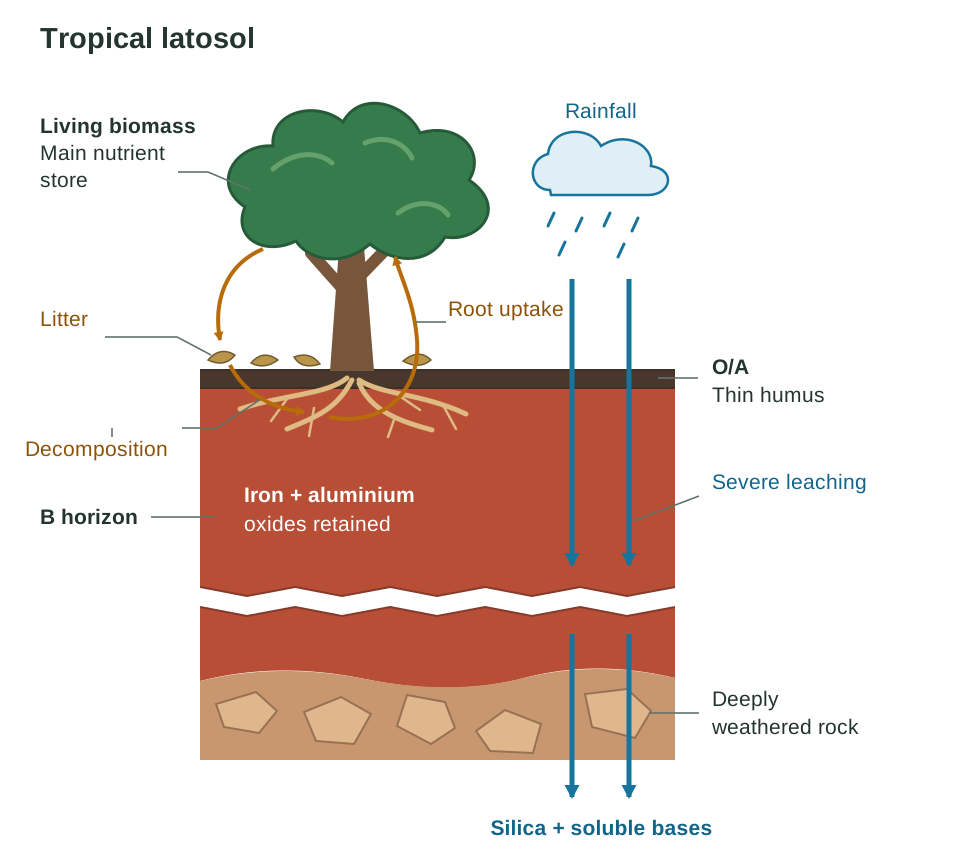
The latosol (ferralsol) is the zonal soil of the equatorial rainforest biome, found across the Amazon Basin and Congo Basin.
- Climate: Consistently high temperatures averaging 27°C and heavy convectional rainfall exceeding 2,000 mm annually.
- Processes: Continuous heat and moisture drive rapid chemical weathering, rotting bedrock up to 20–30 metres deep. Torrential rainfall causes intense laterisation: silica and soluble bases are washed away by severe leaching, leaving behind insoluble ferric iron and aluminium oxides that give the profile its characteristic deep red or orange-red colour. Rapid bacterial decay breaks down leaf litter within weeks (humification), and plant roots reabsorb the released nutrients almost immediately.
- Profile: A very thin O/A horizon (1–5 cm) containing dark organic matter, resting over a massive, heavily leached red B horizon that extends for several metres without clear structural breaks, above deeply weathered rock.
- Characteristics: Latosols are clay-rich, acidic (pH 4.5–5.5), and naturally infertile because the nutrient pool is stored in living biomass rather than held in the soil. If the forest canopy is cleared, rainfall leaches remaining nutrients and sun bakes the exposed iron-rich subsoil into a hard brick-like crust called laterite, which causes severe land degradation.
(Note: Human interference with soils through over-cropping, over-grazing, desertification in the Sahel, and conservation in the Burren is examined in its own dedicated unit.)
Key terms
- Pedogenesis
- The natural process of soil formation governed by climate, parent material, relief, organisms, and time.
- Soil Horizon
- A distinct horizontal layer within a soil profile, running parallel to the ground surface, with specific colour, texture, and chemistry.
- Humification
- The decomposition of plant and animal remains by microorganisms into dark, nutrient-rich, amorphous organic humus.
- Mull Humus
- A crumbly, neutral-to-mildly-acidic humus produced under deciduous woodland where earthworms actively mix organic matter with mineral soil.
- Mor Humus
- An acidic, poorly decomposed surface layer of organic matter formed under conifers or heathland where earthworms and soil mixers are absent.
- Leaching
- The downward removal of dissolved mineral nutrients and basic ions from upper soil horizons by percolating rainwater.
- Eluviation
- The physical washing out and downward transport of fine mineral particles, such as clay, from an upper horizon (A or E).
- Illuviation
- The accumulation and deposition of suspended clays, iron compounds, and dissolved minerals in a lower soil horizon (B horizon).
- Podzolisation
- An advanced soil-forming process in cold, wet climates under acidic litter, where organic acids leach iron and aluminium downward to leave a bleached E horizon and form an ironpan.
- Laterisation
- A soil-forming process in hot, wet tropical regions where severe leaching strips silica and bases, leaving insoluble red iron and aluminium oxides that form a latosol.
- Calcification
- A soil-forming process in semi-arid grasslands where evaporation exceeds precipitation, causing capillary action to draw calcium carbonate upward into the soil profile.
- Gleying
- A soil process occurring in waterlogged, anaerobic conditions where microbes reduce ferric iron into soluble ferrous iron, creating a mottled blue-grey subsoil.
- Bioturbation
- The physical burrowing and churning of soil by living organisms, especially earthworms, which blends humus into the subsoil.
- Zonal Soil
- A mature soil whose characteristics reflect the dominant long-term influence of regional climate and broad biome vegetation over large geographic zones.
- Intrazonal Soil
- A soil whose development is dominated by local site factors such as poor drainage, relief, or parent rock chemistry rather than the regional climate.
- Azonal Soil
- A young, skeletal soil lacking differentiated horizons because ongoing erosion, recent deposition, or insufficient time has prevented profile maturation.
Check yourself
What are the four volumetric components of a standard balanced loam soil?
Roughly 45% mineral matter, 5% organic matter, 25% water, and 25% air.
A soil sample has 65% clay, 20% silt, and 15% sand. What drainage and aeration challenges will this soil face?
Heavy clay soils have tiny, tightly packed pore spaces. They drain very slowly, are prone to waterlogging and compaction, and lack adequate soil air for root respiration.
Why is the boundary between the A and B horizons in an Irish brown earth gradual and diffuse rather than sharp?
Active biological mixing (bioturbation) by earthworms continuously blends organic humus and mineral particles together across the upper horizons.
What is the E horizon, and in which soil type is it most prominent?
The E horizon is a heavily leached (eluviated) layer from which clay, iron, and aluminium have been stripped, leaving a bleached ash-grey layer. It is most prominent in podzols.
Where in Ireland do acid brown earths develop, and why do they require regular applications of ground limestone?
They develop on lowlands and lower slopes where parent drift is derived from lime-poor rocks (granite, shale, or sandstone, such as around the Wicklow foothills). Low calcium causes a pH below 5.5, so farmers add ground limestone to neutralise acidity.
Name the soil-forming process that creates the deep red latosols of tropical rainforests.
Laterisation: intense leaching removes silica and soluble bases, leaving insoluble red iron and aluminium oxides behind.