

Every play and every film begins as a rough idea. Imagining and conceptualising (Strand 1, Learning Outcomes 1.6 to 1.8) is about turning that initial spark into a workable plan: establishing one central dramatic idea, borrowing and adapting techniques from practitioners you study, checking whether the concept is achievable with the time, people, and equipment available, and setting it down in a treatment (for film) or a statement of intention (for theatre). In the Leaving Certificate, this work underpins both the 300-mark written examination and the 300-mark Creativity in Practice Project coursework journal, specifically feeding Section A (Imagining and Conceptualising, 40 marks) and Section B (Exploring Creative Ideas, 60 marks).
The Generative Phase: From Stimulus to Core Dramatic Concept
Idea generation is not about waiting passively for inspiration. Learning Outcome 1.6 asks you to generate ideas, which the syllabus defines as bringing them into existence by means of a defined process.
A stimulus is any starting point that triggers creative thinking: a photograph, a line of poetry, a prop, an item of news, or an abstract theme such as the 2027 project topic, The Use of Colour in Theatre and Film. To move from a stimulus to workable material, makers use structured generative techniques:
- Brainstorming and free association: Suspending judgement during early thinking so that producing a large quantity of ideas uncovers original directions.
- Workshopping and improvisation: Testing ideas physically on the floor. Improvisation taps into posture, spatial relationships, and physical instincts, revealing dramatic tensions that discussion at a desk rarely uncovers.
- Mind-mapping: Placing the stimulus or central motif in the centre and branching outwards to map characters, visual motifs, emotional arcs, and conflicts.
- Drawing on personal and socio-cultural experience: Bringing your own background and lived experience into the work to give it emotional authenticity and social relevance.
Through this exploration, you isolate a core dramatic idea or concept. This is the anchor of the entire piece. It might be a central dramatic question, an emotional state, a theme (such as institutional control or exile), or a visual metaphor. Every choice you make afterwards — acting style, lighting palette, camera framing — should connect back to this core concept. If a choice cannot be traced back to it, ask why it is there.
Practitioner Reference Points and Source Material
At this stage you gather two different kinds of research material: reference points and source material.
A reference point is an existing artistic work or the specific practice of an established practitioner (a professional artist, including performers, directors, designers, or writers). Using a reference point does not mean copying a story. It means analysing how and why a practitioner achieved a particular effect, and then adapting that technique for your own piece.
To write effectively about a reference point in your journal or exam, follow a clear pattern: Practitioner + production + precise technique + what it achieved there + what I adapted for my own piece.
Your class studies one prescribed film option and one prescribed drama/theatre option from Circular 0061/2025, alongside clips from at least one additional work in each discipline, plus your unprescribed Area 2 choices and live performances attended. Specific techniques you can draw on include:
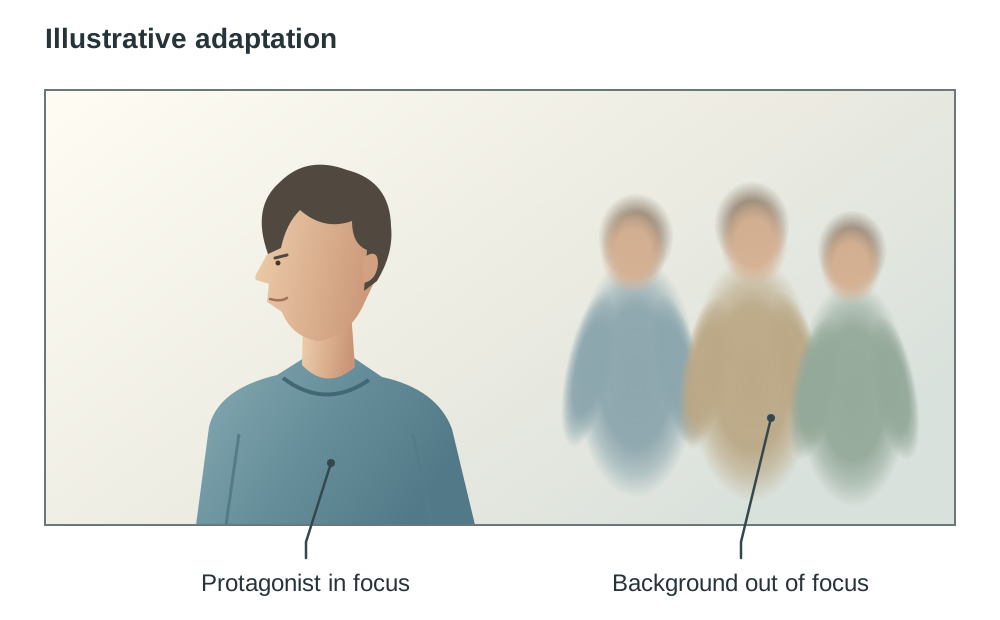
- Colm Bairéad (An Cailín Ciúin): Using shallow depth of field and naturalistic light to convey internal isolation and childhood vulnerability. You might adapt this by keeping background performers out of focus to show a protagonist feeling alienated.
- Steven Spielberg (Jaws): Withholding the central threat, using subjective underwater camera tracking, and employing a recurring musical motif. You might adapt this by never showing an antagonist on screen, signalling their presence entirely through a harsh low-angle shadow and an off-screen sound effect.
- Celine Song (Past Lives): Lingering, unbroken two-shots across physical divides to dramatise emotional distance.
- Nadia Fall (Home, National Theatre 2013): Verbatim speech delivered directly to the audience, preserving natural pauses and hesitations to create immediate intimacy.
- Sean O'Casey / Garry Hynes (The Shadow of a Gunman, Druid 2023): Abrupt shifts between broad physical comedy and stark political terror to heighten dramatic contrast.
- Philip Doherty / Mikel Murfi (Tóraíocht, Fíbín sa Taibhdhearc 2018): Heightened non-naturalistic movement and ensemble chorus work to physicalise fear and pursuit.
Source material covers the wider factual and visual research gathered to furnish the dramatic world: historical documents, news reports, interview transcripts, fabric swatches, ambient soundscapes, or paintings. Makers often organise visual sources into a mood board — a collage of images, colours, and textures that establishes the visual world and atmosphere before sets are built or cameras roll.
Purposeful Research and Checking Feasibility
Research in this subject must be purposeful — directed at answering real questions needed to make the work, rather than collecting aimless trivia. A simple habit keeps research focused: note the question you asked, the source you used, what you found, and how that finding changed or shaped your own creative choice.
An imaginative idea cannot succeed if it cannot be staged or filmed. Investigating feasibility means testing your artistic ambition against practical reality before committing to production. The specification explicitly pairs feasibility with setting goals and timelines.
A practical checklist for testing feasibility covers six areas:
- Goals: Have we stated clearly what a successful version of this piece looks like, so we can judge later in Section E whether we achieved it?
- Time: Can the piece be devised, scripted, rehearsed, filmed, or edited within our class schedule? Does it fit the required performance duration?
- Resources: Can we actually get the space we need (the drama studio, a particular outdoor location), the lanterns (stage lights), camera and sound gear, costumes, and props?
- Skills: Does our group have the vocal control, physical movement, camera handling, or editing skills required, or can we realistically learn them in time?
- People: Are cast and crew members dependable, available for rehearsals and call sheets, and clear about their responsibilities?
- Practical and legal constraints: Have we resolved health and safety risks (rigging, stage combat), location access, GDPR consent for anyone recorded, and performance rights if using existing scripts or copyrighted music?
Duration is a primary feasibility constraint across your course:
- Applied Creative Task 1 (ensemble theatre): approximately 4 to 6 minutes.
- Applied Creative Task 2 (film sequence): approximately 3 minutes in edited format.
- Applied Creative Task 3: 5 to 8 minutes for theatre, or 3 to 5 minutes edited for a short film.
- Creativity in Practice Project: a short piece, from which you select two continuous minutes of recorded material for SEC submission.
Changing an idea because of a practical constraint is not a failure — it is evidence of creative problem-solving, and the guidelines expect it. What matters is that you can explain and justify the change.
Documenting Intentions: Treatments and Statements of Intention
Thinking about a treatment or statement of intention is part of imagining and conceptualising (Learning Outcome 1.7) because writing your concept down is how you explore whether an idea is possible before you start full scripting or physical blocking.
Match the term to your discipline:
- In film, the planning document is called a treatment.
- In theatre, it is called a statement of intention.
(In the official specification glossary, a treatment is defined as presenting the story, concept, and visual idea of a film or theatre production before the script is written or the action devised; the two terms perform the same job, but using treatment for film and statement of intention for theatre matches the learning outcome).
Both documents function as an artistic blueprint containing:
- Core dramatic concept: The central theme, premise, or dramatic question.
- Narrative or content outline: A sequence-by-sequence synopsis of the plot, or an outline of the audience's experience in non-narrative work.
- Genre, form, and style: Chosen conventions (such as naturalism, verbatim theatre, expressionism, or psychological thriller) and the reasons they serve the story.
- Visual and aural aesthetic: Concrete choices for colour palette, lighting states, set layout, camera framing, costume silhouettes, and sound design.
- Target audience and intended impact: Who the piece is for and the emotional or intellectual response you aim to evoke.
- Practitioner reference points: The specific professional techniques you are adapting.
A treatment or statement of intention is often presented orally through a pitch to gather feedback from teachers and peers.
This document is a yardstick, not a contract. The creative process is iterative, and work evolves for valid reasons: initial visions prove overly ambitious, practical obstacles arise, or rehearsal throws up better ideas. When you evaluate your work in Section E, you compare what you produced against what you set out to achieve in this document, explaining and justifying every change.
Key Roles Across Creative, Production, and Technical Teams
A concept cannot move from paper to performance without assigning roles (Learning Outcome 1.8). The syllabus uses four collective terms defined in its glossary:
- Creative team: The collective responsible for the artistic vision and leadership in making a piece of film or theatre (director, playwright, screenwriter, designers).
- Production team: The collective, other than the creative team, responsible for the practical elements of production (producer, stage manager, technicians).
- Crew: Members of the production team.
- Practitioner: Professional artists including performers, creative team, and production team.
Key responsibilities across the six syllabus areas include:
- Directing: The director holds the primary artistic vision, leads the creative team, guides performers, and oversees blocking and visual composition.
- Writing / devising / adapting: Scripting text, generating action from stimuli without a prior script, or adapting existing material respectfully.
- Production: The producer manages logistics, budgets, schedules, call sheets, and legal clearances (such as copyright and permissions).
- Performance: Performers use voice, movement, and gesture to create and sustain a role, and establish a relationship with the audience.
- Design: Set, costume, lighting, and sound designers make aesthetic decisions about the visual and aural world.
- Technical: Technicians operate equipment to execute designs — camera operators, film editors, and stage lighting and sound operators.
In student work, individuals frequently double up on roles (such as writer-director, or lighting designer-operator). To ensure feasibility, pairs of roles must not conflict at the same moment — for example, doubling production design (pre-production) with editing (post-production) works well, whereas acting while operating the camera does not.
Coursework Mechanics: Project Journal Sections A, B, and C
The Additional Assessment Component — the Creativity in Practice Project — is worth 50% of the Leaving Certificate (300 marks). Coursework must be completed and submitted to the class teacher by 23 April 2027. The NCCA guidelines envisage the project taking up to 25 hours, with Stage 1 taking 2–4 hours, Stage 2 taking 12–15 hours, Stage 3 taking 5–6 hours, and Stage 5 taking 2–3 hours.
The overall digital journal has a strict limit of 1,700 words and permits up to 20 images. Any words used to label or annotate images count towards the 1,700-word limit. The five section limits (300 + 400 + 400 + 300 + 300) total exactly 1,700 words, so you cannot overwrite one section without cutting another:
- Section A – Imagining and Conceptualising (40 marks, 300 words): Your personal response to the brief, creative possibilities of the stimulus, initial creative vision, and the sources and practitioner influences informing that vision.
- Section B – Exploring Creative Ideas (60 marks, 400 words): Here your research is marked. You must research creative ideas relating to two (and only two) of the following six areas: (1) writing/devising/adapting, (2) directing, (3) production, (4) performance, (5) design, (6) technical elements. You must explain how your research influenced and informed the development of your own creative ideas.
- Section C – Developing and Refining (80 marks, 400 words): This section must fit three things: your formal treatment or statement of intention (approx. 150 words), one skill developed with evidence of how you developed it (approx. 125 words), and two significant creative decisions made during development (approx. 125 words).
- Overall coherence and communication (20 marks): Awarded across the entire journal for continuous engagement with the stimulus, development of points, clarity of expression, and relevant referencing.
Referencing rules: No particular formal style of referencing is required, provided there is enough accurate detail to authenticate the source (author, title, year, page or timestamp; URL and date accessed for online material). References sit in the reference section and do not count towards the 1,700 words. For Artificial Intelligence tools, you must record: (1) name of the tool, (2) date content was generated, (3) brief explanation of how it was used, and (4) the shareable URL or exact prompt used.
Key terms
- Core Dramatic Idea / Concept
- The central thematic seed, dramatic question, or emotional focus from which a complete theatrical or cinematic work is developed.
- Stimulus
- A starting point (such as an image, object, text, piece of music, or theme) used to spark creative ideas and dramatic action.
- Reference Point
- An existing artistic work or practitioner's practice analysed for how and why an effect was achieved, and adapted to inform one's own creative work.
- Source Material
- The wider range of research materials (historical documents, images, costumes, artefacts, music, personal experience) gathered to furnish and ground the creative world.
- Feasibility
- The practical achievability of a creative project, assessed against time, goals, resources, skills, people, and legal or safety constraints.
- Treatment
- A pre-production document presenting the story, concept, and visual idea of a film (or theatre production) before the script is written or action devised.
- Statement of Intention
- The theatrical planning document outlining the story, dramatic concept, staging style, design elements, and audience goals before rehearsing or devising.
- Creative Team
- The collective responsible for the artistic vision and leadership in making a piece of film or theatre (such as director, writer, and designers).
- Production Team
- The collective, other than the creative team, responsible for the practical and logistical elements of a theatre or film production.
- Crew
- Members of the production team.
- Practitioner
- Professional artists working in drama, film, and theatre, including performers, the creative team, and the production team.
- Pitch
- A concise oral presentation of an idea for a film or theatre performance, often accompanied by a treatment or statement of intention.
- Blocking
- The planned movement and physical positioning of performers on stage or within the camera frame, led by the director in rehearsal.
- Performance Rights
- Legal permission obtained from copyright holders to publicly perform an existing play, screenplay, or copyrighted piece of music.
Check yourself
What is the difference between a practitioner reference point and general source material?
A reference point is the work or practice of an established professional artist analysed for a specific technique and adapted to serve your piece. Source material is the wider pool of research (historical facts, images, music, costumes) gathered to build the dramatic world.
In Section B of the project journal, what three things must you write about each of your two chosen areas?
You must explain what you researched, what you found, and how that research influenced and informed the development of your own creative ideas.
List six practical areas to check when investigating the feasibility of a creative concept.
Goals (what success looks like), Time (schedules and required durations), Resources (spaces, equipment, props, costumes), Skills (acting, technical, editing abilities), People (availability of cast and crew), and Practical/Legal constraints (safety, permissions, GDPR, performance rights).
What collective terms does the specification use to distinguish between artistic leadership and logistical management?
The creative team leads artistic vision (director, writer, designers), while the production team (or crew) manages practical realisation and logistics (producer, stage manager, technicians).
Why is a statement of intention or treatment described as a benchmark rather than an unchangeable contract?
Creative work evolves iteratively during making. The document provides an intentional baseline so that when you evaluate in Section E, you can measure what was achieved against your starting aims and justify every change.