

Climate change is far more than a set of rising figures on a temperature chart. It represents damaged livelihoods, flooded communities, retreating coastlines, and people displaced from their homelands. In Leaving Certificate Climate Action and Sustainable Development, you need to understand two things together: the physical changes happening to the planet, and why the same event hurts some people far more than others. To succeed at Higher Level, you must be able to clearly outline core concepts—mitigation, adaptation, climate debt, ecological debt, and climate loss and damage—and critically discuss mitigation and adaptation through the lens of climate justice.
Understanding Climate Justice and Power
Climate justice means treating climate change as a matter of fairness, human rights, and equality rather than only as a scientific or environmental problem. It starts from the basic reality that the people who did least to cause global warming usually suffer its worst impacts. There is no single universal definition, but in practice, climate justice rests on three core principles:
- Distributive justice: how the burdens and benefits are shared. Who pays for cutting emissions, who receives funding to adapt, and who bears the losses when disaster hits? For example, Pakistan suffered catastrophic flooding in 2022 despite producing under 1% of global greenhouse gases.
- Procedural justice: who sits at the table when decisions are made. Are frontline communities, women, young people, and Indigenous groups genuinely involved in planning, or are policies decided for them by distant governments and corporations?
- Intergenerational justice: fairness between generations. Decisions taken today lock in environmental consequences for young people and future generations who had no say in creating the problem.
A fourth related concept is recognition, which means respecting the distinct identities, cultures, and traditional knowledge systems of affected groups—such as Indigenous land stewardship—rather than treating them merely as passive victims.
To analyse these issues, we distinguish between two economic groups. The Global North refers to wealthy, industrialised nations (such as Ireland, the USA, Germany, and Australia) that built their economies on fossil fuels and carry high historical emissions. The Global South refers to lower- and middle-income nations across Africa, Asia, Latin America, and the Pacific. Many have histories of colonial exploitation, have emitted very little historically, yet face severe geographic exposure to climate hazards with fewer financial resources to respond.
Power and root causes
Climate vulnerability is not random bad luck. It is shaped by decisions taken by those who hold power:
- States pass environmental laws, approve fossil fuel infrastructure, fund flood defences, and decide whether their international climate finance is given as grants or debt-creating loans.
- Large corporations, particularly fossil fuel companies, have historically driven industrial emissions and frequently lobbied to delay or weaken climate regulation.
- International financial institutions (such as the World Bank and IMF) influence the debt conditions of developing countries, dictating whether they can afford public resilience projects.
- Affected communities often hold the least institutional power, which is why social movements—such as the Pacific Climate Warriors in the Global South or Friends of the Earth and the youth climate strikes in the Global North—organise to demand systemic change.
In your exam answers, always distinguish between a symptom and its root cause. A flooded street is a symptom; the root causes include continued greenhouse gas emissions, poor planning regulations on floodplains, and the structural underfunding of community defences.
How Climate Change Harms People and Places
Human activities—chiefly burning coal, oil, and gas, clearing forests, and intensive farming—have amplified the natural greenhouse effect. This extra trapped heat alters atmospheric circulation, melts polar ice, and expands ocean waters, creating two broad types of physical hazards:
- Sudden-onset events: extreme hazards that occur rapidly over hours or days, such as storms, flash floods, heatwaves, and wildfires.
- Slow-onset events: gradual processes developing over years or decades, including sea-level rise, ocean acidification, desertification, glacial retreat, and salinisation of freshwater aquifers.
| Climate-Related Change | Environmental Impact | Human and Economic Consequence |
|---|---|---|
| Rising atmospheric temperatures | Increased frequency and severity of marine and terrestrial heatwaves; prolonged droughts. | Heat-related illness and mortality, especially among older populations; reduced farm yields; severe drinking water shortages. |
| Changes in rainfall patterns | Warmer air holds more moisture — roughly 7% more per 1 °C of warming — so when it does rain, it rains harder; other regions dry out. | Flash flooding damaging homes, roads, and bridges; severe soil erosion; urban drainage collapse; agricultural crop failures. |
| Cryosphere loss and thermal expansion | Continental ice sheets and glaciers melt while seawater expands as it warms, driving sea-level rise. | Saltwater intrusion into coastal drinking water; coastal land loss; forced displacement of low-lying island and delta populations. |
| Warming and ocean acidification | Seawater absorbs excess atmospheric CO₂, lowering ocean pH and weakening shell-forming marine organisms. | Coral reef bleaching; collapse of marine food chains; diminished catches and lost income for coastal fishing communities. |
Ireland is already experiencing these impacts. Rising sea levels accelerate coastal erosion along the Atlantic coast, while intense winter rainfall causes recurring fluvial flooding in the River Shannon basin and Cork city.
Take the 2018 Irish summer drought as an example of climate risk in practice. The hazard was a prolonged period of high heat and no rain. The exposure fell on farms across the south and east. The sensitivity was high because Irish dairy and beef systems rely on rain-fed grass. The adaptive capacity varied sharply: large, well-capitalised farms bought in supplementary feed or drew on financial reserves, whereas smaller, indebted family farms faced an immediate animal fodder crisis that required emergency State aid.
Why the Same Event Hurts Some People Far More than Others
A storm or drought does not affect all human beings equally. The impact of any climate hazard depends on vulnerability, which consists of three distinct components:
- Exposure: whether people, homes, or assets are physically located in harm's way (such as an informal settlement constructed directly on an unprotected riverbank).
- Sensitivity: the degree to which a community or economic system is harmed by a specific shock (such as smallholder farmers whose basic food supply depends entirely on regular seasonal rain).
- Adaptive capacity: the resources, technology, institutions, and money available to anticipate, cope with, and recover from hazards. Wealthy nations can invest billions in coastal surge barriers, whereas developing countries facing high national debt burdens have far less fiscal space to fund public protection.
Put together, these give the standard way of describing climate risk: risk arises when a hazard strikes people and places that are exposed to it and vulnerable to its effects. The same 1-metre storm surge produces very different outcomes along the Dutch coast—where the engineered Delta Works and high adaptive capacity keep casualties near zero—compared to a low-lying delta in Bangladesh, where dense coastal populations face limited sea defences and high mortality.
Vulnerability divides along clear social, demographic, and geographical lines:
- Geography: Low-lying Small Island Developing States (such as Tuvalu) and low-elevation coastal zones (such as Bangladesh) face existential threats from sea surges and soil salinisation, despite contributing almost nothing to global emissions.
- Age: Older people suffer higher rates of cardiovascular stress and heatstroke during extreme heatwaves. Children face heightened vulnerability to vector-borne disease and malnutrition, and will live their entire adult lives in an increasingly destabilised climate system.
- Gender: In many rural societies across the Global South, cultural norms assign women and girls the task of collecting water, cooking fuel, and household food. During severe droughts, they must walk far greater distances each day, exposing them to physical exhaustion and taking girls out of school.
- Citizenship: People displaced across international borders by sea-level rise or drought do not qualify as refugees under the 1951 UN Refugee Convention. This leaves them without legal protection, residency rights, or the right to work.
- Ethnicity and Indigenous peoples: Indigenous communities often rely directly on local ecosystems for food, medicine, and cultural life. Forest fires, shifting seasons, and biodiversity loss destroy ancestral homelands and erode centuries-old traditional knowledge.
- Perceived social status and wealth: Within any society, low-income households live disproportionately in cheaper, poorly insulated housing in flood-prone or industrial areas, lack household insurance, and have no financial savings to rebuild after a disaster.
The Three Pillars: Mitigation, Adaptation, and Loss and Damage
International climate policy is structured around three essential pillars:
- Mitigation: tackling the root causes by reducing greenhouse gas emissions at source (for example, switching from coal-fired power to wind and solar energy) or enhancing natural carbon sinks (such as rewetting drained peatlands and planting native forests).
- Adaptation: adjusting human systems, physical infrastructure, and practices to moderate harm from locked-in climate changes (for example, constructing storm-surge barriers and tidal flood barriers such as the Thames Barrier in London, breeding drought-tolerant crop varieties, and setting up community text-alert warning systems).
- Climate loss and damage: addressing the unavoidable residual harm that occurs when mitigation and adaptation fail or when adaptation limits are reached.
An adaptation limit is the point beyond which an actor or system cannot avoid intolerable risks:
- A soft limit means an adaptation measure exists in theory, but the affected community cannot access it due to lack of money, technology, or political will. For instance, an engineered sea wall could protect a coastal farming village, but the local council cannot secure the funds to construct it.
- A hard limit means no adaptation measure is physically or biologically possible. For example, low-lying atoll nations like Tuvalu face permanent marine submergence, and freshwater ecosystems cannot adapt once a tropical mountain glacier completely disappears.
Economic versus non-economic loss and damage
Loss and damage is divided into two categories:
- Economic loss and damage: physical losses that can be directly measured in monetary terms. This covers damaged roads, collapsed bridges, destroyed homes, lost business revenue, and wrecked agricultural harvests.
- Non-economic loss and damage (NELD): irreversible harms that cannot be traded on a market or assigned a cash price. This includes the loss of human lives, psychological trauma, forced abandonment of ancestral lands, destruction of sacred burial grounds, loss of Indigenous languages, and complete species extinction.
The 2022 Pakistan floods illustrate this reality. Unprecedented monsoon rains intensified by climate change affected roughly one-third of the country, killed over 1,700 people, displaced millions, and caused around US15 billion each)—in a nation responsible for under 1% of global historical emissions.
At UN climate negotiations, developing countries fought for decades for a dedicated mechanism to address these harms. This led to the landmark agreement to establish the Loss and Damage Fund at COP27 in Egypt, which was operationalised at COP28 in Dubai. Ireland has pledged funding to this mechanism, though global contributions remain far below the hundreds of billions required annually.
Climate Debt, Ecological Debt, and Justice in Action
The historic imbalance between who caused climate breakdown and who suffers its consequences creates ethical obligations known as climate debt and ecological debt.
Climate debt is usually described as having two parts:
- Emissions debt: the obligation of wealthy industrialised nations to decarbonise rapidly because they have used up most of the atmosphere's safe space for carbon—the limited amount of greenhouse gas that can be released before warming becomes dangerous. For instance, the USA alone accounts for roughly 20% to 25% of cumulative historical industrial CO₂ emissions, whereas the entire African continent accounts for less than 4%.
- Adaptation debt: the financial and technological duty high-emitting nations have to fund resilience measures and compensate vulnerable communities for loss and damage they did not cause.
Ecological debt is a wider concept. It includes centuries of raw material extraction (timber, petroleum, precious metals), soil depletion, deforestation, and the dumping of hazardous and plastic wastes in the Global South under colonial and post-colonial trade systems. Climate debt is one major part of this broader historical ecological debt.
From a climate justice perspective, international climate finance is not charitable aid. It is restorative justice—the repayment of an accumulated historical debt.
| Justice Issues in Mitigation | Justice Issues in Adaptation | Justice Issues in Loss and Damage |
|---|---|---|
| Common but differentiated responsibilities and respective capabilities | The adaptation gap: the massive shortfall between adaptation funds needed and funds provided | Determining who pays: high-emitting historical polluters versus frontline states |
| Protecting the right to basic development and energy access in poorer countries | Loans versus grants: over 70% of public climate finance has been delivered as loans, deepening debt | Quantifying and acknowledging non-economic loss and damage (culture, sovereignty, lives) |
| Preventing new human rights harms in green supply chains (e.g. child labour in cobalt mines in the DRC) | Avoiding maladaptation: ensuring protective works do not deflect risks onto poorer neighbours | Ensuring rapid, direct community access to the UN Loss and Damage Fund |
| Guaranteeing a just transition for workers in high-carbon industries | Procedural justice: involving local communities in coastal and flood defence designs | Recognising legal and moral accountability rather than treating payments as voluntary charity |
Justice in mitigation
Under the United Nations Framework Convention on Climate Change (UNFCCC), countries operate under the principle of common but differentiated responsibilities and respective capabilities. Wealthy countries must cut emissions earliest and deepest while providing finance and technology to lower-income states.
Mitigation policies must also guarantee a just transition so that workers and communities dependent on high-carbon industries are not abandoned. When Ireland ended peat harvesting for electricity generation and the Midlands peat-fired power stations closed, thousands of Bord na Móna and ESB-linked jobs were affected across a small number of counties. The State's just transition response included retraining and reskilling schemes, bog rehabilitation work that re-employed former peat workers, funding from the EU Just Transition Fund, and the appointment of an independent Just Transition Commissioner to work with local communities.
Justice in adaptation
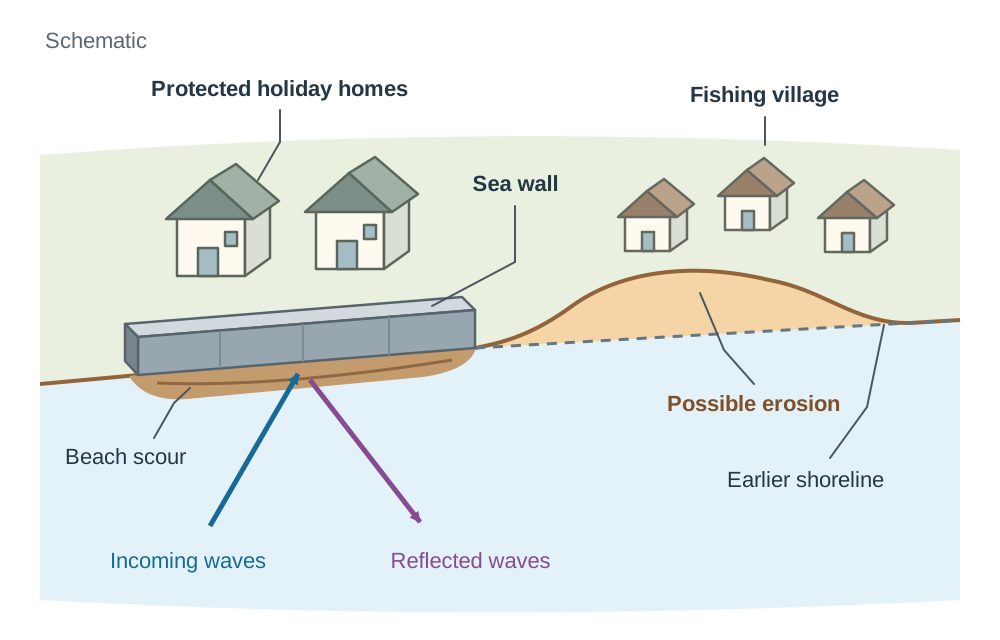
Adaptation efforts must avoid maladaptation—actions taken to reduce climate risk that inadvertently increase vulnerability elsewhere or create new environmental problems. For example, if a local authority builds a hard concrete sea wall to defend expensive holiday homes, the reflected wave energy can scour the beach and accelerate erosion in an adjoining, unprotected fishing village.
Ireland's legal framework and global role
Domestically, Ireland's climate duties are governed by the Climate Action and Low Carbon Development (Amendment) Act 2021. This legislation legally binds the State to reduce national greenhouse gas emissions by 51% by 2030 compared to 2018 levels, and to achieve climate neutrality by 2050. The framework operates through legally binding five-year carbon budgets, sectoral emissions ceilings (for agriculture, transport, energy, and industry), and an annual Climate Action Plan. The Environmental Protection Agency (EPA) monitors national emissions and has repeatedly warned that Ireland is currently not on track to meet these binding limits.
On a per-capita basis, Ireland's emissions are among the highest in the European Union and well above the global average. Under the principle of common but differentiated responsibilities, Ireland is a holder of climate debt, not an innocent bystander. Our financial contributions to international climate funds are an ethical duty to help repair damage our historical emissions have contributed to.
Key terms
- Climate Justice
- An approach that treats climate change as an issue of human rights, equality, and fairness, ensuring that those who contributed least to emissions are protected and that historical polluters pay their fair share.
- Distributive Justice
- The ethical principle governing how the benefits, costs, and burdens of climate action—such as emissions cuts, adaptation funds, and disaster losses—are divided fairly among groups and nations.
- Procedural Justice
- The requirement that all affected communities, particularly marginalised and frontline groups, have a genuine voice and decision-making power in designing climate plans.
- Intergenerational Justice
- The principle of fairness between generations, recognising that current emissions decisions place dangerous ecological burdens on young people and future generations who had no say in making them.
- Climate Change Mitigation
- Human interventions to reduce greenhouse gas emissions at source (such as solar or wind farms) or enhance carbon sinks (such as peatland rewetting and afforestation).
- Climate Change Adaptation
- The process of adjustment in human and natural systems to actual or expected climate impacts in order to moderate harm or exploit beneficial opportunities (such as flood barriers or drought-resistant crops).
- Climate Loss and Damage
- The unavoidable negative impacts of climate change that occur when mitigation has failed and adaptation limits have been exceeded or were never put in place.
- Non-Economic Loss and Damage (NELD)
- Irreversible climate harms that cannot be bought or sold in markets or given a simple cash value, such as loss of life, cultural heritage, sacred sites, and national territory.
- Adaptation Limit
- The threshold where an actor or system can no longer avoid intolerable risks; divided into soft limits (measures exist but funds or technology are lacking) and hard limits (no adaptation is physically possible).
- Climate Debt
- The moral and reparative obligation owed by high-emitting industrialised nations to developing nations for over-consuming the shared atmospheric carbon budget and causing disproportionate harm.
- Ecological Debt
- The accumulated historical debt owed by the Global North to the Global South for centuries of resource extraction, ecological damage, and using global ecosystems as waste dumps.
- Vulnerability
- The degree to which a system or population is susceptible to, and unable to cope with, adverse climate impacts; determined by the interplay of exposure, sensitivity, and adaptive capacity.
- Maladaptation
- An adaptation measure that unintentionally leads to an increased risk of adverse climate-related outcomes, shifts vulnerability onto other groups, or increases emissions.
- Just Transition
- A framework ensuring that the shift away from high-carbon industries is socially fair, protecting affected workers and local communities through retraining, green jobs, and regional investment.
- Common but Differentiated Responsibilities and Respective Capabilities
- A foundational UNFCCC principle establishing that while all nations must act against climate change, industrialised countries must cut emissions fastest and provide finance because of their historical emissions and wealth.
- Loss and Damage Fund
- A dedicated international fund agreed at COP27 and operationalised at COP28 to provide financial assistance to vulnerable developing countries recovering from climate-driven loss and damage.
Check yourself
What three factors determine a population's vulnerability to a climate hazard?
Exposure, sensitivity, and adaptive capacity.
Classify each of the following actions as mitigation (M), adaptation (A), or both: (i) rewetting a Midlands raised bog; (ii) building a tidal flood barrier on the River Lee; (iii) planting a native woodland on a hillside; (iv) an SMS heatwave warning system; (v) replacing a diesel bus fleet with electric buses.
(i) Both (cuts emissions from dried peat and restores a carbon sink, while also slowing flood runoff); (ii) A; (iii) Both (acts as a biological carbon sink while providing soil stability and flood regulation); (iv) A; (v) M.
What is the difference between a soft adaptation limit and a hard adaptation limit?
A soft limit occurs when an adaptation option exists in theory but cannot be accessed due to lack of money, technology, or political will. A hard limit occurs when no adaptation option can physically prevent intolerable harm, such as the total submergence of an atoll.
Name the three core principles of climate justice and briefly state what each covers.
Distributive justice (fair sharing of burdens, costs, and benefits), procedural justice (inclusive, democratic participation in decision-making), and intergenerational justice (fairness to young people and future generations).
What legally binding 2030 emissions reduction target does Ireland have under the Climate Action and Low Carbon Development (Amendment) Act 2021?
A 51% reduction in overall greenhouse gas emissions compared against 2018 levels.