
Environmental chemistry examines how chemical processes maintain the atmosphere and water systems, how human activities disrupt these balances, and how chemical principles offer sustainable solutions. This topic covers the carbon cycle, the natural and enhanced greenhouse effects, the chemical and biological impacts of water contamination, municipal drinking water treatment, qualitative bench testing for environmental ions, and the life-cycle chemistry of carbon allotropes and lithium-ion cells.
The Carbon Cycle and the Natural Greenhouse Effect
Earth's surface temperature is regulated by the natural greenhouse effect. Short-wavelength solar radiation, chiefly visible light and ultraviolet, passes through the atmosphere and warms the planet's surface. The warmed ground radiates this energy back out as longer-wavelength infrared (heat) radiation. Greenhouse gases absorb this outgoing infrared radiation and re-emit it in all directions, trapping thermal energy in the lower atmosphere.
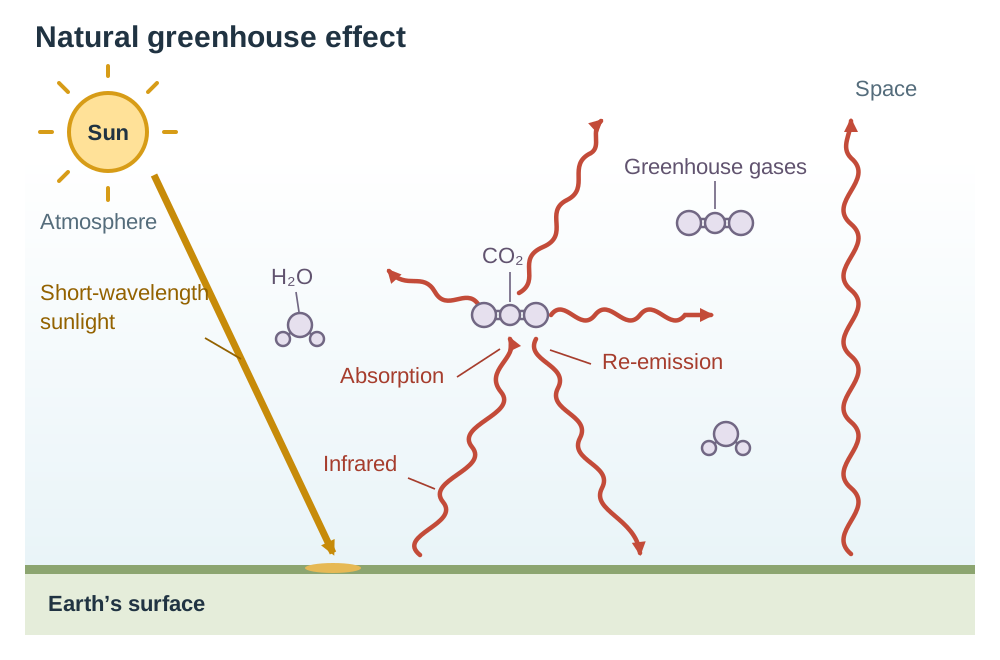
Without this natural heat trapping, Earth's average surface temperature would drop from roughly 15 °C down to -18 °C, a difference of 33 °C that would leave the planet frozen. Water vapour () is the largest single contributor, accounting for 50% to 60% of the natural effect. Because the atmosphere's water vapour content depends directly on air temperature and self-regulates through rapid evaporation and precipitation cycles, it acts as an amplifying feedback rather than an independent driver of climate change.
The global carbon cycle maintains atmospheric carbon dioxide () at roughly 0.04% (approximately 420 ppm) through a dynamic balance between sources and sinks:
- Carbon sources release into the atmosphere. Natural sources include cellular respiration by living organisms, volcanic outgassing, and forest fires. Anthropogenic (human-caused) sources include burning fossil fuels (coal, oil, gas) and heating limestone during cement manufacture: $$
- A carbon sink absorbs more carbon from the atmosphere than it releases. Major sinks include photosynthetic biomass such as forests, the oceans (which dissolve gaseous directly), and peatlands. Irish peat bogs store huge amounts of carbon because waterlogged, anaerobic conditions stop dead plant tissue from fully decaying.
The Enhanced Greenhouse Effect: Evidence, Effects, and Solutions
The enhanced greenhouse effect is the additional warming of Earth's atmosphere caused by human activities that increase greenhouse gas concentrations. The heat-trapping impact of any gas depends on its atmospheric abundance, how long it stays in the air, and its Global Warming Potential (GWP). GWP measures how much heat a gas traps over a 100-year period compared to an equal mass of carbon dioxide, which has a baseline GWP of 1.
| Gas | Main Anthropogenic Sources | GWP (100-year) |
|---|---|---|
| Carbon dioxide () | Burning fossil fuels, cement manufacture, deforestation | 1 (reference) |
| Methane () | Ruminant livestock, rotting landfill waste, natural gas leaks | ~30 |
| Nitrous oxide () | Synthetic nitrogen fertilisers, nylon and nitric acid production | 273 |
| and Sulfur oxides | Vehicle exhausts, coal-burning power stations, industrial fuel use | Variable |
The specification explicitly lists sulfur oxides and alongside greenhouse gases. Nitrous oxide () from fertiliser misuse is a powerful heat-trapping gas. By contrast, nitrogen monoxide () and nitrogen dioxide () from vehicle engines are grouped under ; they react with air and sunlight to generate tropospheric ozone (a greenhouse gas) and cause acid rain. Sulfur dioxide () forms sulfate particles in the atmosphere that reflect solar radiation back into space, causing a regional cooling effect, but it reacts with rain to cause severe acidification.
Scientific Evidence for the Enhanced Effect
- Direct atmospheric measurements: Continuous readings at Mauna Loa in Hawaii (the Keeling curve) show atmospheric climbing steadily from roughly 315 ppm in 1958 to over 420 ppm today, with a regular annual zig-zag caused by northern hemisphere plant growth and winter decay.
- Antarctic ice cores: Air bubbles preserved in deep ice show that atmospheric stayed between 180 and 280 ppm for hundreds of thousands of years. It began rising steeply only after the Industrial Revolution in the late 1700s.
- Temperature correlation: Global surface temperatures have risen by approximately 1.1–1.2 °C since the late 19th century, mirroring the steep rise in . Correlation alone does not prove cause, but laboratory physics (first demonstrated by Irish scientist John Tyndall) proves the exact mechanism: absorbs infrared radiation.
Environmental Consequences
- Global warming: Rising temperatures melt continental ice sheets and glaciers, driving sea-level rise through meltwater and thermal expansion of seawater, while making heatwaves more frequent.
- Precipitation changes: Warmer air holds more moisture. This triggers heavier downpours and flash floods in some regions while driving prolonged droughts and wildfires in others.
- Ocean acidification: The oceans absorb roughly 30% of anthropogenic , forming carbonic acid: $\text{H}^+\text{CO}_3^{2-}$
- Acid rain formation: Sulfur and nitrogen oxides react with atmospheric moisture to acidify rainfall: $$
Practical Solutions
- Switch to renewables: Generating electricity using wind, solar, and hydroelectric power replaces fossil fuel combustion.
- Energy efficiency: Insulating buildings, using electric vehicles charged with renewable power, and expanding public transport cut fuel demand.
- Protect and restore carbon sinks: Planting native broadleaf forests and re-wetting damaged peat bogs locks carbon away permanently.
- Methane recovery: Fitting landfill sites and farm slurry tanks with gas traps allows collected methane to be flared as fuel, converting into and water. Because methane has a GWP of 30, burning it significantly lowers its net warming impact.
- Carbon capture and storage (CCS): Isolating from industrial flue gases, compressing it, and pumping it deep underground into spent offshore gas fields or saline aquifers.
Water Contamination, Eutrophication, and BOD
Less than 1% of Earth's water is accessible freshwater. Water quality is threatened by domestic sewage, industrial discharge, agricultural run-off, microplastics, toxic heavy metals (such as , , and which bioaccumulate along food chains), and acidification.
Eutrophication and Water Health
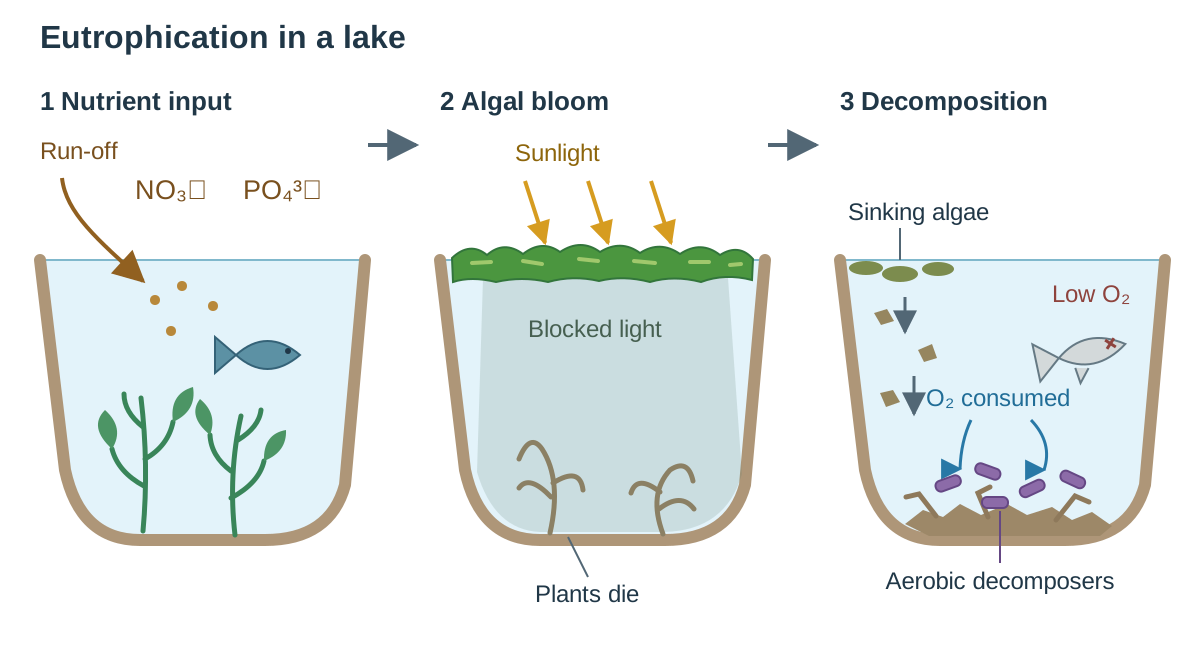
Eutrophication is the excessive nutrient enrichment of water bodies, caused by nitrate () and phosphate () ions from farm fertiliser run-off, animal slurry, or untreated sewage. It unfolds in a predictable chain:
- Nutrient overload triggers an algal bloom across the water's surface.
- Dense green algal mats block sunlight, killing submerged water plants that can no longer photosynthesise.
- The algae exhaust available nutrients, die, and sink to the bed.
- Aerobic decomposing bacteria multiply rapidly, consuming dissolved oxygen as they break down the dead organic matter.
- Dissolved oxygen levels collapse, suffocating fish and causing widespread ecosystem collapse.
Biochemical Oxygen Demand (BOD)
Biochemical Oxygen Demand (BOD) measures organic water pollution. It is defined as the amount of dissolved oxygen consumed by biological processes when a water sample is kept at 20 °C in the dark for five days.
- Why 20 °C? A fixed temperature standardises the metabolic and reproduction rates of the bacteria.
- Why in darkness? Complete darkness stops photosynthetic algae in the water from making oxygen, which would mask bacterial consumption and give a falsely low BOD value.
- Why dilute? Water saturated with air at 20 °C contains only about 9 mg/L of dissolved oxygen. Raw sewage has a BOD of roughly 300 mg/L, and silage effluent can exceed 30,000 mg/L. Undiluted samples would run out of oxygen in a few hours, halting the test. Samples are diluted with aerated, nutrient-spiked distilled water so measurable dissolved oxygen remains after five days.
Municipal Drinking Water Treatment and Water Hardness
Producing potable tap water requires processing surface water through physical and chemical stages. Water treatment has significant energy and environmental costs: running large pumps and high-intensity lamps uses substantial electricity, manufacturing and delivering treatment chemicals generates carbon emissions, and settled sludge must be safely dried and disposed of. Leaks in old distribution mains waste both treated water and the energy used to clean it. Balancing these costs is essential, as municipal treatment protects communities against life-threatening waterborne illnesses such as cholera and cryptosporidiosis.
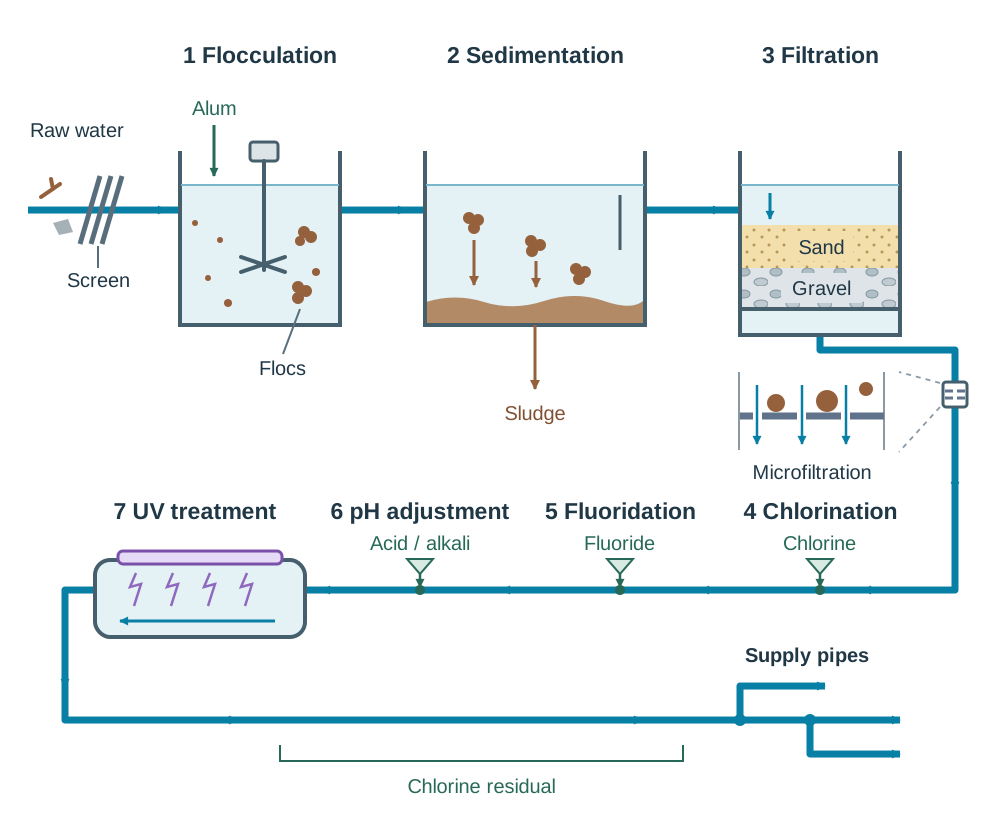
Raw water is passed through screens to take out floating debris like branches and plastics. The syllabus specifies seven core treatment processes:
- Flocculation: Colloidal clay and silt particles carry negative charges that keep them suspended. Adding aluminium sulfate (alum, ) neutralises these charges, allowing particles to clump together into larger masses called flocs. Excess alum alters taste, causes pipe corrosion, and must stay within strict legal limits.
- Sedimentation: Water enters large settling tanks where slow flow rates let gravity pull the dense flocs to the bottom as sludge, which is scraped away while clarified water overflows.
- Filtration: Water passes through sand and gravel beds to catch any remaining fine solids. Plants often include microfiltration membranes (pores 0.1 to 10 ) to screen out protozoan cysts like Cryptosporidium.
- Chlorination: Chlorine gas () or sodium hypochlorite () is added at about 0.5 ppm. Chlorine reacts with water to yield hypochlorous acid (), the active disinfectant that kills bacteria and viruses: $$ A residual chlorine level of 0.2 to 0.5 ppm must stay in the water to prevent microbes multiplying inside supply pipes on the way to taps.
- Fluoridation: Adding fluoride compounds, such as sodium fluoride () or hexafluorosilicic acid (), at roughly 0.7 ppm is a statutory requirement in Ireland to strengthen tooth enamel. Overdosing causes fluorosis (mottling and staining of teeth).
- pH adjustment: Tap water is maintained between pH 7.2 and 7.8. If the supply is acidic (common in granite catchments), calcium hydroxide (slaked lime, ) or sodium carbonate is added to prevent pipe corrosion. If too alkaline (common in limestone catchments), dilute sulfuric acid is added. Excess lime increases water hardness, while excess acid corrodes metal plumbing.
- UV treatment: Water passes under ultraviolet lamps that penetrate microbial cells and damage their DNA, neutralising chlorine-resistant parasites like Cryptosporidium. UV leaves no chemical taste, but it provides no lasting disinfectant once water leaves the chamber. Chlorine must still be added to protect water throughout the pipe network.
Water Hardness
Hard water contains dissolved calcium () and magnesium () ions, which react with soap to form an insoluble grey scum instead of an immediate lather.
- Temporary hardness is caused by dissolved calcium hydrogencarbonate, . It can be removed by boiling, which decomposes the soluble hydrogencarbonate into insoluble calcium carbonate (limescale): $$
- Permanent hardness is caused by dissolved calcium and magnesium sulfates (or chlorides), such as . Boiling does not precipitate these ions; removing them requires ion-exchange resins.
Qualitative Identification of Environmental Ions
Testing an unknown salt or water sample for dissolved ions is a practical requirement (Learning Outcome 2.1.5). For each anion, you must know the test reagents, observations, and balanced equations with state symbols.
| Anion | Bench Procedure | Expected Observation | Balanced Chemical Equation |
|---|---|---|---|
| Chloride () | Add dilute , then . Add dilute . | White precipitate forms; dissolves completely in dilute ammonia | <br> |
| Sulfate () | Add , then add dilute | White precipitate forms and remains insoluble when dilute is added | |
| Sulfite () | Add , then add dilute | White precipitate forms; dissolves in dilute with effervescence | <br> |
| Carbonate () | 1. Add dilute and bubble gas through limewater.<br>2. Add cold . | 1. Effervescence; gas turns limewater milky.<br>2. White precipitate forms immediately in the cold. | <br><br> |
| Hydrogencarbonate () | 1. Add dilute and bubble gas through limewater.<br>2. Add cold , then boil. | 1. Effervescence; gas turns limewater milky.<br>2. No precipitate cold; white precipitate appears on boiling. | <br> |
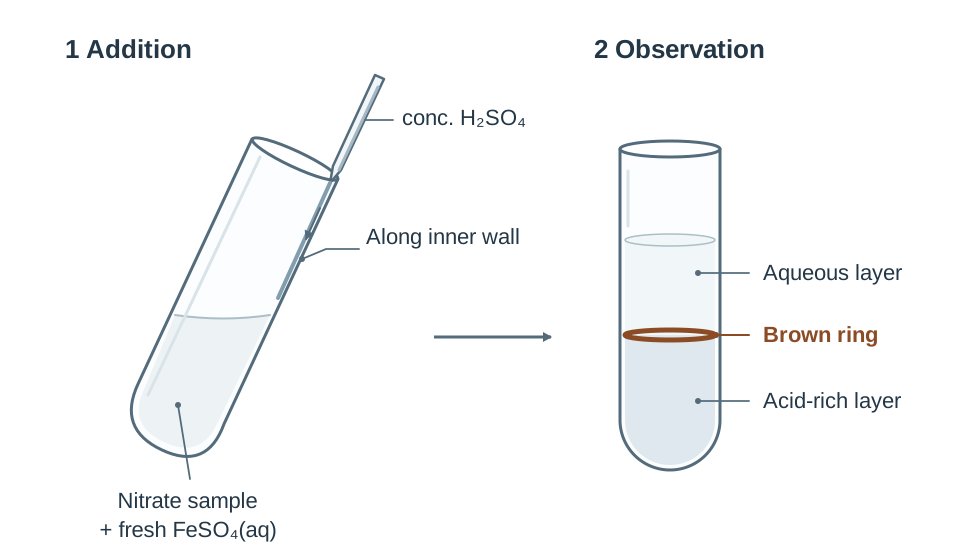
| Nitrate () | Brown ring test: add fresh , then tilt tube and trickle conc. down the inside wall. | A brown ring forms at the junction of the two liquid layers | <br> |
| Phosphate () | Acidify with conc. , add ammonium molybdate reagent, and warm gently. | Canary-yellow precipitate of ammonium phosphomolybdate forms |
Flame Tests for Cations
To identify the metal cation in an unknown salt, dip a clean nichrome or platinum wire into concentrated hydrochloric acid, touch it to the salt, and hold it in the hot, non-luminous flame of a Bunsen burner:
- Lithium (): crimson flame
- Sodium (): yellow-orange flame
- Potassium (): lilac flame
- Calcium (): brick-red flame
- Strontium (): red flame
- Barium (): apple-green flame
- Copper (): blue-green flame
If an unknown salt produces a brick-red flame and its solution gives a white precipitate with barium chloride that does not dissolve in dilute , the salt is calcium sulfate.
Modern Materials: Carbon Allotropes and Lithium-Ion Cells
Technological sustainability depends on advanced materials, particularly carbon allotropes and rechargeable cells.
Comparing Carbon Allotropes
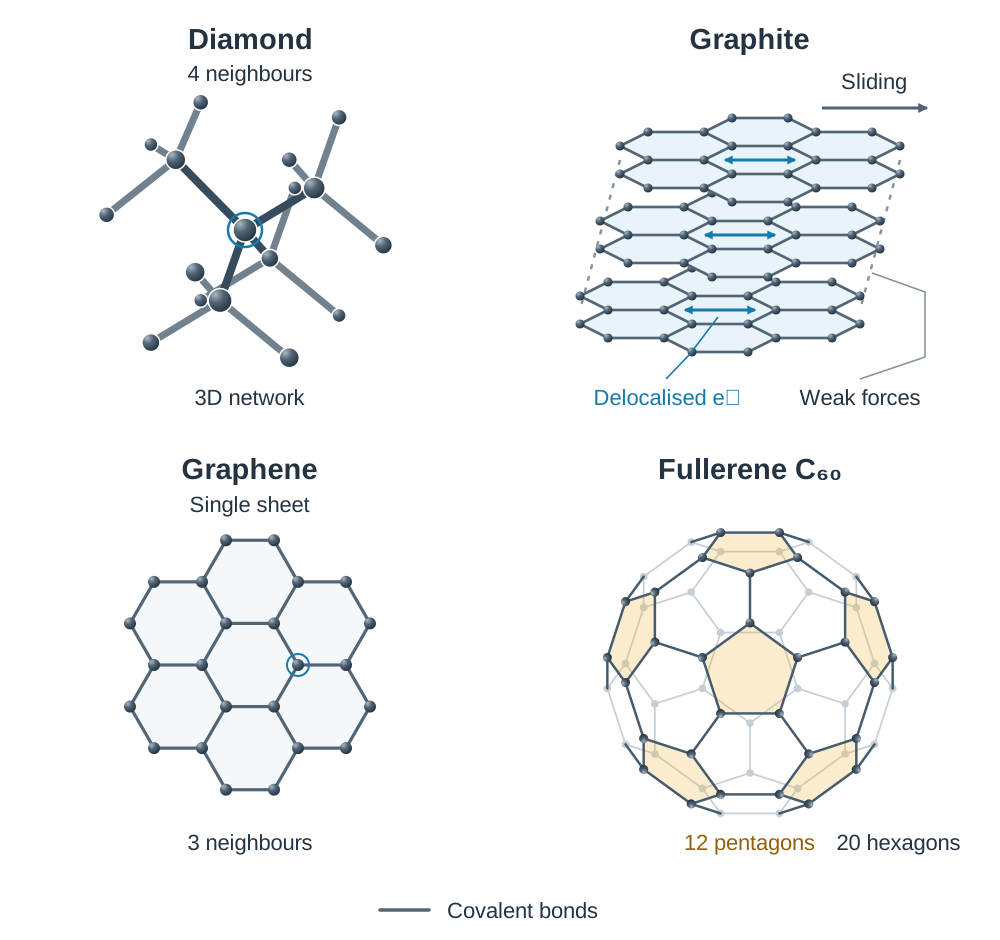
Allotropes are different structural forms of the same element in the same physical state. Carbon atoms bond covalently in different arrangements:
| Allotrope | Structure and Bonding | Electrical Conductivity | Hardness and Uses |
|---|---|---|---|
| Diamond | Giant 3D tetrahedral network. Each carbon forms four strong covalent -bonds to four neighbours. | Non-conductor (all valence electrons localised in bonds). | Hardest natural substance; very high melting point. Used in drill bits, cutting discs, and jewellery. |
| Graphite | 2D flat sheets of hexagonal rings. Each carbon is bonded to three neighbours, leaving one delocalised electron per atom. Sheets held by weak dispersion forces. | Good electrical conductor along sheets due to free delocalised electrons. | Soft and slippery because layers slide easily. Used in dry lubricants, pencils, and battery electrodes. |
| Graphene | A single layer of graphite, one atom thick, arranged in a honeycomb lattice. | Exceptional conductor of heat and electricity. | Extremely strong for its mass, flexible, and transparent. Used in touchscreens, composites, and desalination membranes. |
| Fullerene () | Discrete soccer-ball-shaped cage of 60 carbon atoms (20 hexagons, 12 pentagons). | Poor electrical conductor. | Soft molecular solid. Used in nanotechnology, solar cells, and experimental drug delivery. |
The Lithium-Ion Rechargeable Cell
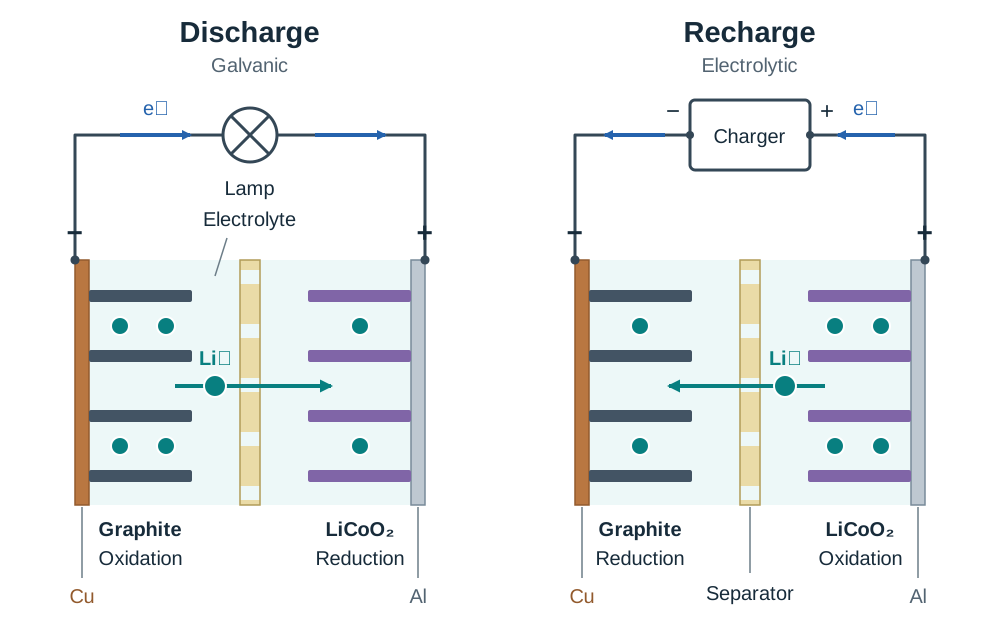
A lithium-ion battery works by shuttling lithium ions back and forth between two layered host structures that act like atomic car parks. The technical term for inserting ions between these layers without destroying the host crystal is intercalation.
- Cell construction: The negative electrode consists of graphite coated onto copper foil. The positive electrode consists of a lithium metal oxide (such as ) coated onto aluminium foil. Between them sits a microporous polymer separator that allows ions to pass while preventing physical contact that would short-circuit the cell. The electrolyte is a lithium salt (like ) dissolved in a non-aqueous organic solvent. Water cannot be used because lithium reacts vigorously with water.
- Discharging (acts as a galvanic cell): During use, a spontaneous redox reaction delivers electrical power to an external device. Lithium atoms intercalated in the graphite negative electrode undergo oxidation, shedding electrons to the external circuit: $\text{Li}^+$
- Recharging (acts as an electrolytic cell): An external charger applies a voltage that forces electrons in reverse, driving a non-spontaneous chemical storage reaction. At the positive electrode, lithium ions are pushed out of the cobalt oxide. At the negative graphite electrode, reduction occurs: ions accept electrons and intercalate back into the graphite sheets: $$
- Life-cycle and environment: Lithium cells are lightweight, hold high charge density, and recharge hundreds of times, making them ideal for phones, laptops, and electric vehicles. However, extracting lithium from salt flats consumes huge amounts of groundwater, and mining cobalt causes severe habitat disruption. Spent batteries must never go into household bins, where damage can spark runaway fires in bin lorries or leach toxic heavy metals from landfill. Sustainable use requires hydrometallurgical recycling plants that dissolve spent electrodes in acid solutions to recover pure lithium, cobalt, nickel, and copper for new cells.
Key terms
- Natural Greenhouse Effect
- The natural process by which atmospheric gases absorb and re-radiate infrared heat emitted by Earth's surface, keeping the planet roughly 33 °C warmer than it would otherwise be.
- Enhanced Greenhouse Effect
- The additional warming of Earth's atmosphere caused by human activities that increase the concentrations of greenhouse gases.
- Global Warming Potential (GWP)
- A relative measure of how much heat a greenhouse gas traps in the atmosphere over a specific timescale (usually 100 years) compared to an equal mass of carbon dioxide.
- Carbon Sink
- A natural or artificial reservoir that absorbs and stores more carbon from the atmosphere than it releases.
- Eutrophication
- The excessive enrichment of water by nutrients, particularly nitrates and phosphates, causing algal blooms and subsequent deoxygenation of the aquatic environment.
- Biochemical Oxygen Demand (BOD)
- The amount of dissolved oxygen consumed by biological processes when a water sample is kept at 20 °C in the dark for five days.
- Flocculation
- The clumping together of fine suspended particles into larger, settleable flocs upon the addition of a chemical coagulant such as aluminium sulfate.
- Hard Water
- Water that contains dissolved calcium (Ca²⁺) or magnesium (Mg²⁺) ions, which prevents soap from lathering easily and produces scum.
- Allotropes
- Different structural forms of the same element in the same physical state.
- Galvanic Cell
- An electrochemical cell that converts chemical energy into electrical energy through a spontaneous redox reaction.
- Electrolytic Cell
- An electrochemical cell that uses external electrical energy to drive a non-spontaneous redox reaction.
- Intercalation
- The reversible insertion of guest ions or molecules into the layered structure of a solid host material without significantly changing the host structure.
Check yourself
Why is water vapour described as a climate feedback rather than an independent driver of the enhanced greenhouse effect?
Its atmospheric concentration is controlled by temperature-driven natural evaporation and precipitation cycles, with a residence time of only days. It amplifies warming initiated by long-lived gases like CO2 rather than triggering warming independently.
Name the chemical added to make suspended clay particles clump together in water treatment, and name the stage that removes these clumps.
Aluminium sulfate (alum); sedimentation (settling).
Why does boiling remove temporary water hardness but not permanent water hardness?
Boiling causes soluble calcium hydrogencarbonate to decompose into insoluble calcium carbonate (limescale). Permanent hardness is caused by calcium and magnesium sulfates, which do not decompose or precipitate on boiling.
State the reagent used to distinguish between barium sulfate and barium sulfite precipitates, and give the distinguishing observation.
Dilute hydrochloric acid (HCl). Barium sulfate remains insoluble, while barium sulfite dissolves with effervescence.
Explain why graphite conducts electricity while diamond does not, referring to their bonding.
In graphite, each carbon atom bonds to three others, leaving one delocalised electron per atom free to drift across the hexagonal sheets. In diamond, each carbon forms four localised covalent bonds, leaving no free electrons.
Why is water unsuitable as an electrolyte solvent in a lithium-ion battery?
Lithium stored in the charged graphite electrode behaves like lithium metal, which reacts vigorously with water to produce flammable hydrogen gas. A non-aqueous organic solvent is therefore used.