

Being an informed employee requires knowing your legal rights and daily responsibilities, understanding how collective bargaining shields workers, and evaluating how fiscal policy and flexible working arrangements shape take-home pay and job security. In Ireland, workers rely on two distinct safeguards: binding statutory legislation and voluntary non-legislative workplace supports. This topic covers the core Acts governing pay, working conditions, health and safety, discrimination, and dismissal, alongside the role of trade unions, the gig economy, the annual government budget, and a critical approach to analysing workplace news stories in the media.
Two Layers of Protection: Legislative and Non-Legislative
Irish workers are protected by two complementary layers. Examination questions regularly ask you to distinguish between them.
Legislative Protection
Legislative protection consists of statutory rights passed by the Oireachtas and European Union directives transposed into Irish law. These laws set a legal minimum that no employer is allowed to go below. If a contract of employment contains a clause that gives an employee less than the law requires, that clause has no legal effect—the statutory right still applies. Breaches are referred to the Workplace Relations Commission (WRC) or the civil courts for legal redress.
Non-Legislative Protection
Non-legislative protection refers to voluntary workplace policies, benefits, and collective agreements that exceed the legal minimum. Employers introduce these supports to improve morale, attract and retain skilled staff, or maintain harmonious industrial relations. An employer is not compelled by law to introduce these extra terms, but once agreed benefits are written into an individual employee's contract of employment, they become legally binding.
Key non-legislative mechanisms include:
- Trade union membership and collective agreements: Joining a union gives workers collective bargaining strength to negotiate terms well above statutory minimums, such as enhanced overtime rates or redundancy terms.
- Workplace grievance procedures: Agreed company mechanisms for resolving disputes over rosters, grading, or interpersonal conflict internally before escalating externally.
- Employee Assistance Programmes (EAPs): Confidential, employer-funded counselling and advisory services supporting staff facing mental health, legal, or personal difficulties.
- Corporate wellness initiatives: Policies supporting health and work-life balance, including subsidised gym memberships, ergonomic workstation assessments, or flexible remote working arrangements.
- Enhanced contractual benefits: Company schemes that exceed statutory baselines, such as offering 25 days of paid annual leave (where the statutory baseline is 20 days) or three months of fully paid company sick leave.
Core Legislation at a Glance
| Protection Area | Key Irish Legislation | Enforcing Body |
|---|---|---|
| Pay | National Minimum Wage Act 2000, Payment of Wages Act 1991, Sick Leave Act 2022 | Workplace Relations Commission (WRC) |
| Conditions | Terms of Employment (Information) Act 1994, Organisation of Working Time Act 1997, Employment (Miscellaneous Provisions) Act 2018 | Workplace Relations Commission (WRC) |
| Health & Safety | Safety, Health and Welfare at Work Act 2005 | Health and Safety Authority (HSA) |
| Discrimination | Employment Equality Acts 1998–2015 | Workplace Relations Commission (WRC) |
| Security of Employment | Minimum Notice and Terms of Employment Act 1973, Protection of Employees (Fixed-Term Work) Act 2003, the Redundancy Payments Acts | Workplace Relations Commission (WRC) |
| Dismissal | Unfair Dismissals Acts 1977–2015 | Workplace Relations Commission (WRC) (Appeals to Labour Court) |
Pay, Terms of Employment, and Precarious Work
Statutory workplace rules set strict baselines for pay, written contracts, and hours of work.
1. Pay Protections
- National Minimum Wage Act 2000: Establishes the statutory wage floor per hour. In the examination, always apply the exact hourly rate stated in the question. Reduced sub-minimum rates have historically applied to workers under 20. Government policy has moved towards phasing out these youth rates, so check current announcements and use the figures provided on the exam paper.
- Payment of Wages Act 1991: Mandates that every worker receive an itemised payslip showing gross pay and all deductions. Unauthorised deductions are unlawful; an employer can only deduct money required by statute (such as PAYE, PRSI, USC), authorised by the employment contract (such as pension contributions), or agreed in writing by the worker beforehand.
- Sick Leave Act 2022: Workers with at least 13 weeks of continuous service who supply a medical certificate are entitled to statutory sick pay (SSP). SSP is paid by the employer at 70% of normal daily pay, subject to a statutory cap of €110 per day, up to a set number of days per calendar year (5 days). Once statutory entitlement is exhausted, eligible workers apply to the Department of Social Protection for Illness Benefit.
2. Terms and Working Hours
- Terms of Employment (Information) Act 1994: Employers must provide a written statement of five core terms within five days of an employee starting work: full names of employer and employee, address of the employer, expected contract duration if temporary, rate or method of calculating pay, and the expected normal working day or week. A full statement detailing leave, notice, and rest intervals must follow within one month.
- Organisation of Working Time Act 1997: Regulates working patterns to combat workplace fatigue:
- Maximum weekly hours: An average maximum of 48 hours per week, usually averaged over a four-month reference period.
- Daily rest: A minimum of 11 consecutive hours of rest in every 24-hour window.
- Weekly rest: A continuous 24-hour rest period in each seven-day cycle, normally preceded by the 11-hour daily rest.
- Rest breaks: A 15-minute break after 4.5 hours worked, and a 30-minute break after 6 hours worked (which may include the earlier 15-minute break).
- Annual leave: A statutory baseline of four working weeks (20 days) of paid annual leave per year for full-time employees, earned pro-rata by part-time staff.
3. Protection Against Precarious Work
- Employment (Miscellaneous Provisions) Act 2018: Prohibits zero-hour contracts in almost all circumstances, reserving them only for genuine emergency cover or casual relief. It grants workers the right to be placed on a band of hours that reflects the actual hours worked on average over a 12-month reference period, and guarantees compensation if a worker is called in for work and sent home without hours.
- Protection of Employees (Fixed-Term Work) Act 2003: Prohibits less favourable treatment of temporary or fixed-term staff compared to permanent peers. A worker placed on successive fixed-term contracts for more than four continuous years is generally entitled to a contract of indefinite duration (CID).
- Protection of Employees (Part-Time Work) Act 2001: Mandates equal hourly pay rates and pro-rata entitlements for part-time workers compared to full-time staff.
Equality, Health and Safety, and Employment Duties
Employment relationships balance employee protections with shared workplace obligations.
Anti-Discrimination: Employment Equality Acts 1998–2015
This legislation prohibits direct and indirect discrimination, sexual harassment, and harassment across recruitment, pay, training, and promotional opportunities. Direct discrimination means treating someone less favourably than another person because of one of the protected grounds (for example refusing to interview an applicant because of her age). Indirect discrimination happens where a rule that looks neutral puts one group at a particular disadvantage without good business justification (for example insisting all staff work full-time hours where this disadvantages employees with caring responsibilities). It protects individuals across nine protected grounds:
- Gender
- Civil status
- Family status
- Sexual orientation
- Religion
- Age
- Disability
- Race (including colour, nationality, or ethnic origin)
- Membership of the Traveller community
(Memory aid: Get Certain Facts Straight, Remember All Discrimination Rules Today)
- Reasonable accommodation: Employers must take appropriate measures to allow a person with a disability to access, participate in, or advance in employment, unless doing so imposes a disproportionate burden (excessive cost or disruption). Examples include installing wheelchair ramps, offering ergonomic seating, providing screen-reading software, or modifying shift schedules for medical treatments.
Health and Safety: Safety, Health and Welfare at Work Act 2005
This Act establishes a shared duty of care enforced by the Health and Safety Authority (HSA):
| Employer Statutory Responsibilities | Employee Statutory Responsibilities |
|---|---|
| Provide safe equipment, safe systems of work, and protective clothing (PPE) free of charge. | Take reasonable care of their own safety, health, and welfare and that of co-workers. |
| Conduct risk assessments and publish an up-to-date Safety Statement. | Co-operate fully with safety protocols and wear all supplied PPE correctly. |
| Provide adequate health and safety training and instruction in clear language. | Report any known defects, equipment failures, or workplace hazards immediately. |
| Facilitate the democratic election of a workplace Safety Representative. | Not be under the influence of alcohol or drugs while at work. |
- Penalisation protections: Section 27 makes it unlawful for an employer to penalise a worker—through dismissal, demotion, transfer, or disciplinary action—for reporting safety hazards or acting as a Safety Representative.
General Rights and Responsibilities
Beyond health and safety, daily obligations define the workplace:
- Employee responsibilities: Carry out duties competently; follow lawful management instructions; arrive punctually; respect commercial confidentiality (trade secrets, GDPR); act honestly in good faith; give proper notice on resignation.
- Employer responsibilities: Pay at least the statutory minimum wage on time with payslips; supply written terms of employment; respect statutory leave entitlements; maintain equal treatment; follow fair disciplinary procedures; provide correct statutory notice.
Security of Employment, Dismissals, and Redundancy
Statutory rules prevent arbitrary termination and guarantee compensation for genuine structural job losses.
Notice Entitlements: Minimum Notice and Terms of Employment Act 1973
Employers must provide written notice before terminating an employment contract, based on service length:
- 13 weeks to 2 years: 1 week notice
- 2 to 5 years: 2 weeks notice
- 5 to 10 years: 4 weeks notice
- 10 to 15 years: 6 weeks notice
- Over 15 years: 8 weeks notice
Employees must give at least one week's notice when resigning, unless the employment contract specifies a longer period. Summary dismissal without notice is only lawful in cases of gross misconduct.
Unfair Dismissals Acts 1977–2015
Applies to workers with at least 52 weeks of continuous service. The law operates under a legal presumption that every dismissal is unfair unless the employer can prove both a fair substantive ground and compliance with fair procedures.
- Exceptions to the 52-week rule: No minimum service is required if dismissal relates to trade union activity, pregnancy or maternity leave, or making a protected disclosure (whistleblowing). Claims must be submitted to the WRC within 6 months (extendable to 12 months for reasonable cause).
Fair Grounds for Dismissal
- Incapability: Chronic, documented medical unfitness or persistent absenteeism preventing role completion.
- Incompetence: Documented failure to perform the job to required standards following clear targets, training, and formal reviews.
- Qualifications: Failure to hold or maintain mandatory legal qualifications (such as a commercial driver losing their driving licence).
- Conduct: Gross misconduct (theft, assault, gross negligence) or persistent minor breaches following warnings.
- Redundancy: The job ceases to exist due to restructuring, automation, or business closure.
- Contravening the law: Where continued employment would breach statute law (such as an expired work visa).
Fair Disciplinary Procedures
Employers must observe natural justice. Standard progression moves through stages: informal chat → formal verbal warning → first written warning → final written warning → dismissal as a last resort. Where a grave allegation is investigated, an employer may place an employee on paid suspension; this is a neutral protective measure, not a disciplinary sanction.
Constructive Dismissal
Occurs when an employee resigns because the employer's unreasonable conduct made remaining intolerable (such as unaddressed bullying or severe unilateral wage cuts). Crucially, the burden of proof reverses onto the employee, who must show their resignation was reasonable and that internal grievance channels were exhausted.
Remedies for Unfair Dismissal
An Adjudication Officer at the WRC can order:
- Reinstatement: Returning to the original job with full back pay and preserved service.
- Re-engagement: Returning to an equivalent role from an agreed date (often without full back pay).
- Compensation: Up to a maximum of two years' (104 weeks') remuneration for proven financial loss. Where the employee immediately secured another role and suffered no financial loss, the WRC can still award up to 4 weeks' pay for procedural breaches.
The Redundancy Payments Acts
Applies to employees aged 16 or older with at least 104 weeks (two years) of continuous service whose positions cease to exist. The statutory redundancy payment is exempt from income tax and calculated as:
Weekly earnings used in the calculation are subject to a strict statutory ceiling of €600 per week.
Trade Unions and Industrial Relations
A trade union is an association of workers formed to protect and improve pay, benefits, safety, and working conditions through collective bargaining.
The Role of Trade Unions in the Workplace
- Collective bargaining: Negotiating collectively on wages, rosters, working conditions, and pension schemes, giving workers far greater bargaining power than an individual employee. For example, SIPTU negotiating a phased pay increase across the private security sector.
- Representation in disputes: Union officials and shop stewards accompany members facing disciplinary, grievance, or redundancy meetings, and represent them in hearings before the WRC.
- Protecting job security and terms: Unions police workplace agreements to ensure employers adhere to contracts and statutory leave rules, often securing redundancy severance packages above the statutory minimum.
- Workplace health and safety: Unions support workplace Safety Representatives and lobby management for safe systems of work and protective gear.
- Advisory and legal services: Members gain access to expert advice on legal entitlements, professional training, and financial benefits such as strike funds.
- Political lobbying: Through the Irish Congress of Trade Unions (ICTU), unions influence national policy on minimum wage adjustments, sick pay legislation, and pensions.
Evaluating Trade Union Membership
- Benefits for workers: Strength in numbers during negotiations; expert legal representation; greater protection against unfair dismissal; higher average wages.
- Drawbacks for workers: Union subscriptions must be paid; members must abide by majority strike decisions even if they personally disagree; loss of earnings during strikes; potential friction with anti-union employers.
Key Irish Trade Unions: The SIFI Memory Aid
- S – SIPTU (Services, Industrial, Professional and Technical Union): Ireland's largest union, representing manufacturing, transport, healthcare, and retail workers.
- I – INTO (Irish National Teachers' Organisation): Represents primary school teachers.
- F – Fórsa: Ireland's largest public sector union, representing civil servants, local authority workers, and health administration staff.
- I – INMO (Irish Nurses and Midwives Organisation): Specialist union representing nurses and midwives.
The Shop Steward
A shop steward is a workplace employee elected by union peers to handle day-to-day union matters: acting as the communication bridge between members and head office, handling initial grievances with local supervisors, ensuring compliance with collective agreements, and recruiting new staff.
Industrial Relations Act 1990
Provides the statutory framework governing industrial action:
- Trade dispute: Defined as a legitimate dispute between employers and workers connected with employment terms, conditions, dismissal, or union recognition.
- Mandatory secret ballot: For industrial action to be lawful, members must approve it via a secret ballot. The union must give the employer at least seven days' written notice before industrial action begins.
- Official vs unofficial disputes: An official dispute is approved by secret ballot and sanctioned by the trade union. Workers receive legal immunity from civil claims for company losses caused by the strike. An unofficial dispute (wildcat strike) lacks union sanction and secret ballot approval; workers receive no legal immunity and risk dismissal or legal injunctions.
- Picketing rules: Primary picketing (peaceful protesting outside the employer's premises) is lawful during an official dispute. Secondary picketing (picketing an outside customer or supplier) is illegal unless the union proves that the third party actively assisted the employer to frustrate the strike.
- Closed shops: Under Article 40.6.1 of the Constitution, citizens enjoy freedom of association, which includes the right not to join a union. Closed shop agreements (where employment requires joining a specific union) are unconstitutional. Employers cannot force workers into a union, nor dismiss workers for union activity.
The Gig Economy: Role, Status, and Worker Impacts
The gig economy is a segment of the labour market reliant on temporary positions, freelance assignments, or short-term tasks paid 'per piece', usually arranged through mobile apps and digital platforms.
The Role of the Gig Economy
The gig economy provides businesses with labour on demand, connecting buyers and suppliers through online algorithms:
- Matches staffing directly to consumer demand peaks (such as evening food orders or weekend transport surges), eliminating costs from idle staff.
- Keeps business overheads variable rather than fixed, as firms do not pay employer PRSI, sick pay, or holiday leave to independent contractors.
- Delivers low-cost, on-demand services to consumers via smartphone apps.
- Provides flexible entry points for workers who cannot commit to rigid rosters, including students, family carers, and migrant workers.
- Prominent examples: Food delivery (Deliveroo, Just Eat), transport (Free Now, Uber), and freelance services (Fiverr, Upwork).
Evaluating the Gig Economy for Workers
| Worker Opportunities | Worker Challenges and Risks |
|---|---|
| Flexible hours: Autonomy to choose when to log on and off around personal commitments. | Unpredictable income: Pay fluctuates depending on app order volume and algorithmic dispatch. |
| Low barrier to entry: Fast onboarding with minimal formal interviews or credentials. | Absence of employment safety net: Contractors do not receive statutory sick pay, paid annual leave, or statutory redundancy cover. |
| Supplementary earnings: Convenient way to earn extra cash alongside a primary job. | Weaker social insurance: Self-employed gig workers pay Class S PRSI, which does not cover Illness Benefit or occupational injuries benefits, and no employer PRSI contribution is made on their behalf. They are also outside workplace pension schemes, so they rely on the State Pension alone unless they save privately. |
| Autonomy: Absence of immediate on-site supervisors. | Platform reliance and costs: Workers absorb their own equipment, vehicle repairs, and insurance costs, and have no collective voice. |
Legal Employment Status
The central legal debate focuses on whether gig workers hold a contract of service (employees entitled to statutory protections) or a contract for services (independent contractors managing their own business). In Revenue Commissioners v Karshan (Midlands) Ltd t/a Domino's Pizza [2023], the Irish Supreme Court ruled that delivery drivers treated as independent contractors were employees for tax purposes, giving weight to employer control and operational direction. Meanwhile, the EU Platform Work Directive introduces a legal presumption of employment where digital platforms exercise managerial supervision over tasks and pay.
The Government Budget and Critical Media Analysis
Annual government decisions directly shape worker take-home pay, benefits, and workplace standards.
How the Annual Budget Impacts Workers
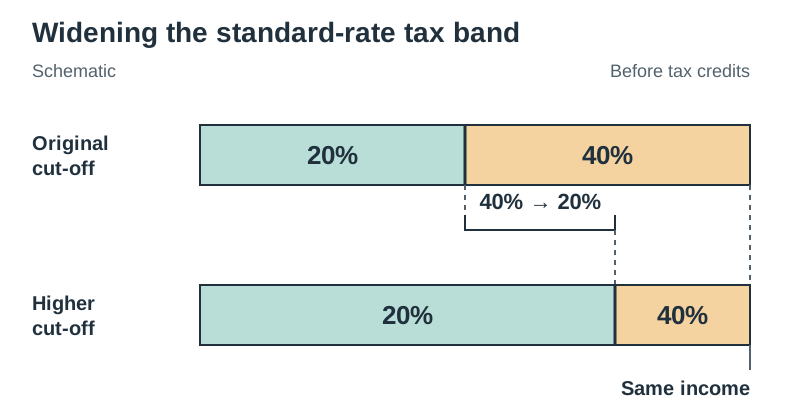
- Standard rate cut-off point: Gross income up to this ceiling is taxed at the standard rate (20%), while earnings above it are taxed at the higher rate (40%). Widening this cut-off point shields more income from top-rate tax, increasing take-home pay.
- Tax credits: Amounts deducted euro-for-euro from the gross tax calculation (such as the Personal Tax Credit and Employee/PAYE Tax Credit). Raising tax credits lowers the tax bill for every taxpayer.
- USC and PRSI: Changes to Universal Social Charge percentage rates or entry thresholds alter net pay. Pay-Related Social Insurance (PRSI) contributions establish worker eligibility for social welfare safety nets like Illness Benefit and Jobseeker's Benefit.
- National minimum wage: Adjustments recommended by the Low Pay Commission are announced alongside the Budget to protect lower-paid workers against inflation.
- Pension auto-enrolment ('My Future Fund'): Workers aged 23–60 earning over set thresholds who lack a workplace pension are automatically enrolled into a retirement savings plan. Funded by employee contributions, matching employer contributions, and a State top-up, it slightly reduces take-home pay immediately but builds long-term pension security.
Critical Media Analysis Routine
When evaluating workplace news stories in written examinations or preparing the Business Alive Investigative Study, apply this five-step framework:
- Identify the core parties: Who is involved? (e.g., employees, business owners, trade union officials, WRC, Labour Court).
- Identify the central issue: Is the dispute over wage levels, rest breaks, alleged discrimination, safety, or employment status?
- Cite the relevant legislation or body: Pinpoint the governing statute (such as the Safety, Health and Welfare at Work Act 2005) or state agency (HSA, WRC).
- Evaluate conflicting perspectives: Contrast the employer's cost/operational pressures against the employee's welfare and legal entitlements.
- Deliver a reasoned personal judgement: State an evidence-backed conclusion.
Media Demonstration
News item: 'A WRC adjudicator has ordered a logistics company to pay €14,000 in compensation to an operative dismissed via a text message after 15 months of employment, following complaints about faulty forklift brakes.'
Analysis: This dispute involves a logistics operative and business management over workplace safety and termination. The governing statutes are the Safety, Health and Welfare at Work Act 2005 (duty to provide safe equipment; prohibition of penalisation under Section 27) and the Unfair Dismissals Acts 1977–2015. While the employer may have experienced operational pressures, dismissing an employee by text message for reporting a safety defect violates natural justice and constitutes statutory penalisation. The adjudicator's compensation award was justified because the dismissal was substantively and procedurally unlawful.
Key terms
- Legislative Protection
- Legally binding rights enacted by the Oireachtas and EU directives that establish a mandatory statutory floor employers cannot drop below.
- Non-Legislative Protection
- Voluntary workplace policies, benefits, and union agreements that go beyond statutory minimums and become contractually binding once agreed.
- Statutory Sick Pay (SSP)
- A legal right under the Sick Leave Act 2022 providing eligible workers with certified illness 70% of normal daily pay, capped at €110 per day, up to a set number of statutory days per year.
- Safety Statement
- A mandatory written document prepared by an employer based on workplace risk assessments, detailing identified hazards and safety controls.
- Safety Representative
- A workplace employee democratically elected by colleagues to represent them in safety consultations with management under the 2005 Act.
- Reasonable Accommodation
- The statutory duty on employers under the Employment Equality Acts to provide appropriate adjustments for workers with disabilities, unless doing so imposes a disproportionate burden.
- Constructive Dismissal
- A termination where an employee resigns due to intolerable employer conduct, with the legal burden of proof resting on the employee to prove their resignation was justified.
- Statutory Redundancy
- A tax-free statutory lump sum of two weeks' pay per year of service plus one bonus week, capped at €600 per week, paid to eligible workers whose jobs cease to exist.
- Workplace Relations Commission (WRC)
- The independent statutory body established in 2015 to oversee workplace conciliation, workplace inspections, and the adjudication of employment rights complaints.
- Shop Steward
- A workplace employee democratically elected by union peers to handle local member representation, communicate with management, and ensure compliance with agreements.
- Official Dispute
- Industrial action approved by secret ballot, sanctioned by the trade union, and notified with at least seven days' advance notice, conferring civil legal immunity on participants.
- Gig Economy
- A segment of the labour market that relies on temporary, on-demand assignments or piece-work, usually brokered through digital platforms.
- Contract of Service
- A formal employment contract creating an employer-employee relationship with full statutory employment rights, distinct from an independent contractor's contract for services.
- Tax Credit
- A statutory allowance deducted euro-for-euro directly from calculated gross tax, reducing the final income tax bill.
Check yourself
Distinguish between legislative and non-legislative protection in the workplace, providing one example of each.
Legislative protection consists of legally binding statutory rights passed by the Oireachtas that set mandatory minimum standards employers cannot breach, such as statutory minimum wage under the National Minimum Wage Act 2000. Non-legislative protection refers to voluntary policies and benefits that exceed the law, such as an Employee Assistance Programme (EAP) or enhanced contractual sick pay.
An employee with 10 months of continuous service is dismissed for joining a trade union. Can she take a claim under the Unfair Dismissals Acts? Explain.
Yes. While the Unfair Dismissals Acts normally require 52 weeks of continuous service, this service requirement is waived where dismissal is connected to trade union membership or lawful union activity.
What is the primary role of a shop steward in a unionised business?
A shop steward is an elected workplace union representative who acts as a communication bridge between members and management, represents colleagues in grievance and disciplinary meetings, and monitors compliance with collective agreements.
A worker earning €800 per week with 5 years of service is made redundant. Calculate their statutory redundancy payment.
Formula: (Years × 2) + 1 week = (5 × 2) + 1 = 11 weeks. Weekly pay is capped at €600. Entitlement = 11 weeks × €600 = €6,600.
What is meant by reasonable accommodation under the Employment Equality Acts 1998–2015?
It is the statutory obligation on employers to provide practical adjustments and facilities to allow workers with disabilities to do their work (such as ergonomic equipment or modified hours), unless doing so causes a disproportionate financial burden.