

Genetic engineering is the artificial manipulation and deliberate alteration of an organism's genetic material to give it new traits or produce useful substances. In Leaving Certificate Biology, this topic covers the five core steps of plasmid-based recombinant DNA technology, alternative vectors and delivery methods, DNA profiling through extraction, PCR, and gel electrophoresis, the principle of chain-termination DNA sequencing, and the use of digital bioinformatics databases to track disease-causing alleles. It also addresses the real-world bioethics of genetic modification, DNA privacy, and stem cell technologies across healthcare, agriculture, and society.
Principles and Steps of Genetic Engineering
Genetic engineering allows biologists to transfer specific genes across species boundaries that could never cross through natural reproduction. This is possible because the genetic code is universal: the same nucleotide triplets (codons) code for the identical amino acids across bacteria, fungi, plants, and animals. An organism that incorporates foreign genetic material is called a genetically modified organism (GMO) or transgenic organism.
The core method you need to know in detail uses bacterial plasmids. A plasmid is a small, circular, self-replicating loop of double-stranded DNA found in bacteria, separate from the main bacterial chromosome. The engineering pathway follows five consecutive steps:
- Isolation: Donor cells containing the target gene of interest are broken open, and the gene is isolated and purified. At the same time, plasmid vectors are isolated from bacterial host cells such as Escherichia coli.
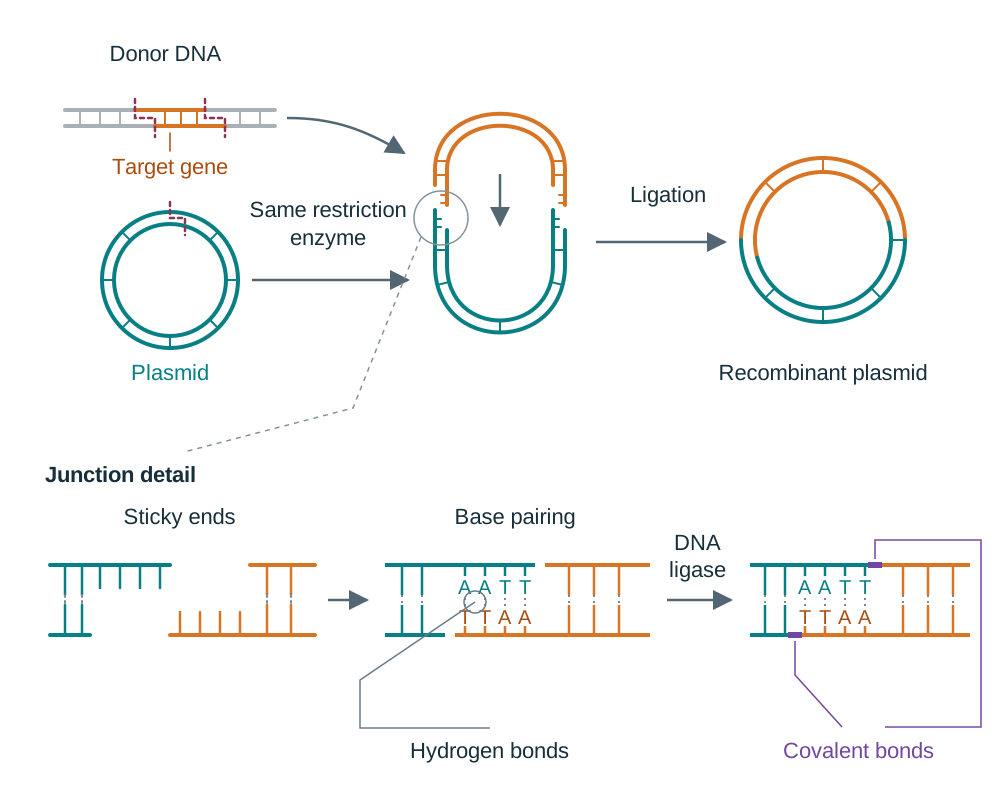
- Cutting: The donor DNA and the plasmid vector are cut using the same restriction enzyme (restriction endonuclease). A restriction enzyme acts like molecular scissors. It recognises one specific short sequence of bases (usually four to six bases long), called its recognition site, and cuts the DNA there. Using the same enzyme on both molecules ensures they are cut with matching staggered incisions, leaving short, single-stranded complementary overhangs called sticky ends.
- Ligation: The cut target gene and opened plasmid are mixed together in the presence of DNA ligase. Complementary sticky ends pair up by hydrogen bonding between matching bases. DNA ligase acts as molecular glue, reforming covalent phosphodiester bonds along the sugar-phosphate backbone to yield a sealed loop of recombinant DNA.
- Transformation: The recombinant plasmid is taken up by recipient bacterial host cells. The bacteria are treated with cold calcium chloride and then given a brief heat shock. This makes the cell wall and cell membrane temporarily permeable so that the recombinant plasmid can enter. Because uptake efficiency is low, plasmids carry selectable marker genes, such as antibiotic resistance, allowing researchers to kill non-transformed bacteria on selective agar plates.
- Expression: Inside the transformed host cells, the foreign gene is transcribed into mRNA and translated on bacterial ribosomes to synthesise a functional target protein. Transformed bacteria are cultured in large-scale industrial fermenters (bioreactors) where they duplicate the plasmid with each cell division, mass-producing therapeutic proteins.
Vectors and Delivery Methods
A vector is a carrier used to transfer foreign genetic material into a host cell. While bacterial plasmids are the most common vector, others are widely used in biology:
- Viruses and bacteriophages: Viruses have a natural ability to inject nucleic acid into host cells. Scientists remove the disease-causing genes and insert the therapeutic gene of interest. Modified viruses are the standard vectors used in human gene therapy.
- Agrobacterium tumefaciens: This soil bacterium naturally transfers a segment of its Ti plasmid* into plant genomes. Biologists use it as a vector to deliver beneficial traits into crop plants.
- Liposomes: Synthetic microscopic lipid droplets encapsulate recombinant DNA, fuse with the host cell membrane, and release the genetic payload directly into the cytoplasm.
Where no biological vector is used, foreign DNA can be introduced physically: microinjection uses an ultra-fine glass micropipette to inject DNA directly into the nucleus of a fertilised egg cell (common in creating transgenic animals); a gene gun fires microscopic heavy-metal particles coated with DNA into plant tissues; or electroporation applies a brief high-voltage electrical pulse to open temporary pores in the cell membrane.
Applications Across Medicine, Agriculture, and Industry
Recombinant DNA technology provides reliable biological alternatives across multiple fields:
Medicine and Pharmaceuticals
Transformed bacteria produce pure human insulin for patients with diabetes, eliminating the allergic reactions and supply shortages once caused by bovine or porcine pancreatic extracts. Modified bacteria also produce human growth hormone and blood clotting Factor VIII for haemophilia. In addition, transgenic farm animals, such as sheep or goats, can be engineered to secrete complex human therapeutic proteins into their milk for collection and purification.
Agriculture
Crops are genetically engineered for pest resistance and environmental tolerance. In Bt maize and Bt cotton, an inserted gene from the soil bacterium Bacillus thuringiensis produces a crystal endotoxin lethal to caterpillar pests, substantially reducing chemical insecticide spraying. Other crops carry genes conferring herbicide tolerance (enabling farmers to spray weeds without injuring the crop), drought tolerance, or enriched nutrients such as provitamin-A in Golden Rice.
Industry and Environment
Recombinant microorganisms serve as commercial factories. In the food industry, genetically engineered yeast and bacteria manufacture recombinant chymosin (rennin), replacing calf-stomach rennet to coagulate milk in commercial cheese production. Recombinant bacterial enzymes, including amylases and proteases, are standard active ingredients in biological laundry detergents. For environmental protection, modified bacteria carry out bioremediation by breaking down toxic hydrocarbons following crude oil spills, accumulating heavy metals from contaminated soil or water so they can be extracted safely, or synthesising biodegradable polyhydroxyalkanoates (bioplastics) from renewable plant sugars.
DNA Profiling: Laboratory Modelling and Separation
A DNA profile is a distinct pattern of bands generated from an individual's DNA. More than 99% of the human genome is the same in every person, so those regions are useless for telling people apart. Profiling therefore targets a small number of highly variable non-coding regions called short tandem repeats (STRs), where the number of repeat units differs greatly between individuals. Because repeat numbers vary independently across different chromosomes, the mathematical probability of two unrelated individuals sharing the identical band pattern across multiple loci is less than one in a billion. Only identical (monozygotic) twins share an identical DNA profile.
The school laboratory model for DNA profiling links three sequential stages:
Stage 1: DNA Extraction
Any tissue containing nucleated cells can supply DNA (such as kiwi fruit, onion, cheek epithelial cells, or white blood cells).
Method: extracting DNA from plant tissue (kiwi or onion)
- Chop the tissue and mash or blend it for a few seconds. This breaks down the cellulose cell walls and increases the surface area exposed to extraction reagents.
- Add a solution of washing-up liquid (detergent) and table salt (sodium chloride) in distilled water, then stir gently.
- Stand the beaker in a water bath at 60°C for 15 minutes to denature cellular enzymes, then cool in an ice bath for 5 minutes to prevent DNA degradation.
- Filter the mixture through coffee filter paper or muslin into a boiling tube to remove insoluble cell wall debris, collecting the clear liquid filtrate containing the dissolved DNA.
- Add a few drops of a protease enzyme solution (or fresh pineapple juice, which contains the enzyme bromelain) and swirl gently.
- Tilt the tube and slowly pour ice-cold ethanol down the inside wall so that it forms a distinct, clear layer floating directly on top of the filtrate. Do not shake or mix.
- White, stringy DNA precipitates at the boundary between the ethanol and the filtrate, because DNA is completely insoluble in cold alcohol. Spool the DNA strands out gently onto a clean glass rod.
Why each reagent is used
- Detergent: Dissolves the phospholipid bilayers of the cell surface membrane and nuclear envelope, releasing chromatin into solution.
- Sodium chloride: Positively charged sodium ions () neutralise the negative charges on the DNA phosphate backbone, shielding the strands so they clump together instead of repelling.
- Protease: Hydrolyses and digests the histone proteins around which eukaryotic DNA is tightly wrapped, releasing free double-stranded DNA.
- Ice-cold ethanol: DNA is soluble in water but insoluble in chilled alcohol; cold ethanol forces the DNA to precipitate out of the aqueous filtrate.
Stage 2: Polymerase Chain Reaction (PCR)
Trace evidence from a crime scene often yields only microscopic amounts of DNA. Polymerase Chain Reaction (PCR) is an automated molecular technique used to rapidly amplify tiny quantities of a specific DNA sequence into millions of copies in vitro.
The reaction mixture requires five components: template DNA, DNA primers (short single-stranded oligonucleotides complementary to the sequences flanking the target STR region), free deoxynucleotide triphosphates (dNTPs: A, T, C, G), a buffer solution, and Taq polymerase (a heat-stable DNA polymerase isolated from the thermophilic hot-spring bacterium Thermus aquaticus).
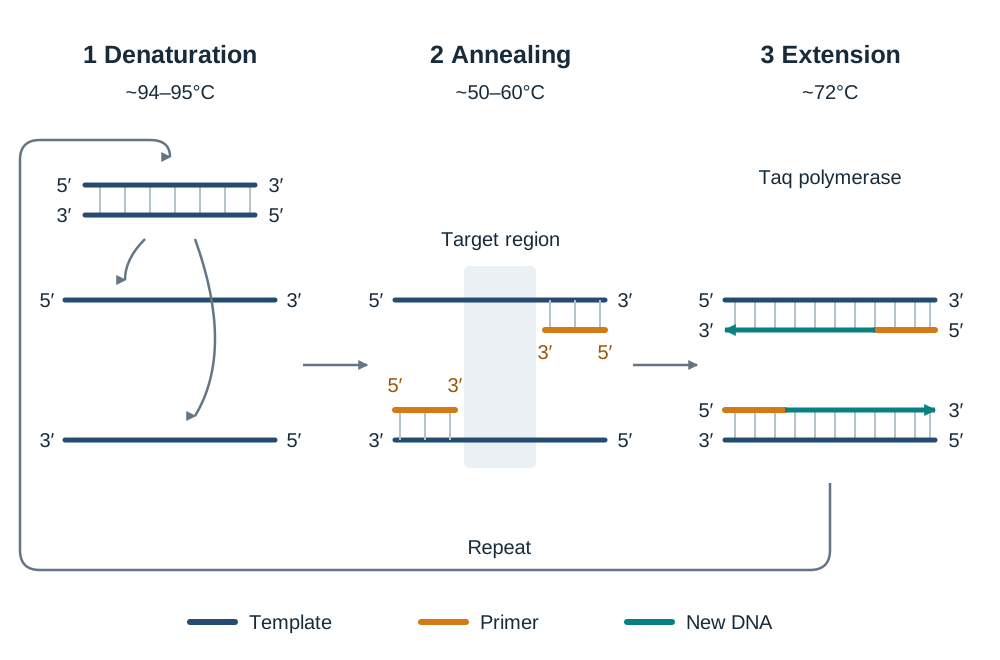
A thermal cycler repeats a three-step cycle roughly 30 times:
- Denaturation (~94–95°C): High temperature breaks the weak hydrogen bonds holding complementary base pairs together, separating double-stranded DNA into single strands.
- Annealing (~50–60°C): The mixture cools, allowing primers to bind specifically to their complementary target sequences flanking the STR.
- Extension (~72°C): Taq polymerase synthesises new complementary DNA strands by adding matching free dNTPs to the 3' ends of the primers.
Target DNA doubles every cycle (). Starting with just one double-stranded DNA molecule, 30 cycles yield over one billion copies ().
Uses of PCR
- Amplifying minute amounts of DNA from crime scenes or archaeological specimens.
- Diagnosing clinical infections by detecting pathogen nucleic acids in patient samples (such as viral RNA converted to cDNA during a SARS-CoV-2 PCR test).
- Screening individuals or early embryos for specific inherited disease alleles before sequencing.
- Generating millions of copies of a target gene to supply genetic engineering cloning experiments.
Stage 3: Gel Electrophoresis
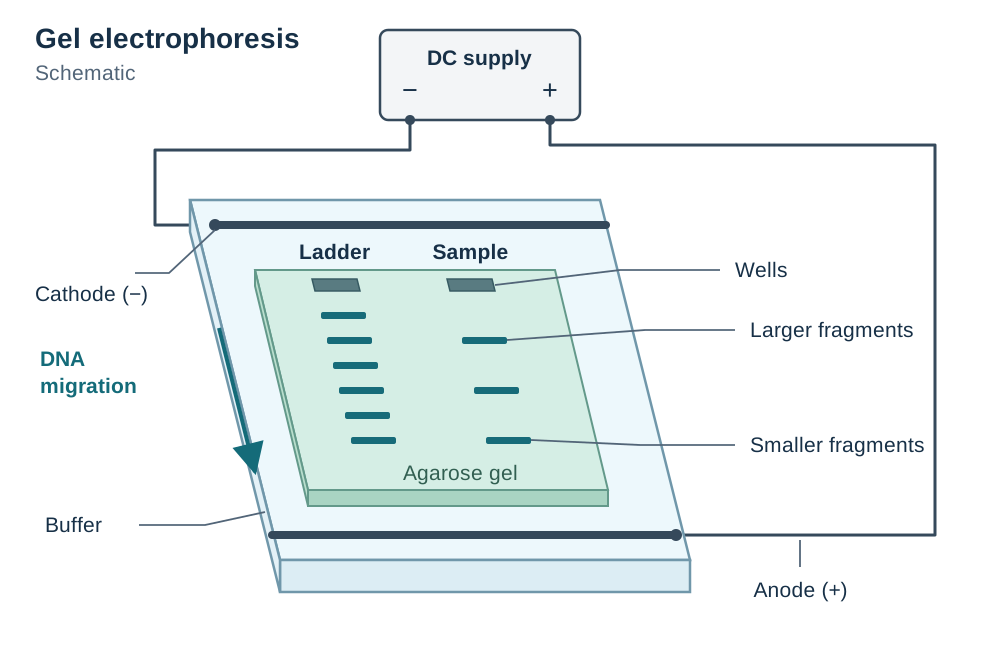
The amplified STR fragments are loaded into wells at the negative cathode end of an agarose gel. The gel sits submerged in a buffer solution, which conducts the electric current and maintains a steady pH so that the DNA keeps its negative electrical charge.
When a direct electric current runs across the gel, the fragments migrate according to two physical rules:
- Electrical charge: each nucleotide in the DNA backbone carries a negatively charged phosphate group, so a DNA fragment has an overall negative charge. It is repelled by the negative cathode and drawn towards the positive anode.
- Molecular sieving: The agarose gel forms a microscopic porous mesh. Small DNA fragments pass through the pores rapidly and travel farther down the gel, whereas larger fragments face higher friction, move slowly, and stay closer to the wells.
A DNA size ladder (a commercial mixture of DNA fragments of known base-pair lengths) is loaded into an adjacent reference lane on the same gel. It acts as a ruler, allowing the size of each unknown sample band to be calibrated by direct comparison.
Note on curriculum scope: The Leaving Certificate course sets out three stages for generating a profile: DNA extraction, PCR, and gel electrophoresis. Give those three in order. In modern STR profiling, primers sit on either side of the repeat locus, so amplified fragments already vary in length and are loaded straight onto the gel. In older RFLP methods, extracted DNA was cut with restriction enzymes before electrophoresis; that historical method is scientifically sound, but modern profiling relies on STR-PCR sizing without an extra cutting step.
Uses of DNA Profiling
- Forensic science: Matching biological trace evidence (blood, semen, saliva, skin cells, hair roots) to a suspect, eliminating innocent individuals, or identifying victims of fires and natural disasters.
- Establishing family relationships: Paternity and maternity testing, resolving disputed immigration and family-reunification cases, and tracing missing persons.
- Medical diagnosis: Identifying inherited disease alleles, screening carriers, and matching tissue antigens between donors and recipients for organ transplantation.
- Agriculture and conservation: Verifying pedigree lines in livestock and pedigree dog breeding, detecting illegal meat substitution or food fraud, and identifying endangered species products seized from illegal wildlife trade.
- Ecological research: Measuring genetic variation within wild populations and assessing evolutionary relationships between closely related species.
Interpreting Profiles and Scientific Inquiry Controls
Interpreting DNA profiles requires systematic comparative analysis of band positions:
Forensic Analysis
For forensic identification, every single band in the crime scene evidence profile must align exactly with a band in the suspect's reference lane across all tested loci. If even one band does not match, the suspect is completely excluded. However, a DNA match shows only that biological material matching that individual was found at the scene. It does not prove how or when it got there, and it does not establish criminal intent or guilt.
Parentage Testing
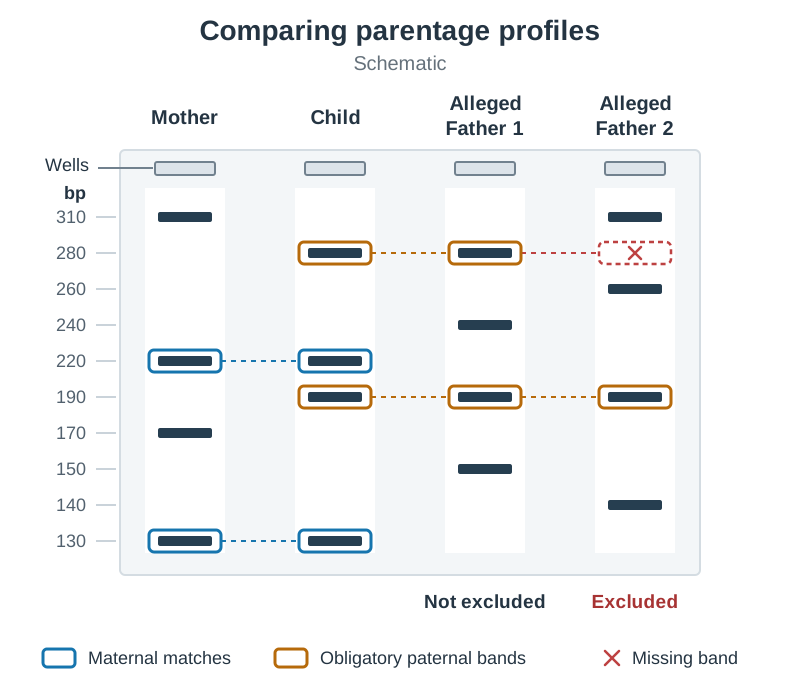
A child inherits exactly 50% of their nuclear DNA from their biological mother and 50% from their biological father. Paternity analysis follows a strict two-step deduction:
- Compare the child's profile directly against the mother's profile and cross off every band the child shares with the mother.
- The remaining bands are obligatory paternal bands; every single one of them must have come from the biological father. Any alleged father who lacks even one obligatory paternal band is excluded. An alleged father who has all of the obligatory paternal bands cannot be excluded, and the more loci that match, the more likely it is that he is the biological father.
Controls: Showing That Your Result Can Be Trusted
Valid scientific inquiries require experimental controls:
- Negative control: A PCR reaction containing all reagents, primers, and buffer, but with sterile water substituted for template DNA. It must show zero bands on the gel. If any band appears, the reagents or equipment are contaminated with foreign DNA, making the entire test invalid.
- Positive control: A known DNA sample run under identical conditions to confirm that the thermal cycler, Taq polymerase, and staining reagents functioned correctly.
Explaining Unexpected Results on a Gel
- No bands at all in one lane: The sample DNA was degraded, template concentration was too low, or a critical PCR reagent (such as primers or Taq polymerase) was omitted.
- More bands than expected in an evidence lane: The sample is contaminated or contains mixed biological material from two or more individuals.
- Bands present in the negative control lane: Reagents were contaminated with stray DNA; all results on the gel are unreliable and the experiment must be repeated.
- Smeared or curved bands: The gel ran at too high a voltage (causing overheating) or too much concentrated DNA was loaded into the well.
- A band sitting between ladder markers: Estimate the fragment size as a range between the two closest reference ladder sizes.
DNA Sequencing and Genome Databases (Higher Level)
A DNA profile tells you how long fragments are (a pattern of bands). A DNA sequence tells you the exact order of bases. Profiling identifies an individual; sequencing reads their genetic code.
DNA sequencing is the laboratory process of determining the exact linear sequence of nucleotide bases (Adenine, Thymine, Guanine, Cytosine) along a DNA molecule.
Principle of DNA Sequencing
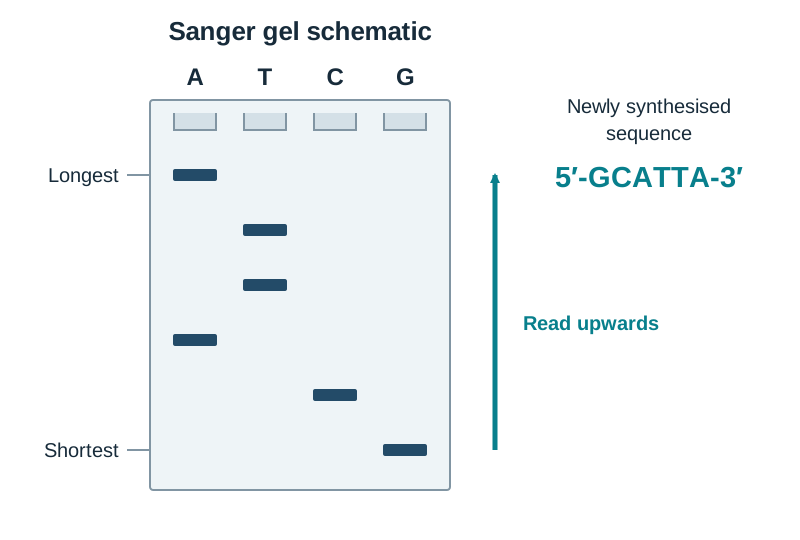
Classic Sanger sequencing works by generating a collection of DNA fragments where each fragment is precisely one nucleotide longer than the previous one, ending with an identified terminal base:
- Single-stranded template DNA is incubated with a complementary primer, DNA polymerase, standard deoxynucleotides (dATP, dTTP, dCTP, dGTP), and small amounts of modified dideoxynucleotides (ddNTPs).
- Standard dNTPs have a 3'-OH group on the deoxyribose ring, which is required to form the next phosphodiester bond with an incoming nucleotide. ddNTPs lack this 3'-OH group. Whenever DNA polymerase randomly incorporates a ddNTP into the growing chain, extension stops permanently (chain termination).
- This creates a mixture of newly synthesised fragments representing every single base position along the template strand, with each fragment ending on an identified chain-terminating ddNTP.
- Modern automated sequencing attaches a distinct fluorescent dye to each of the four ddNTP types and separates them by capillary gel electrophoresis. A laser reads the colours in order from the shortest fragment (which travels fastest) to the longest, generating the exact nucleotide sequence.
Connection to gel reading: In the original version of Sanger sequencing, four separate reaction tubes were run—one each for ddATP, ddTTP, ddCTP, and ddGTP—and loaded into four adjacent lanes of a gel. The lane containing a band revealed which terminal base caused the chain to stop. Modern machines run all four bases together in a single tube using colour-coded fluorescence, but the reading principle is identical: read from the shortest fragment to the longest.
Why Sequencing and Genome Databases Matter
- The Human Genome Project established an international reference sequence of human DNA. A patient's individual sequence can be aligned against this reference to find the exact genetic variant causing their illness.
- Personalised medicine: Knowing a patient's exact genotype helps doctors choose drugs that are clinically effective for them while avoiding treatments that would cause toxic side effects.
- Tracking disease outbreaks: Rapid whole-genome sequencing of viruses and bacteria during epidemics pinpoints transmission chains and monitors emerging mutant strains.
- Evolutionary classification: Comparing orthologous gene sequences between species reveals evolutionary divergence and refines phylogenetic classification.
Because the human genome contains approximately three billion base pairs, these comparisons require powerful digital technology. Bioinformatics combines biology, computer science, and statistics to store, organise, search, and analyse massive datasets of genetic information in public databases like GenBank (NCBI), Ensembl, and OMIM.
Searching Databases for Disease Alleles (Higher Level Requirement)
At Higher Level, you must be able to describe how genome databases are queried to link specific alleles to human genetic conditions:
| Disease | Gene & Chromosome | Specific Mutation / Allele | Molecular & Physiological Consequence |
|---|---|---|---|
| Cystic Fibrosis | CFTR (Chromosome 7) | F508 (F508del) | A 3-base deletion (CTT) removes codon 508, deleting the amino acid phenylalanine. The misfolded CFTR channel protein is degraded, blocking chloride ion transport across epithelial membranes and producing thick, sticky mucus in the lungs and pancreas. |
| Sickle Cell Anaemia | HBB (Chromosome 11) | Point mutation () | A single base substitution replaces glutamic acid with valine at position 6 of the -globin polypeptide. Under low oxygen, abnormal haemoglobin polymerises, distorting red blood cells into rigid sickles that clog capillaries. |
| Huntington's Disease | HTT (Chromosome 4) | Trinucleotide repeat expansion | An unstable expansion of the triplet repeat (typically repeats) produces an abnormally long polyglutamine tract in the huntingtin protein, leading to toxic protein aggregation and progressive brain neuron loss. |
| Hereditary Breast Cancer | BRCA1 (Chr 17) / BRCA2 (Chr 13) | Frameshift or nonsense mutations | Inactivating mutations knock out tumor-suppressor proteins required for double-stranded DNA break repair, dramatically elevating the lifetime risk of breast and ovarian cancers. |
Bioethics of Genetic Technologies
Bioethics examines whether biological procedures and technologies are morally justifiable. In Leaving Certificate Biology, questions that ask you to discuss an issue require a balanced review that examines arguments for and against before arriving at a supported conclusion.
Genetic Modification: Agriculture and Gene Editing
Advocates emphasize that GM crops increase yields, provide natural pest resistance via Bt toxins, cut back chemical spraying, and improve nutrition (as with vitamin-A-enriched Golden Rice). In human health, newer tools such as CRISPR-Cas9 can edit a chosen sequence directly inside a living cell, using a guide RNA to locate the target and the enzyme Cas9 to cut it, offering genuine cures for single-gene disorders.
Critics raise valid concerns about ecological disruption, such as the escape of herbicide-resistance genes into wild weedy relatives through cross-pollination. Others highlight multinational corporate control over patented seeds, potential animal welfare harms in transgenic livestock, and unpredictable off-target cuts during gene editing.
Gene Therapy: Somatic vs. Germline Editing
Gene therapy involves inserting a normal, working copy of a gene into cells to correct a genetic disease, usually using a modified viral vector. The ethical acceptability depends on which cells are targeted:
- Somatic gene therapy: Corrects genes only in affected body tissues (such as lung epithelial cells for cystic fibrosis or bone marrow stem cells for sickle cell disease). The genetic changes die with the patient and are never passed on to offspring. Somatic therapy is widely accepted and clinically licensed.
- Germline editing: Alters the DNA of reproductive cells (sperm, eggs) or early human embryos. Every cell in the resulting child carries the edit, and the change is permanently inherited by future generations. Germline editing is legally prohibited in Ireland and across the EU because unborn future generations cannot give informed consent, unexpected long-term health risks could emerge, and the technology could be misused to select non-medical cosmetic or cognitive traits ("designer babies").
Genetic Testing and Data Privacy
Affordable DNA sequencing gives patients early diagnosis and personalised prescriptions. However, genetic data can be misused. If commercial databases share data without strict informed consent, people risk genetic discrimination, where insurance companies or employers deny coverage or jobs based on predispositions to incurable conditions like Huntington's disease or Alzheimer's. Receiving genetic risk data can also trigger severe anxiety and raises difficult questions about whether family members have a right to know inherited risk factors.
Stem Cells and Cloning
A stem cell is an undifferentiated cell capable of dividing indefinitely by mitosis and differentiating into specialised cell types.
- Adult stem cells: Extracted from mature tissues (such as bone marrow). They are multipotent, meaning they can only differentiate into a limited range of related cell types (e.g. blood cells). Harvesting them carries no ethical controversy, and they are routinely used to treat blood cancers like leukaemia.
- Embryonic stem cells: Harvested from the inner cell mass of an early five-day-old in vitro fertilisation (IVF) embryo (blastocyst). They are pluripotent, capable of developing into almost any cell type in the human body. They offer extraordinary therapeutic potential to regenerate damaged tissues in Parkinson's disease, type 1 diabetes, or spinal cord injuries.
The core ethical conflict is that harvesting embryonic stem cells destroys the human blastocyst. Some individuals view the human embryo as possessing a full right to life from fertilisation, making any destructive research morally wrong. Others argue that surplus IVF embryos destined for destruction should be used to alleviate human suffering.
In therapeutic cloning, somatic cell nuclear transfer (SCNT) places a patient's nucleus into an enucleated egg to culture perfectly matched embryonic stem cells that will not be rejected by their immune system. Critics object because it creates and destroys human embryos, and could provide the technical pathway towards reproductive cloning (cloning an entire baby), which is universally condemned.
Key terms
- Genetic Engineering
- The artificial manipulation and deliberate alteration of an organism's genetic material to change its traits or produce useful substances.
- Plasmid
- A small, circular, self-replicating loop of double-stranded DNA found naturally in bacteria, separate from the main bacterial chromosome.
- Restriction Enzyme
- An enzyme that recognises a specific nucleotide sequence and cuts DNA at that site, often leaving complementary sticky ends.
- Sticky Ends
- Short, single-stranded overhangs of unpaired bases produced when a restriction enzyme makes a staggered cut in double-stranded DNA.
- DNA Ligase
- An enzyme that joins cut DNA fragments together by reforming covalent phosphodiester bonds along the sugar-phosphate backbone.
- Recombinant DNA
- A DNA molecule created in the laboratory by combining genetic material from two or more different biological sources.
- Vector
- A biological carrier (such as a plasmid or modified virus) used to transfer foreign genetic material into a host cell.
- Transformation
- The uptake and incorporation of foreign exogenous DNA, such as a recombinant plasmid, into a recipient host cell.
- Expression
- The process by which the genetic code of an inserted gene is transcribed into mRNA and translated to produce a functional protein.
- DNA Profile
- A unique pattern of bands produced from an individual's DNA by separating variable non-coding fragments using gel electrophoresis.
- Short Tandem Repeats (STRs)
- Short sequences of non-coding DNA (typically 2 to 6 base pairs) that are repeated consecutively, where the repeat count varies between individuals.
- Polymerase Chain Reaction (PCR)
- An in vitro molecular technique used to rapidly amplify tiny quantities of a specific DNA sequence into millions of copies through thermal cycling.
- Taq Polymerase
- A heat-stable DNA polymerase isolated from the thermophilic bacterium Thermus aquaticus that replicates DNA during PCR without denaturing.
- Gel Electrophoresis
- A laboratory method that separates charged macromolecules such as DNA fragments according to size by drawing them through a porous gel using an electric current.
- DNA Sequencing
- The laboratory process of determining the exact linear sequence of nucleotide bases (Adenine, Thymine, Guanine, Cytosine) along a DNA molecule.
- Bioinformatics
- The interdisciplinary field combining biology, computer science, and statistics to store, organise, and analyse large volumes of biological data, such as genomic sequences.
- Gene Therapy
- The medical insertion of a normal, functioning copy of a gene into cells to correct a genetic defect or treat a disorder.
- Informed Consent
- Voluntary agreement given by an individual for a medical test or procedure after being fully informed of its nature, risks, benefits, and data implications.
- Stem Cell
- An undifferentiated cell capable of dividing indefinitely by mitosis and giving rise to specialised differentiated cell types.
- Pluripotent
- The capacity of a stem cell (such as an embryonic stem cell) to differentiate into almost any specialized cell type in the body.
- Multipotent
- The capacity of a stem cell (such as an adult bone marrow stem cell) to differentiate into a limited range of closely related cell types.
Check yourself
Why is it essential to use the same restriction enzyme to cut both the foreign target gene and the plasmid vector?
Using the same restriction enzyme ensures that both the target gene and the opened plasmid have identical, complementary single-stranded sticky ends that can base-pair by hydrogen bonding.
What is the biological role of washing-up liquid (detergent) and ice-cold ethanol in a school DNA extraction practical?
Detergent dissolves the phospholipid bilayers of the cell surface and nuclear membranes to release DNA; ice-cold ethanol precipitates the DNA out of solution because DNA is insoluble in cold alcohol.
State the three temperature stages in a single cycle of the Polymerase Chain Reaction (PCR) and describe what occurs at each.
Denaturation (~94°C) breaks hydrogen bonds to separate double-stranded DNA into single strands; Annealing (~50–60°C) allows primers to bind to complementary flanking sequences; Extension (~72°C) enables Taq polymerase to synthesise new complementary DNA strands.
Why does Taq polymerase suit PCR reactions better than human DNA polymerase?
Taq polymerase is isolated from a thermophilic bacterium and is heat-stable, meaning it will not denature during the repeated high-temperature denaturation stages (~94°C).
In gel electrophoresis, what two physical factors determine how far a DNA fragment travels?
Its negative charge (attracted to the positive anode) and its molecular size (smaller fragments move faster and farther through the agarose gel pores).
A gel has a DNA ladder lane with bands at 100, 200, 300, and 400 bp. A crime scene evidence band sits just above the 200 bp marker and a suspect's band sits level with the 300 bp marker. Can the suspect be linked to the evidence?
No. The two fragments are different lengths (roughly 220 bp and 300 bp), so the bands do not align and the suspect is completely excluded by this locus.
What is the fundamental difference between a DNA profile and a DNA sequence?
A DNA profile displays a pattern of fragment lengths (band sizes) to establish identity or relationships, whereas a DNA sequence determines the exact linear order of nucleotide bases (A, T, C, G) along the strand.
Name the gene, chromosome, and specific mutation responsible for cystic fibrosis that can be identified via genome databases.
The CFTR gene on Chromosome 7 with the F508del (Delta-F508) mutation, which is a three-base deletion causing the loss of the amino acid phenylalanine.
Why are embryonic stem cells classified as pluripotent, and what is the primary ethical issue associated with their extraction?
They can differentiate into almost any specialised cell type in the body; the primary ethical objection is that extracting them destroys an early human embryo (blastocyst).
Explain the ethical difference between somatic gene therapy and germline editing.
Somatic gene therapy alters only the patient's body cells and the change cannot be passed on to their children; germline editing alters reproductive cells or embryos, permanently changing all future generations without their consent.