

Microbiomes and Ecological Nutrient Cycles
A microbiome is the complete community of microorganisms—including bacteria, archaea, fungi, and viruses—together with their genes, residing in a particular habitat.
The Human Gastrointestinal Microbiome
The human large intestine contains trillions of microorganisms, roughly matching the total number of human cells in the body. This mutualistic community supports human health in several ways:
- Digestion: Bacteria ferment complex carbohydrates and dietary fibres that human enzymes cannot break down, producing short-chain fatty acids that nourish the gut lining.
- Vitamin production: Gut bacteria produce vitamin K (essential for blood clotting) and B-group vitamins such as biotin and folate.
- Immune protection: Commensal bacteria stimulate intestinal immune cells, training the immune system to distinguish harmless antigens from dangerous invaders. They also outcompete pathogenic species for nutrients and attachment space.
- Metabolic health: A balanced gut microbiome helps regulate blood lipid levels, promotes normal insulin sensitivity, and helps regulate hormones that control appetite.
The Soil Microbiome and the Nitrogen Cycle
Soil bacteria drive the continuous recycling of nitrogen between the atmosphere, soil, and living organisms. You do not need to memorise the Latin names of these bacteria; instead, describe them clearly by their ecological role:
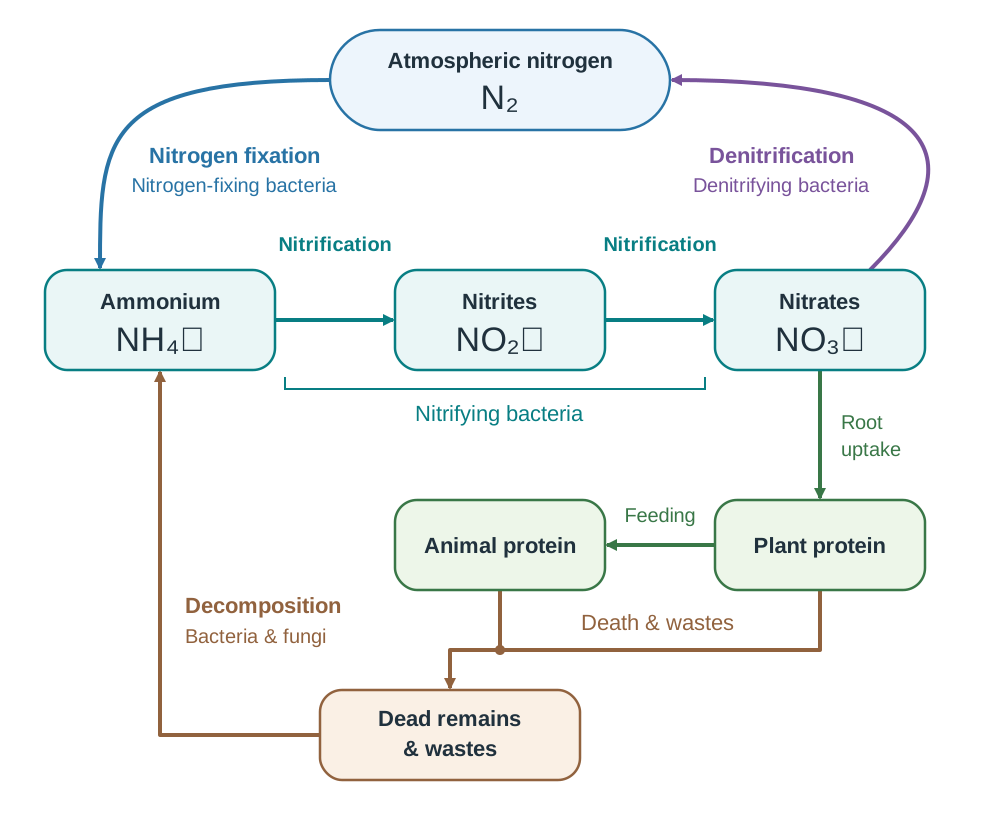
- Nitrogen fixation: Free-living soil bacteria and symbiotic bacteria in the root nodules of legumes (such as clover and peas) convert inert nitrogen gas () from the air into ammonium ().
- Decomposition: Saprophytic bacteria and fungi break down dead plant and animal remains, as well as urea and faeces, releasing ammonium back into the soil.
- Nitrification: Chemosynthetic nitrifying bacteria convert ammonium into nitrites () and then convert nitrites into nitrates (). Plants absorb these nitrates through their roots to make proteins.
- Denitrification: Anaerobic denitrifying bacteria convert soil nitrates back into atmospheric nitrogen gas (). This happens mostly in waterlogged, compacted soils where oxygen is scarce.
Sustainability and Climate Links
In the carbon cycle, saprophytic bacteria act as decomposers, releasing locked organic carbon back into the atmosphere as carbon dioxide () through cellular respiration. Climate warming also changes how soil microbiomes work. Higher soil temperatures speed up microbial respiration and decomposition, so more stored carbon is released as carbon dioxide (and more nitrous oxide may be released), which can contribute to further warming. Overusing chemical nitrogen fertilisers in agriculture runs off into waterways, triggering algal blooms and eutrophication. In wet soils, excess fertiliser feeds denitrifying bacteria, which produce nitrous oxide ()—a potent greenhouse gas that accelerates global climate change.