

This topic covers how farmers manage farm animals across their lifecycles, how growth and feeding efficiency are measured using Daily Liveweight Gain (DLG) and Feed Conversion Ratio (FCR), and how to work safely around animals, machinery, and slurry. It also explains the practical steps needed to protect water quality, manage animal disease, meet welfare and environmental standards, and understand how produce quality drives farm income.
Livestock Lifecycle Stages and Nutritional Management
Managing livestock successfully means matching feed to the animal's changing needs as it grows, reproduces, and produces milk or meat.
Cattle Lifecycle Stages
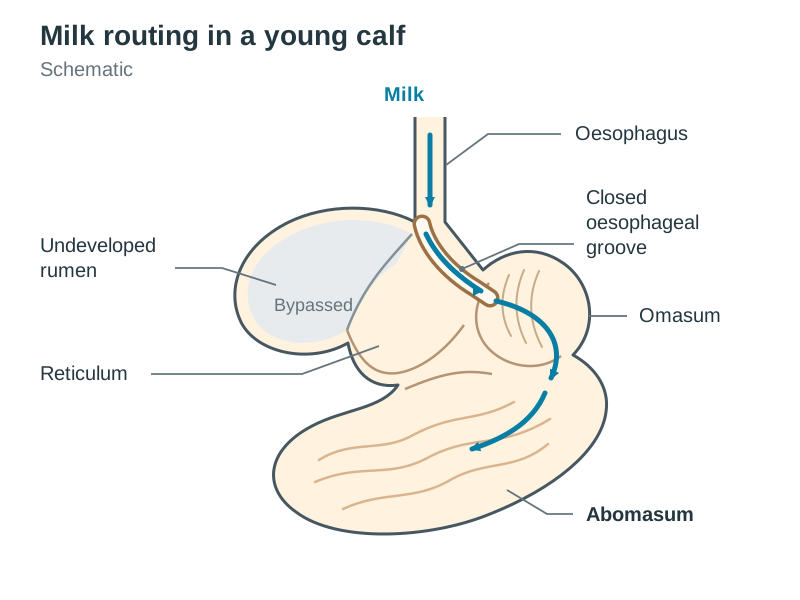
- Calf stage (0–8 weeks): Calves are born without antibodies because the cow's placenta prevents immunoglobulins passing to the calf in the womb. The calf must get colostrum (first milk) quickly to absorb antibodies directly across the gut wall into the blood. This gives the calf passive immunity. Gut absorption falls sharply after birth and is almost completely gone by 24 hours. Follow the 1-2-3 rule: use colostrum from the 1st milking, feed it within 2 hours of birth, and give at least 3 litres. Newborn calves are functionally monogastric: the oesophageal groove closes when the calf drinks, channelling milk directly into the abomasum and bypassing the undeveloped rumen. To build rumen microbes and grow the rumen wall, offer clean water, straw, and coarse calf starter concentrates from the first week.
- Weanling stage (2–12 months): Once off milk, calves rely on the rumen to ferment grass and forage into volatile fatty acids. Feed a 14–16% crude protein diet with leafy grass or top-quality silage to support bone and muscle growth.
- Replacement heifers (12–24 months): Dairy replacement heifers must grow steadily to reach about 60% of their mature body weight by 15 months, so they can be mated to calve down at 24 months. Do not overfeed heifers before puberty (around 3 to 9 months of age), as this causes fat to build up in the developing udder, reducing milk-producing tissue and lowering later milk yields.
- Lactating cow: In early lactation, milk output rises faster than feed intake, putting the cow into a negative energy balance. She milks off her own body fat to cover the gap. If underfed, she may develop ketosis.
- Dry cow (60-day dry period): This rest period lets udder tissue regenerate and restores Body Condition Score (BCS) before calving. Calving target BCS is 3.0 to 3.25 for dairy cows and 2.5 to 3.0 for sucklers. Feed dry-cow minerals: milk fever is caused by low blood calcium (hypocalcaemia) at calving. Supplying magnesium in the dry cow diet and avoiding high-calcium, high-potassium feeds helps the cow mobilise calcium from her bones. Low magnesium on its own causes grass tetany.
Sheep and Pig Nutrition
- Ewes in late pregnancy: Roughly 70% of foetal lamb growth takes place during the last 6 to 8 weeks of pregnancy. Farmers scan ewes and feed extra concentrates based on litter size to prevent twin-lamb disease (pregnancy toxaemia) in twin- and triplet-bearing ewes.
- Pig diets change with age: Young weaned pigs build lean muscle quickly and require rations with 16–18% crude protein (usually from soya bean meal). As pigs grow towards finishing, their protein requirement drops to about 14%. Extra protein is expensive, wasted, and excreted as nitrogen in slurry. Cereals (barley and wheat) provide energy. Pigs are monogastric and lack rumen microbes to digest cellulose, which is why they cannot digest grass.
Evaluating Animal Performance: DLG and Feed Conversion Ratio
Farmers measure animal growth and feed efficiency to check whether a feeding regime or enterprise is paying off.
Daily Liveweight Gain (DLG)
Daily Liveweight Gain (DLG) is the average liveweight an animal puts on each day over a given period:
If an exam question asks for DLG from birth to slaughter and provides only the final weight and age in days, divide the slaughter weight by the age in days (for example, ). This calculation ignores birth weight, but it is the method expected when a question gives only final liveweight and age (e.g. 2025 Q16).
Food / Feed Conversion Ratio (FCR)
Feed Conversion Ratio (FCR) is the amount of feed (in kg) needed to produce 1 kg of liveweight gain:
A lower FCR means the animal is more efficient, as it requires less feed to put on each kilogram of weight.
| Animal and Diet | Target DLG (kg/day) | Typical FCR (kg feed : kg gain) |
|---|---|---|
| Weanling winter store steer (silage + meal) | 0.50 – 0.60 | 10.0 – 12.0 (dry matter) |
| Intensive beef finishing steer (high meal) | 1.20 – 1.50 | 7.0 – 8.5 (dry matter) |
| Finishing pig (concentrate meal) | 0.85 – 1.00 | 2.4 – 2.8 (as-fed meal)* |
(Slow-growing store animals have a higher, poorer FCR because a greater proportion of their daily feed intake is used for body maintenance rather than liveweight gain.)
*Pigs have a lower FCR than cattle because they are fed a dry, concentrated, easily digested meal and lose no energy to enteric methane gas. However, cattle and sheep convert grass and silage—forage that humans and pigs cannot eat—into high-quality milk and meat. That grass-converting ability is Ireland's core farming advantage.
Animal Health, Mastitis, and Disease Control
Preventing and controlling disease protects animal welfare, farm income, and food safety.
Mastitis in Dairy Cows
Mastitis is inflammation of the udder, caused by bacteria entering through the teat canal.
- Clinical mastitis: Visible symptoms include a hot, swollen, hard quarter, clots or flakes in the milk, reduced milk yield, and a cow showing signs of pain or fever.
- Subclinical mastitis: No visible clots in the milk, but the cow has a high Somatic Cell Count (SCC) and lower milk yield.
- Treatment: Milk out the infected quarter fully, clean and disinfect the teat end, infuse an intramammary antibiotic tube, mark the cow clearly, and dump her milk for the full withdrawal period.
- Prevention: Dip or spray all teats after every milking; keep cubicles clean and limed; service the milking machine regularly; milk infected cows last; use dry-cow therapy or teat sealants at drying off; cull persistent repeat cases.
Sheep Parasite Control and Footrot
Always pair the control method with the named parasite in exam answers:
- Stomach and intestinal worms: Dose with an anthelmintic; use rotational grazing or clean aftergrass to break the lifecycle; use faecal egg counts to dose only when needed, which slows anthelmintic resistance.
- Liver fluke: Drain or fence off wet, muddy areas to eliminate the mud snail (the intermediate host); dose with a flukicide.
- Blowfly (maggots / flystrike): Shearing in early summer; dagging (shearing soiled wool from around the tail); tail docking; applying pour-on chemical treatments or insect growth regulators.
- Sheep scab and lice: Plunge dipping in an approved dip; injectable treatments.
- Footrot: Caused by bacteria, leading to severe lameness, red moist skin between the claws, a foul smell, and horn separating from the hoof. Treat by isolating the sheep, using antibiotic sprays or injections, running the flock through a zinc sulphate or copper sulphate footbath, and vaccinating. Chronically lame sheep eat less, lose condition, and should be culled.
Notifiable Diseases
A notifiable disease is an infectious disease that a farmer or vet is legally required to report to the Department of Agriculture, Food and the Marine (DAFM) immediately upon suspicion. Examples include bovine tuberculosis (TB), brucellosis, foot-and-mouth disease, BSE, and avian influenza.
These diseases are controlled by law because they spread rapidly across farms, some are zoonoses, and an uncontrolled outbreak can shut down Ireland's international export markets. Compliance requires annual TB skin testing of the herd, immediately isolating reactors until DAFM collects them, placing movement restrictions on the herd until it tests clear, maintaining full tagging records on the AIM database, and running strict farm biosecurity.
Animal Husbandry, Welfare, and Fertility Targets
The Animal Health and Welfare Act (2013) places a legal duty of care on farmers to ensure animals are looked after properly. Animal welfare is evaluated using the Five Freedoms:
- Freedom from hunger and thirst (fresh water and a balanced diet).
- Freedom from discomfort (shelter, dry lying areas, and good ventilation).
- Freedom from pain, injury, and disease (prevention, rapid treatment, and handling units).
- Freedom to express normal behaviour (sufficient space, social contact with other stock).
- Freedom from fear and distress (calm handling, no rough treatment).
Sheep Breeding-Season Management
- Body Condition Score: Ewes should be at BCS 3.0–3.5 at mating.
- Flushing: Putting ewes on a higher plane of nutrition (fresh leafy grass or meal) for 3 weeks before and during mating. This increases ovulation rate, leading to more twin births.
- Health checks: Cull broken-mouthed, infertile, or chronically lame ewes; check rams 6–8 weeks before breeding (feet, teeth, testicles).
- Raddling: Fit a raddle harness with coloured crayon to the ram (ratio of roughly 1 ram per 40 ewes). As the ram mounts, he marks the ewe's rump. Change the raddle colour every 16–17 days (the length of the ewe's oestrous cycle). Ewes marked with the first colour and then re-marked with the new colour have returned to heat, so they did not conceive at the first mating. Unmarked ewes have not been mated. The raddle dates also let you predict lambing.
Suckler Herd Fertility Targets (KPIs)
- Calving interval: The time in days between two calvings of the same cow. Target is 365 days (one calf per cow per year).
- 6-week calving rate: Target is 80% of the herd calved within the first 6 weeks of the calving season.
- Calves per cow per year: Target is 0.95.
To hit these targets, keep cows at BCS 2.5–3.0 at breeding, feed replacement heifers to reach target weights, use a fertility-tested bull or heat-detection tools (tail paint, scratch cards, activity collars), cull infertile cows, and feed colostrum to every calf within 2 hours to keep calf mortality low.
Housing, Farmyard Layout, and Farm Safety
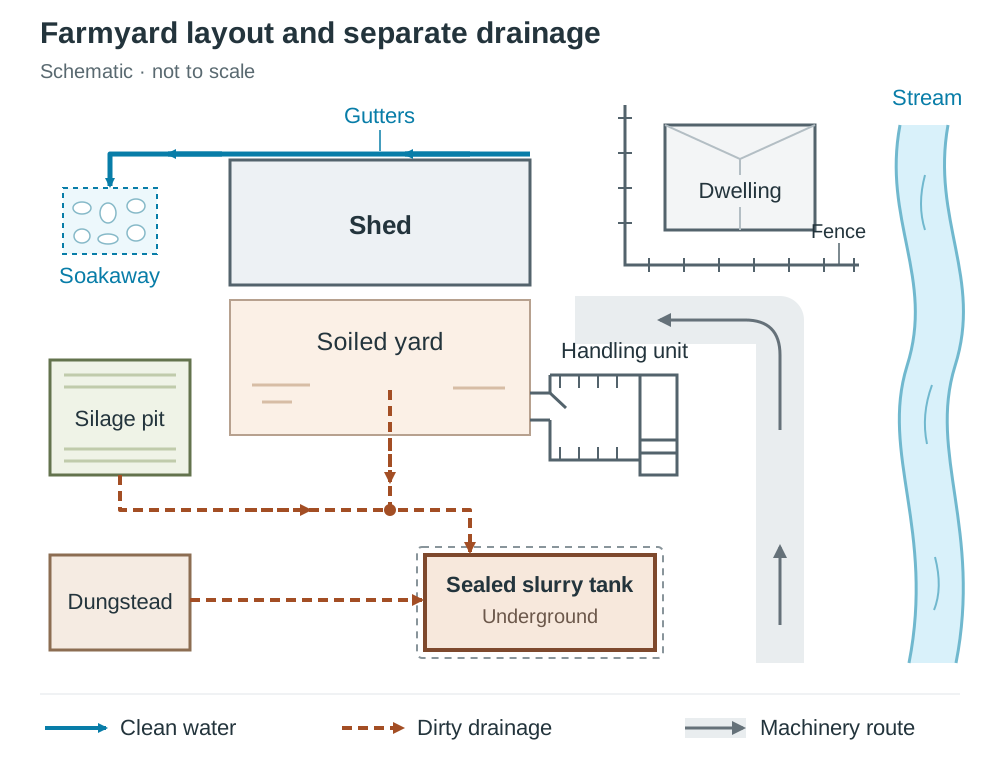
A farmyard sketch in an exam must balance animal handling, operator safety, and environmental protection.
Farmyard Layout Essentials
- Clean and dirty water separation: Roof gutters and clean yard areas must channel clean rainwater directly into soakaways or streams. Soiled yard water and effluent from the dungstead or silage pit must drain into sealed underground slurry tanks. Mixing clean roof water into slurry tanks wastes valuable tank storage and increases spreading costs.
- Handling units: Races and crushes should feature solid curved walls, non-slip concrete floors, anti-backing bars, and a sturdy head-gate. Cattle naturally circle and move toward light; curved walls keep them moving forward without seeing handlers standing ahead. A separate calving gate allows one person to safely assist a calving cow or perform a caesarean section without danger.
- Yard layout best practice: Locate the silage pit and slurry tanks away from streams; keep the farm dwelling separated from working machinery routes; provide good yard lighting; store veterinary medicines and chemicals in a locked shed.
Farm Safety and Hazard Controls
- Machinery hazards: Tractors and machinery cause the highest number of farm deaths. Always apply the 'Safe Stop' procedure: handbrake on, controls in neutral, engine stopped, and key removed before leaving the cab. Ensure PTO shafts are covered by a fully intact, chained PTO shield.
- Livestock hazards: Freshly calved cows and breeding bulls are dangerous. Use a bull pen with an exterior service passage, fit a nose ring to the bull, and never turn your back on a cow with a newborn calf.
- Biological hazards (Zoonoses): A zoonosis is an infection passed from animals to humans.
- Leptospirosis: Spread through infected cattle urine and calving fluids; causes severe flu-like illness and meningitis in humans. Prevent by herd vaccination, wearing gloves and eye protection when assisting calvings or milking.
- Ringworm: Fungal skin infection transmitted by touching infected cattle or timber gates; causes itchy circular lesions.
- Orf: Viral skin infection from sheep; causes painful blisters and scabs on hands. Prevent by wearing gloves and vaccinating the flock.
- Salmonella: Bacteria spread through manure; causes severe gastroenteritis.
Slurry Gas Dynamics and Safety Protocol
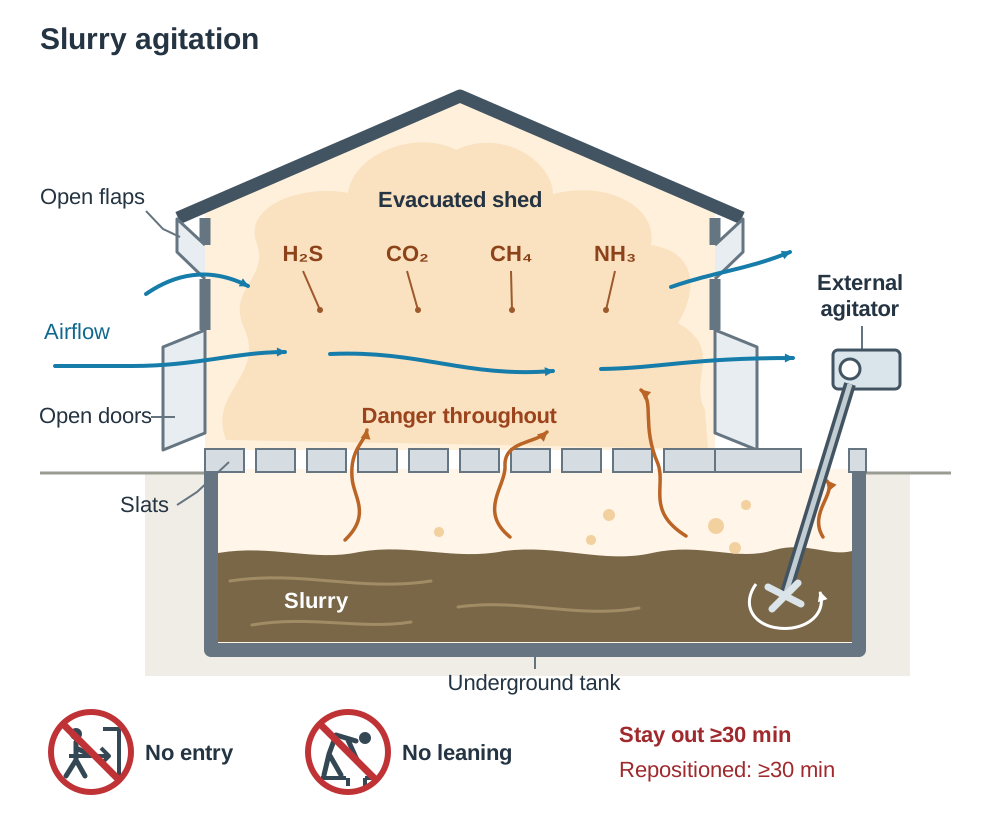
Slurry stored anaerobically in tanks produces four gases:
- Hydrogen sulphide (): Heavier than air, highly toxic, flammable. At low levels it smells like rotten eggs, but at higher concentrations it rapidly deadens the human sense of smell. One or two breaths can cause collapse, respiratory failure, and death.
- Carbon dioxide (): Heavier than air, colourless, odourless; displaces oxygen and causes suffocation.
- Methane (): Lighter than air, colourless, odourless; highly explosive when mixed with air at 5–15%.
- Ammonia (): Lighter than air, sharp stinging smell; irritates eyes and lungs.
Agitation Safety Protocol: Gas release peaks in the first 30 minutes of agitation. Follow these rules:
- Choose a windy day so gases blow away quickly.
- Evacuate all people and livestock from the building.
- Open all shed doors and ventilation flaps.
- Connect the agitator externally, start it, and leave the building immediately for at least 30 minutes.
- If the pump is moved or the jet direction changed, leave the building again for at least 30 minutes.
- Never enter or lean over a slurry tank, never work alone, and use a handheld gas monitor.
Slurry Management, Water Quality, and Climate Impacts
Animal manure is a valuable organic fertiliser, but improper storage or spreading damages waterways, soil, and the air.
Slurry versus Farmyard Manure (FYM)
| Heading | Slurry | Farmyard Manure (FYM) |
|---|---|---|
| Nutrient value | Liquid; higher available nitrogen; fast-acting | Solid; rich in organic matter; slow-release nutrients; builds soil structure |
| Storage | Underground slatted tanks or slurry lagoons | Solid dungstead or concrete manure slab with effluent collection tank |
| Spreading method | Tanker fitted with trailing shoe, dribble bar, or splash plate | Muckspreader |
| Disadvantages | Strong odours; releases toxic gases; risk of spreading disease to pasture | Slower return to grazing; can spread weed seeds; bulky to transport and spread |
Protecting Water Quality: Eutrophication and Buffer Zones
Under the Nitrates Regulations (Good Agricultural Practice), farmers must have 16 to 22 weeks of winter slurry storage (depending on the county) to hold waste during the winter closed period, when land spreading is prohibited by law.
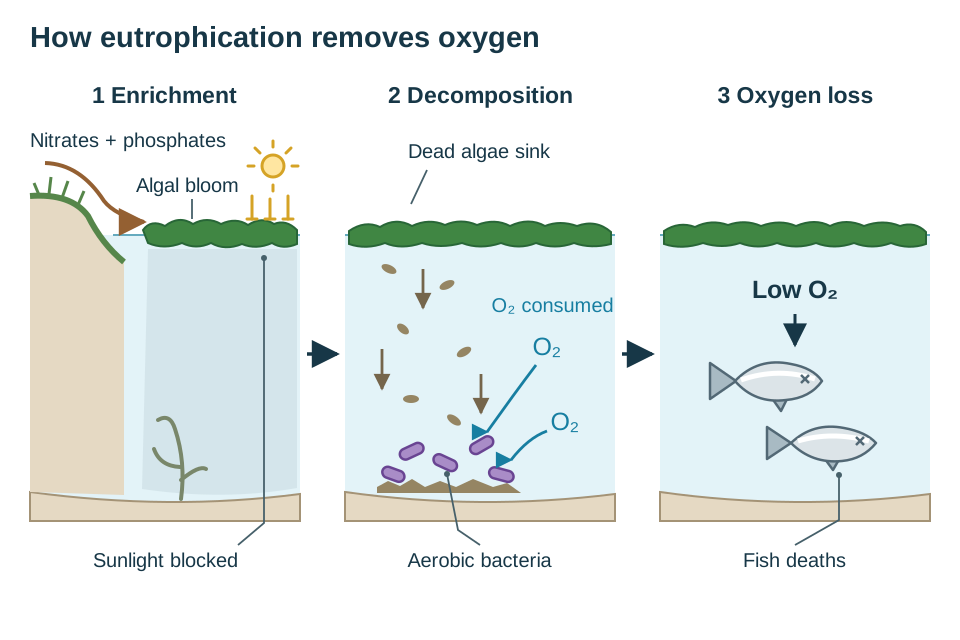
Spreading slurry on wet, frozen, or steeply sloping ground causes runoff into rivers and lakes. Phosphate and nitrate enrichment causes eutrophication:
- High nutrient levels trigger a rapid algal bloom.
- Algae cover the surface, blocking sunlight from underwater plants.
- The algae die and sink to the bottom.
- Aerobic decomposers (bacteria) multiply and use up the dissolved oxygen as they break down the dead algae.
- Dissolved oxygen levels collapse, suffocating fish and other aquatic life.
To prevent runoff, statutory buffer zones must be observed: chemical fertiliser must not be spread within 2 m of a watercourse, while organic slurry and FYM must not be spread within at least 5 m (with wider buffer zones near lakes and drinking water sources).
Low-Emission Slurry Spreading (LESS)
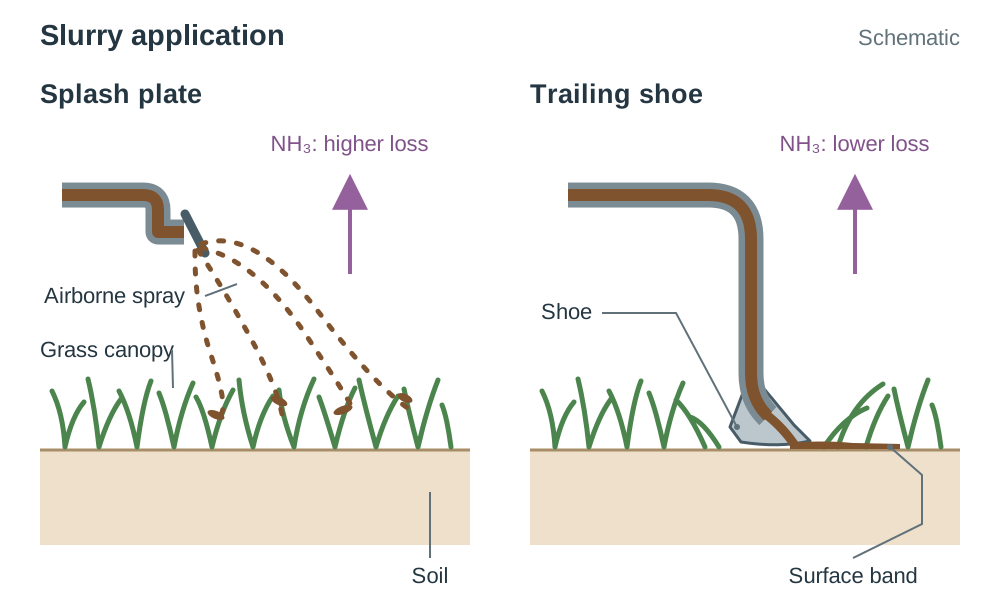
Traditional splash plates throw slurry into the air, losing up to 80% of available ammonium-nitrogen as ammonia () gas. Low-Emission Slurry Spreading (LESS) techniques, such as the trailing shoe and dribble bar, apply slurry in narrow bands directly below the grass canopy onto the soil surface. This cuts ammonia loss by 30% to 60%, keeps nitrogen in the soil for plant growth, reduces pasture soiling, and allows stock back onto pasture sooner.
Climate Mitigation and Biodiversity
- Enteric methane (): Produced by microbes in the cow's rumen during grass fermentation and belched out. Reduced by feeding highly digestible leafy grass, using clover and multi-species swards, and breeding more efficient animals with high Economic Breeding Index (EBI) values.
- Nitrous oxide (): Potent greenhouse gas released from wet, compacted soils. Reduced by using protected urea instead of CAN, spreading slurry in spring when grass is growing actively, and aerating compacted ground.
- Biodiversity: Retaining native hedgerows, establishing field margins, maintaining buffer zones, and sowing multi-species swards provide habitats for wildlife and pollinators while intercepting overland nutrient runoff.
Farm Economics, Milk Quality, and Market Standards
Farmers must manage costs, animal performance, and product quality to maintain profit margins.
Farm Economics: Gross Margin, Carcass Value, and Stocking Rate
- Gross margin measures the output of an enterprise minus its variable costs:
Variable costs include meal, chemical fertiliser, veterinary medicine, seed, and contractor charges. Fixed costs (machinery depreciation, building maintenance) are not deducted.
- Comparing Production Systems (Beef Enterprise):
- Suckler-to-weanling: Calves are sold in autumn at 8–9 months old. This system requires less winter shed space, lower silage reserves, and smaller slurry storage because only cows are housed or outwintered. Variable costs (meal, vet) and capital tied up in stock are lower, giving quicker annual cash flow, but total output value per cow is lower.
- Suckler-to-beef: Animals are kept until slaughter at 20–28 months of age. This system demands substantial winter housing, more silage, extra slurry tank capacity, and higher variable costs for concentrate feed and veterinary care across two winters. Cash flow is delayed, but output per head and overall gross margin potential are higher if finishing performance is strong.
- The choice of system directly alters the farm's gross margin by changing both the value of output per hectare and the variable input costs required to finish stock.
- Kill-out percentage: The percentage of the live animal that ends up as saleable carcass weight:
Typical kill-out percentages are 52–56% for beef steers, 56–60% for continental bulls, and 46–50% for lambs. Carcasses are graded on conformation (shape: E, U, R, O, P, with E being best) and fat cover (1 to 5, with 3 to 4 being ideal). Factory base prices are adjusted based on the grid grade plus quality assurance bonuses.
- Livestock Unit (LU) and Stocking Rate: A Livestock Unit is a standardised unit of feed demand equal to the annual feed requirement of a 550 kg mature cow (roughly 12 tonnes of dry matter per year). A dairy cow is 1.0 LU, a beef store animal is 0.6–0.8 LU, and a mature ewe is 0.15–0.20 LU. The stocking rate is calculated as total LU divided by the farm area in hectares. Under the Nitrates Directive, organic nitrogen from grazing livestock cannot exceed 170 kg N/ha per year unless the farm holds a formal nitrates derogation.
Milk Quality and the A + B − C Pricing System
Processors pay for milk based on solids rather than liquid volume, using the formula:
Where is the payment per kg of protein, is the payment per kg of butterfat, and is the processing and volume deduction per litre.
- Milk tests:
- Hygiene tests: Total Bacterial Count (TBC) measures bacteria per millilitre; low counts earn bonuses, while high counts indicate poor milking hygiene or failing refrigeration. Somatic Cell Count (SCC) measures white blood cells per millilitre. A high SCC (for an individual cow, above about 200,000 cells/ml) indicates subclinical mastitis. Processors reward low SCC and penalise high SCC, and milk above 400,000 cells/ml does not meet the standard for sale. An antibiotic residue test checks for medicine traces.
- Composition tests: Butterfat %, protein %, and lactose %.
Irish Grass-Fed Produce, Traceability, and Innovation
- Grass-fed advantages: Beef and dairy from grass-fed stock contain higher levels of healthy omega-3 fatty acids, conjugated linoleic acid (CLA), and beta-carotene, giving Irish butter its characteristic yellow colour. Bord Bia's Grass Fed Standard and Origin Green scheme verify these claims to international buyers.
- Market trends and consumer requirements:
- Export markets: The vast majority of Irish dairy and beef is exported, meaning compliance with stringent international buyer standards on traceability, carbon footprint, and animal welfare directly determines market access.
- Value-added products: Processing raw milk and meat into specialised products such as cheese and branded premium cuts captures higher margins than selling bulk commodities.
- Niche and artisan markets: Small-scale premium sectors, such as farmhouse cheese and certified organic meat, command higher price premiums.
- Consumer demand: Rising consumer demand for sustainable, high-welfare, and traceable food drives participation in quality assurance schemes.
- Food traceability: Dairy calves must be double ear-tagged within 20 days of birth (suckler calves within 27 days) and registered on the AIM database within 7 days. Farmers must record all medicine batch numbers, dates, and observed withdrawal periods in a herd register to ensure zero pharmaceutical residues enter the food chain.
- Innovations in sustainable intensification: Producing food efficiently without damaging the environment requires modern technologies: genomic selection and sexed semen in cattle, electronic heat-detection collars, CT scanning of terminal-sire rams to evaluate muscle and fat depth without slaughtering the animal, and Low-Emission Slurry Spreading (LESS).
Milk Quality Over Time and Milk Solids
Investigating the quality of a milk sample over time is a specified (starred) practical activity. In contrast, comparing the percentage of water and solids in morning and evening milk is an outcome based on secondary data, where exam questions typically supply sample masses for calculation.
Investigation: Milk Quality Over Time (pH Method)
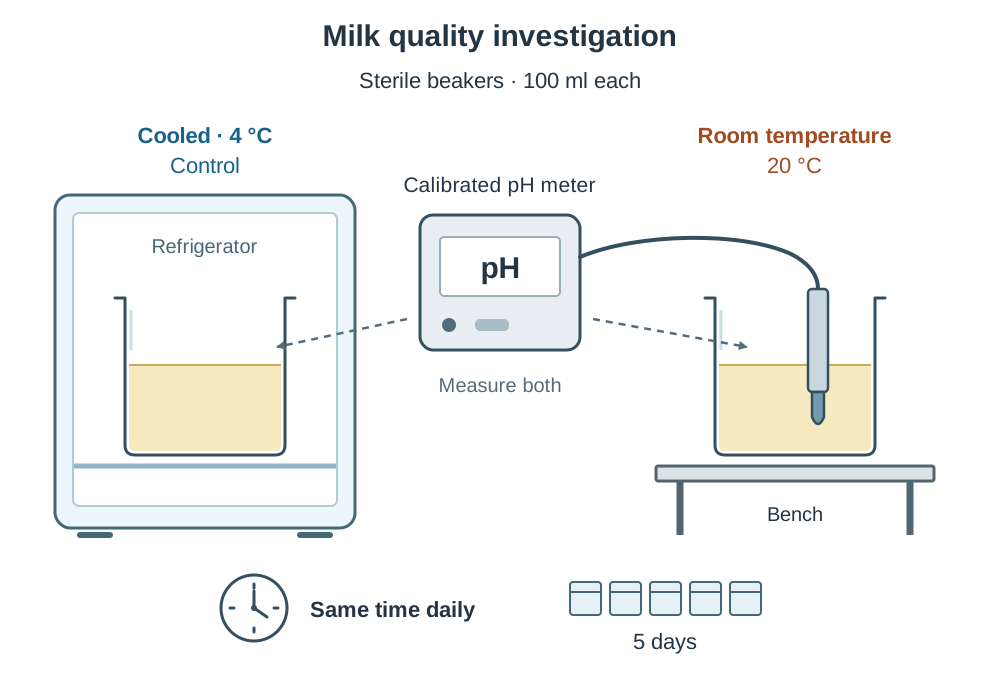
- Aim: To show that milk quality deteriorates over time as bacteria multiply, and that uncooled milk spoils faster.
- Method:
- Pour equal volumes (100 ml) of fresh raw or pasteurised milk into two clean, sterile beakers.
- Label one beaker 'Cooled' and store it in a refrigerator at 4 °C. This acts as the control.
- Label the other beaker 'Room Temperature' and leave it on an open laboratory bench at 20 °C.
- Measure and record the pH of both beakers using a calibrated pH meter at the same time each day for 5 days.
- Result: The pH of the room-temperature milk drops rapidly from 6.7 down to below 5.0, turning sour and curdling. The refrigerated milk maintains its pH for significantly longer.
- Conclusion: Bacteria in milk ferment lactose sugar into lactic acid, dropping the pH. Storing milk at 4 °C inhibits bacterial growth.
- Farm link: This is why milk is cooled quickly in the bulk tank to about 4 °C and collected regularly. Poor cooling lets bacteria multiply, raising the Total Bacterial Count (TBC) and leading to price penalties.
Comparing Water and Solids in A.M. and P.M. Milk
Milk composition is calculated using the formulas:
Evening milk (p.m.) almost always contains a higher percentage of solids (fat and protein) than morning milk (a.m.). The interval between evening and morning milking is typically longer (for example, 14 hours overnight vs 10 hours during the day). A longer milking interval produces a larger volume of milk with a diluted fat content, whereas a shorter interval produces a smaller volume with concentrated solids.
Key terms
- Colostrum
- The nutrient- and antibody-rich first milk secreted by a female mammal after giving birth, providing passive immunity to the newborn.
- Passive Immunity
- Temporary disease protection gained when a newborn absorbs antibodies directly from colostrum across the gut wall without making them itself.
- Oesophageal Groove
- A muscular fold in young calves that channels swallowed milk directly from the oesophagus into the abomasum, bypassing the undeveloped rumen.
- Body Condition Score (BCS)
- A visual and tactile assessment of an animal's body fat reserves, scored on a scale from 1 (very thin) to 5 (very fat).
- Daily Liveweight Gain (DLG)
- The average weight gained by an animal per day over a given period, expressed in kilograms per day (kg/day).
- Feed Conversion Ratio (FCR)
- The amount of feed (in kilograms) required to produce one kilogram of liveweight gain, where a lower number indicates higher efficiency.
- Withdrawal Period
- The statutory minimum time that must pass between the last administration of a veterinary medicine and the slaughter of the animal or the sale of its milk for human consumption.
- Mastitis
- An infectious inflammation of the mammary gland (udder), typically caused by bacterial infection through the teat canal.
- Somatic Cell Count (SCC)
- The number of white blood cells per millilitre of milk, used as a primary indicator of udder health and subclinical mastitis.
- Total Bacterial Count (TBC)
- The number of living bacteria per millilitre of milk, reflecting milking plant cleanliness, hygiene, and cooling efficiency in the bulk tank.
- Notifiable Disease
- An infectious disease that farmers and veterinarians are legally bound to report to the Department of Agriculture, Food and the Marine upon suspicion.
- Zoonosis
- An infectious disease that can be naturally transmitted from animals to humans.
- Hydrogen Sulphide (H₂S)
- A highly toxic, heavier-than-air, flammable gas produced during anaerobic decomposition of slurry that paralyses the sense of smell and causes rapid death.
- Closed Period
- The winter interval set by the Nitrates Regulations during which spreading slurry, farmyard manure, and chemical fertilisers on agricultural land is legally banned.
- Eutrophication
- The nutrient enrichment of water by nitrates and phosphates, causing algal blooms that deplete dissolved oxygen upon decomposing, suffocating aquatic life.
- Low-Emission Slurry Spreading (LESS)
- Equipment such as trailing shoe and dribble bar applicators that place liquid slurry directly on the soil surface under the grass canopy to cut ammonia emissions.
- Gross Margin
- The financial output of a farm enterprise minus its variable costs (such as feed, fertiliser, veterinary expenses, and contractor charges).
- Livestock Unit (LU)
- A standard unit of livestock feed requirement equivalent to the annual intake of a mature 550 kg dairy cow (roughly 12 tonnes of dry matter per year).
Check yourself
A lamb gained 18 kg over 120 days while consuming 72 kg of concentrate ration. Calculate the lamb's DLG and FCR.
DLG = 18 kg ÷ 120 days = 0.15 kg/day. FCR = 72 kg feed ÷ 18 kg gain = 4.0 kg feed per kg gain.
Why must a newborn calf consume colostrum within 2 hours of birth?
Calves are born without antibodies, and the intestinal wall can only absorb large intact immunoglobulin molecules for a short time. Absorption falls rapidly from birth and is almost completely gone by 24 hours.
State the legal duty of a livestock farmer when a notifiable disease like bovine TB is suspected.
The farmer must notify the Department of Agriculture, Food and the Marine (DAFM) immediately, isolate the animal, and observe movement restrictions on the herd until testing is completed.
Why is hydrogen sulphide gas the leading cause of fatal accidents during slurry agitation?
It is heavier than air, highly toxic, and rapidly deadens the sense of smell at dangerous concentrations, causing sudden collapse and death within one or two breaths.
Why does Low-Emission Slurry Spreading (LESS) save the farmer money compared to splash-plate spreading?
It cuts ammonia volatilisation by 30–60%, retaining more available nitrogen in the soil for grass growth, which reduces the amount of expensive chemical nitrogen fertiliser needed.
Explain how changing the raddle colour every 16–17 days helps sheep flock management.
16–17 days is the length of the ewe's oestrous cycle. Ewes marked with the first colour and then re-marked with the new colour have returned to heat, so they did not conceive at the first mating. Unmarked ewes have not been mated. The raddle dates also let you predict lambing.