

The Renaissance was a cultural revival inspired by Ancient Greece and Rome that transformed European art, literature, and science. In the exam you may be asked why it began in Italy, how Renaissance art differed from medieval art, and what changed in science and medicine.
Why the Renaissance Began in Italy
The Renaissance began in fourteenth-century Italy before spreading across Europe. Several key factors sparked this cultural revival:
- Roman ruins across Italy inspired artists and architects to revive classical styles.
- Italian city-states like Florence and Venice grew rich from Mediterranean trade routes.
- Wealthy patrons, including Lorenzo de' Medici and Pope Julius II, funded magnificent artworks.
- Greek scholars fled to Italy after Constantinople fell in 1453, bringing ancient classical manuscripts.
- Humanism encouraged scholars to study people, reason, and evidence instead of simply accepting old teachings.
Breakthroughs in Renaissance Art
Renaissance artists moved away from flat medieval imagery by studying nature, mathematics, and human anatomy to depict figures realistically.
| Feature | Medieval Art | Renaissance Art |
|---|---|---|
| Subject | Predominantly religious | Religious, portraits, and classical mythology |
| Depth | Flat and two-dimensional | Linear perspective creating three-dimensional depth |
| Medium | Mostly egg tempera on wood panels | Oil paint, which could be blended and layered (fresco was used in both periods) |
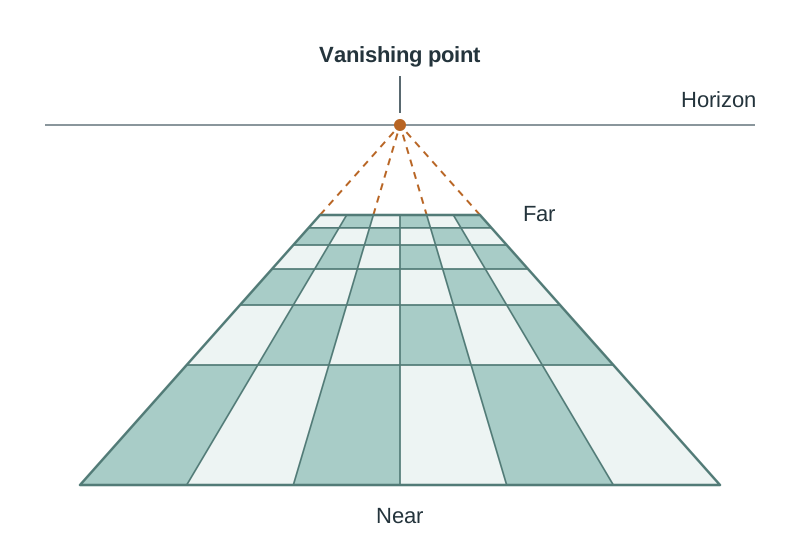
- Perspective used a vanishing point to create an illusion of depth, as in the receding floor tiles and arches of Renaissance Annunciation scenes.
- Sfumato blended paint tones softly to remove sharp outlines, seen in the Mona Lisa.
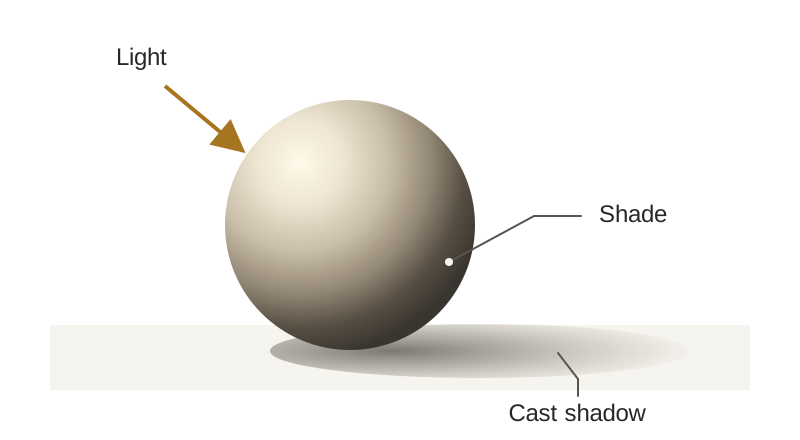
- Chiaroscuro (light and shade) made light fall from one direction, casting shadows that made figures look solid.
- Leonardo da Vinci cut open dead bodies to study muscles and bones, so he could paint people realistically.
- Michelangelo Buonarroti sculpted the lifelike marble David and painted frescoes across the Sistine Chapel ceiling.
- Architects revived classical domes, columns and symmetry, as in Brunelleschi's dome on Florence cathedral.
The Scientific and Medical Revolutions
Renaissance scientists trusted their own observation, measurement, and experiments instead of only believing ancient writers.
- Nicolaus Copernicus proposed the heliocentric theory, arguing that the Earth and planets orbit the Sun.
- Galileo Galilei improved the telescope and saw moons orbiting Jupiter, which showed that not everything circles the Earth and supported Copernicus's theory.
- Church authorities defended the geocentric model. In 1633 Galileo was tried, forced to take back his views, and kept under house arrest for the rest of his life.
- Andreas Vesalius dissected human bodies and published accurate drawings in On the Fabric of the Human Body. Before this, doctors relied on Galen's 1,400-year-old descriptions, some of which were wrong.
- William Harvey discovered blood circulation, proving that the human heart functions as a pump.
The Printing Press and the Spread of Ideas
Around 1450, Johannes Gutenberg developed the movable metal type printing press in Mainz, Germany. This transformed how knowledge spread:
- Printing replaced slow hand-copying, so books became cheap and more people learned to read.
- Scientific theories and humanist ideas spread rapidly across Europe before rulers could ban them.
- Printers increasingly published works in the vernacular — the everyday local language — rather than in Latin.
Key terms
- Renaissance
- A French word meaning 'rebirth', describing the European revival of classical art, learning, and science.
- Patron
- A wealthy person or institution, such as the Medici family or the Church, that paid artists to produce work.
- Humanism
- A movement focused on studying human life, reason, and classical Greek and Roman texts rather than relying solely on old authority.
- Perspective
- A technique using a vanishing point to create the illusion of three-dimensional depth on a flat surface.
- Sfumato
- A painting method that blends colours and tones gradually to create soft, smoky outlines.
- Chiaroscuro
- The use of strong light and shadow in a painting to make figures look solid and three-dimensional.
- Fresco
- A method of painting directly onto wet wall or ceiling plaster so the colours fuse with the surface.
- Heliocentric Theory
- The astronomical model arguing that the Sun sits at the centre of the solar system, with planets orbiting it.
Check yourself
Name two major patrons who financed Renaissance art in Italy.
Lorenzo de' Medici and Pope Julius II.
Name three features of Renaissance art.
Perspective, chiaroscuro (light and shade), and realistic anatomy.
How can you tell that a painter has used perspective?
Lines, such as floor tiles or roof arches, converge towards a central vanishing point to create depth.
Which medical pioneer proved that the human heart pumps blood around the body?
William Harvey.
Why did the Roman Inquisition put Galileo on trial for heresy in 1633?
Because he argued publicly for Copernicus's idea that the Earth moves around the Sun, which went against the Church's geocentric teaching.