

Technological developments and innovations are new tools, machines, and methods that changed how people lived, worked, and travelled across history. In the Junior Cycle examination, questions usually ask you to describe one development you studied and explain how it changed people's lives, for better and for worse.
The Printing Press and the Spread of Ideas
Around 1450, Johannes Gutenberg developed the movable-type printing press in Mainz, Germany. Before this, books were copied by hand by monks and scribes, making them scarce and expensive. Gutenberg cast individual, reusable metal letters, arranged them in a frame, inked them, and pressed them onto paper. This made books far cheaper to produce and allowed identical copies to spread quickly.
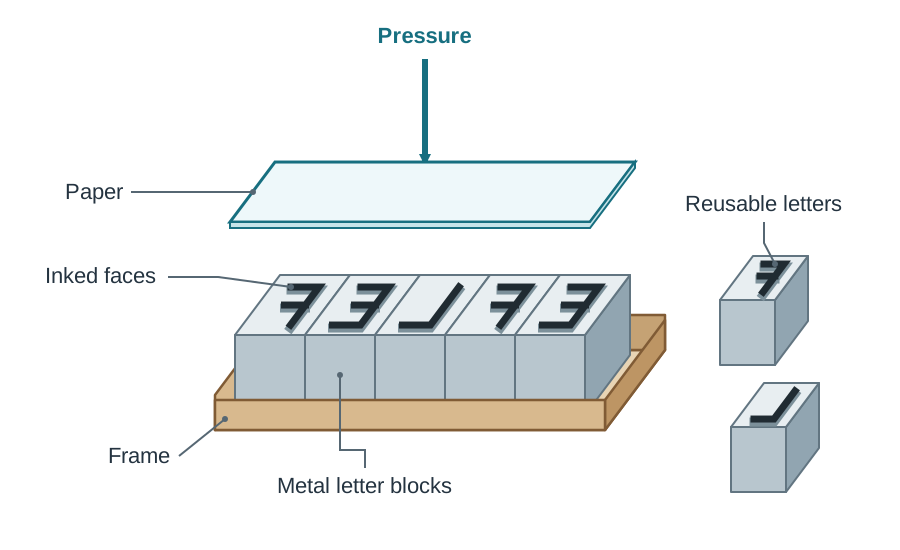
In 1517, Martin Luther's criticisms of Church abuses were printed and spread across Germany within weeks. His German translation of the New Testament, printed in 1522, let ordinary people read the Bible for themselves. By breaking the monopoly on copying texts, the printing press raised literacy rates and accelerated both the Renaissance and the Protestant Reformation.
Navigational Technology and Ocean Exploration
During the fifteenth century, Portuguese and Spanish maritime innovations allowed sailors to venture into open oceans. The caravel was a light, fast ship with a strong hull and triangular lateen sails, which let sailors zig-zag against the wind instead of waiting for a following wind. Sailors also used new instruments: the magnetic compass gave a reliable bearing away from coastlines, while the astrolabe and quadrant measured the angle of the sun or stars to calculate latitude.
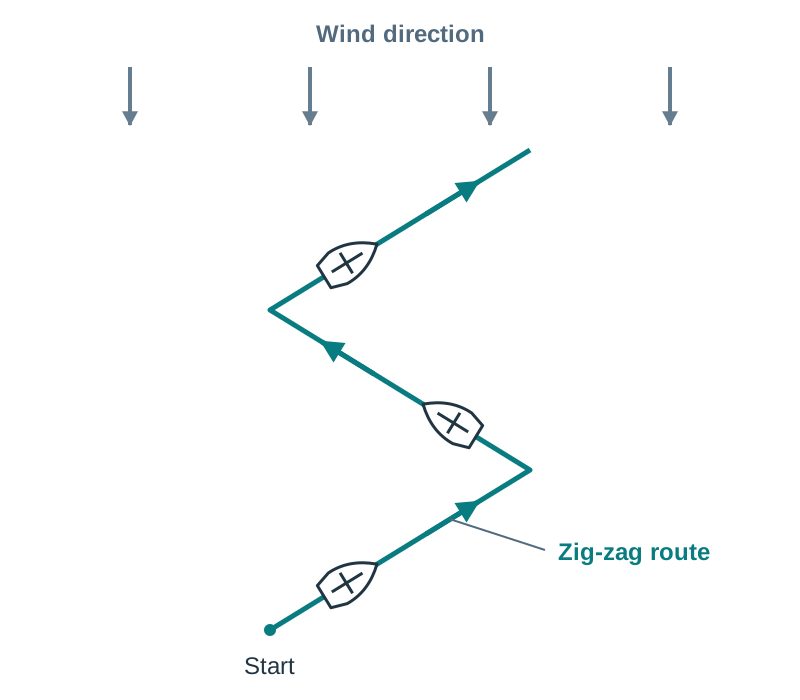
These tools made transatlantic voyages possible, including Christopher Columbus reaching the Americas in 1492. These developments opened global trade networks, but they also led to conquest, colonisation, and the transatlantic slave trade.
Agriculture, Steam Power, and Industry
The Agricultural Revolution introduced new farming methods and machinery in the eighteenth century. Jethro Tull's seed drill planted seeds in straight rows, wasting less seed and increasing crop yields. Four-field crop rotation kept soil fertile without leaving fields fallow, while Robert Bakewell used selective breeding to produce heavier farm animals. Enclosure divided open common land into private fenced fields, which forced many small farmers to seek factory work in towns.
The Industrial Revolution expanded when James Watt improved Thomas Newcomen's steam engine by patenting a separate condenser in 1769, drastically cutting coal use. Later improvements created turning motion to drive heavy machinery, creating the factory system and rapid urbanisation in cities like Manchester. George Stephenson built steam locomotives, opening the Liverpool and Manchester Railway in 1830. Yet continuity remained: horse transport and manual farming persisted for decades alongside steam power.
Twentieth-Century Technology and Modern Conflict
Modern technology dramatically changed warfare, communication, and society in the twentieth century. In World War One, machine guns and barbed wire gave defenders an overwhelming advantage, causing trench stalemate. Armies introduced poison gas in 1915 and tanks in 1916 to try to break through.
In World War Two, radar detected enemy aircraft, code-breaking machines decoded secret messages, and long-range bombers attacked cities. The atomic bombs dropped on Hiroshima and Nagasaki in August 1945 ended the war in the Pacific and began the nuclear arms race of the Cold War. In the space race, the USSR launched Sputnik, the first satellite, in 1957, and the USA landed Apollo 11 on the Moon in 1969, watched live on television by millions worldwide.
New Technology and the Historian
Technology does not just cause historical change; it is also a vital tool for historians and archaeologists investigating the past.
- Radiocarbon dating measures carbon decay to calculate the approximate age of organic remains, such as wood, bone, and seeds.
- Aerial photography and LiDAR use aircraft and lasers to scan the ground, revealing buried ringforts, ancient field walls, and lost settlements invisible from ground level.
- DNA analysis reveals family relationships, migration patterns, and causes of death in ancient populations.
- Digital archives give instant online access to primary sources such as census records and old newspapers.
Because new technologies uncover fresh evidence, historians frequently revise earlier judgements about the past.
Key terms
- Invention
- A completely new tool, device, or method created for the first time, such as Gutenberg's movable-type press.
- Innovation
- An improvement or practical application of an existing machine or method, such as Watt adding a separate condenser to the steam engine.
- Caravel
- A light, ocean-going ship fitted with triangular lateen sails that allowed sailors to sail against the wind.
- Astrolabe
- A navigational instrument used to calculate latitude at sea by measuring the angle between the horizon and the sun or North Star.
- Factory System
- A manufacturing system that concentrates powered machinery and paid labourers in a single centralised workplace.
- Radiocarbon Dating
- A scientific method used to estimate the age of organic historical remains, such as bone or charcoal, by measuring carbon decay.
- Continuity
- The aspects of life, work, or society that stay the same over time while other things undergo rapid change.
- Historical Significance
- The reason historians judge a person, event, or development important enough to study, based on its lasting impact on people's lives.
Check yourself
What key component did James Watt patent in 1769 to make the steam engine fuel-efficient?
A separate condenser.
Name two agricultural innovations that raised food production during the Agricultural Revolution.
Jethro Tull's seed drill and four-field crop rotation (or Robert Bakewell's selective breeding).
Name one technological development that caused trench stalemate during World War One.
The machine gun (or barbed wire).
What does radiocarbon dating allow a historian or archaeologist to find out?
The approximate age of organic remains such as wood, bone, or charcoal.