

Aural skills in Leaving Certificate Music develop your ability to listen critically to unfamiliar musical excerpts, identify stylistic and structural elements by ear, and write down what you hear using accurate musical terminology. At Higher Level you should be able to recognise the four standard cadences, follow semiquaver movement and compound time, write down melody and rhythm, and identify timbres and textures. Recent papers have also asked about 20th-century and studio techniques and about differences between excerpts.
Recognising Cadences and Harmonic Movement
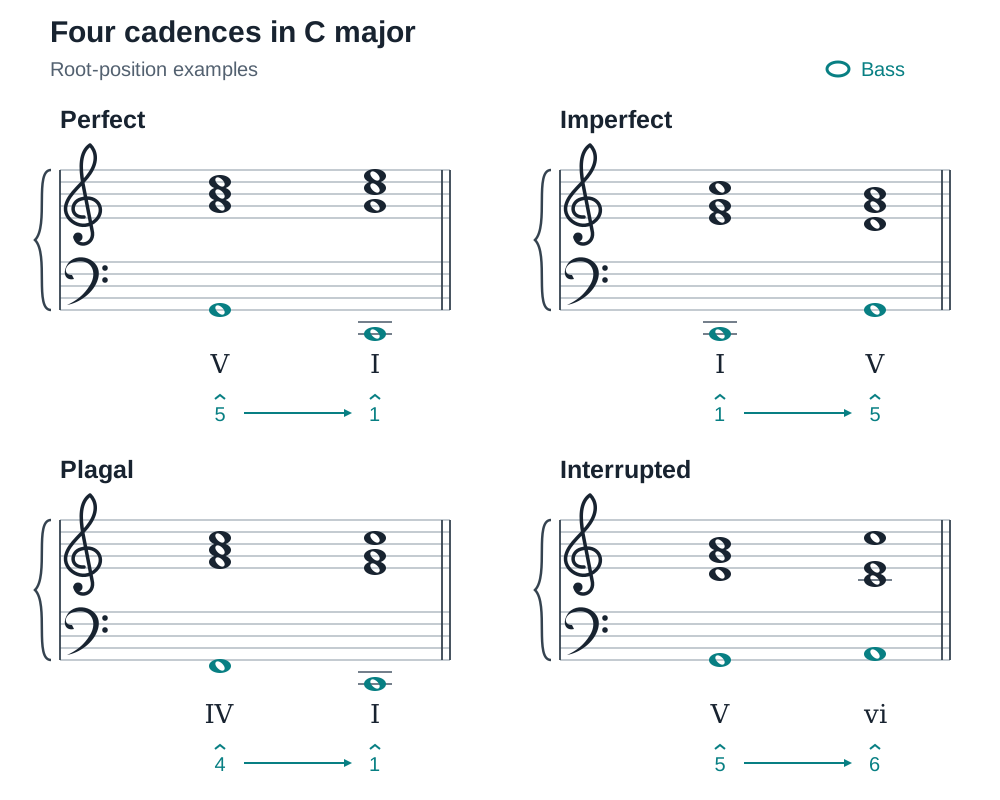
Cadences act as musical punctuation at phrase endings. Never guess a cadence from the melody alone; track the bass line and judge how finished the phrase sounds.
| Cadence | Chords | Bass Movement | Aural Quality | Familiar Example |
|---|---|---|---|---|
| Perfect | V–I (or V–i) | Leaps down a 5th or up a 4th (5 to 1) | Fully resolved, like a full stop. Often heard as V7–I or preceded by Ic (the cadential 6/4: Ic–V–I). | Final chords of a national anthem |
| Imperfect | Any chord to V (I–V, ii–V, IV–V, or Ic–V) | Rests on note 5 (dominant) | Unfinished and expectant, like a comma or question mark. The music pauses on chord V without leaving the home key. | End of 'Up above the world so high' in 'Twinkle, Twinkle, Little Star' (the phrase pauses on chord V) |
| Plagal | IV–I (or iv–i) | Leaps down a 4th or up a 5th (4 to 1) | Conclusive but softer than a perfect cadence. | The two-chord 'Amen' at the end of a hymn |
| Interrupted | V–vi (or V–VI) | Steps up from 5 to 6 | Surprise or deception. Chord V sets up a perfect cadence, but steps unexpectedly to chord vi. | A deceptive twist before the final phrase of a pop ballad |
Listen also for underlying harmonic devices:
- Pedal: a sustained or repeated note, usually in the bass, while harmonies shift above it. A tonic pedal sounds grounded and calm; a dominant pedal builds harmonic tension.
- Tonality: a major key sounds bright and settled, while a minor key sounds darker or more tense, often coloured by a raised 7th leading note pulling upward. To find the home note, listen to a phrase that sounds fully finished (a perfect or plagal cadence) or to the final chord of the excerpt.
- Modulation: shifting from the home key to a new tonal centre. Major pieces typically modulate to the dominant (such as G major to D major) or to the relative minor (G major to E minor). Minor pieces typically modulate to the relative major (E minor to G major). When a modulation occurs, listen for accidentals and a new home note confirmed by a cadence.
Metre, Rhythm, and Irish Dance Forms
Higher Level questions test your ability to tell simple metres from compound metres and distinguish between different dance rhythms.
Simple and Compound Metres
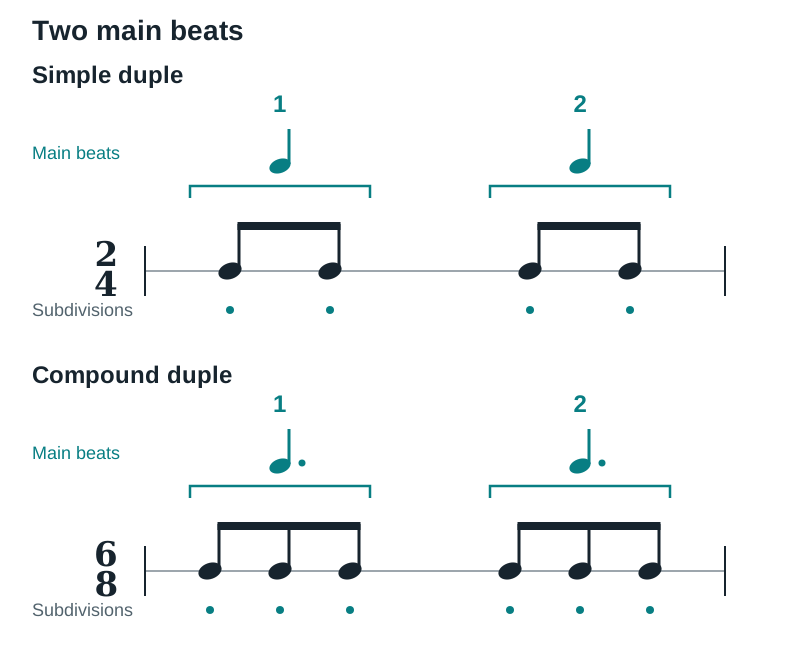
- Simple metres (2/4, 3/4, 4/4): each main beat divides naturally into two equal notes (one crotchet divides into two quavers). A piece in 2/4 has a two-beat march feel, 3/4 produces a three-beat waltz pulse, and 4/4 provides a steady four-beat common time.
- Compound duple metre (6/8): the bar contains two main dotted-crotchet beats, each dividing into three quavers ('ONE-two-three, TWO-two-three'). This lilting, swinging pulse defines the double jig.
- Syncopation: deliberately accenting weak beats or offbeats to inject rhythmic drive into jazz, rock, and traditional tunes.
Irish Dance Types
Recognising dance forms by ear is a regular exam task. Identify them by time signature and characteristic rhythmic feel:
- Reel: 4/4 (or 2/2), fast tempo, continuous flowing quavers.
- Double jig: 6/8, fast tempo, bouncy groups of three quavers.
- Slip jig: 9/8 (three dotted-crotchet beats per bar), light, graceful, and flowing.
- Hornpipe: 4/4, noticeably slower than a reel, characterised by a dotted 'swung' rhythm and often three emphatic crotchets at phrase ends.
- Polka: 2/4, fast, crisp, and bouncy, typical of the Sliabh Luachra tradition.
- Slide: 12/8, a fast, driving dance in compound time, also rooted in Sliabh Luachra.
Irish Singing Style
- Sean-nós: a traditional solo, unaccompanied singing style, usually in the Irish language. It features free metre, a subtle nasal vocal timbre, and regional ornamentation that ranges from highly elaborate decoration in Connemara to a plainer melodic line in Donegal.
Writing Down What You Hear (Dictation)
Unprepared listening questions regularly print a melodic or rhythmic line with one or two bars left blank for you to complete. Practise this systematic four-step routine:
- Count the beats first: check the time signature before writing anything. In 4/4, your answer must contain exactly four crotchet beats. In 6/8, it must total two dotted crotchets (six quaver values).
- Notate rhythm on the first hearing: tap the underlying pulse and count how many notes sound on each beat:
- One note per beat is a crotchet.
- Two equal notes per beat are two quavers.
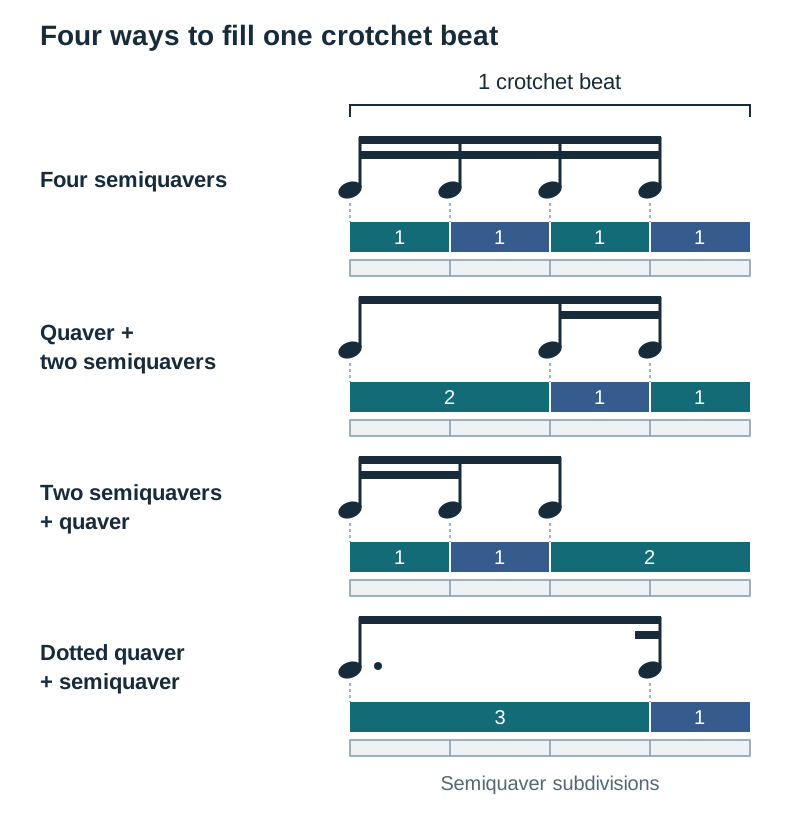
- Four quick, even notes per beat are four semiquavers.
- A long-short skipping pattern is a dotted quaver followed by a semiquaver.
- In 6/8, three equal notes across a beat are three quavers.
- Map pitch on later hearings: use the printed notes directly before and after the blank bar as reference anchors. Decide whether each note steps, leaps, or repeats, and whether the line ascends or descends.
- Add up bar values: check your arithmetic. Check that the notes add up to the full bar. If the total is wrong, the rhythm must be wrong somewhere, so listen again before finalising.
Common Semiquaver Groupings
- Four semiquavers: an even, rapid run of notes.
- Quaver + two semiquavers: a 'long-short-short' rhythm.
- Two semiquavers + quaver: a 'short-short-long' rhythm.
- Dotted quaver + semiquaver: a sharp, skipping rhythm.
Timbre: Recognising Voices and Instruments
Timbre describes the tone colour of a voice or instrument. In the exam, name specific instruments and vocal categories rather than general family groups.
Vocal Classifications
From highest to lowest pitch range:
- Soprano: high female voice.
- Alto: low female voice (with mezzo-soprano falling between soprano and alto).
- Tenor: high male voice.
- Baritone: mid-range male voice.
- Bass: low male voice.
Orchestral Families
- Strings: violin (highest), viola (warm, mid-range), cello (rich, low), double bass (deepest), and harp.
- Woodwind: flute (agile, breathy, pure), oboe (piercing, nasal, double-reed), clarinet (warm, mellow, single-reed, with a woody low register), and bassoon (deep, buzzy double-reed).
- Brass: trumpet (bright, crisp, piercing), French horn (mellow, warm, rounded), trombone (bold and powerful, capable of sliding glissandi), and tuba (heavy, deep foundation).
- Percussion: tuned percussion includes timpani, xylophone, and glockenspiel; untuned percussion includes snare drum, bass drum, cymbals, tambourine, and triangle.
Traditional and Popular Instruments
Listen for electric guitar, bass guitar, drum kit, synthesiser, fiddle, tin whistle, uilleann pipes, flute, concertina, button accordion, and bodhrán. In traditional music, identify performance ornaments including cuts and strikes (single grace notes), rolls (multi-note ornaments on fiddle, whistle, flute, and pipes), crans (piping ornaments on low notes), and slides (pitch-bending up into a note).
Musical Texture and Structural Forms
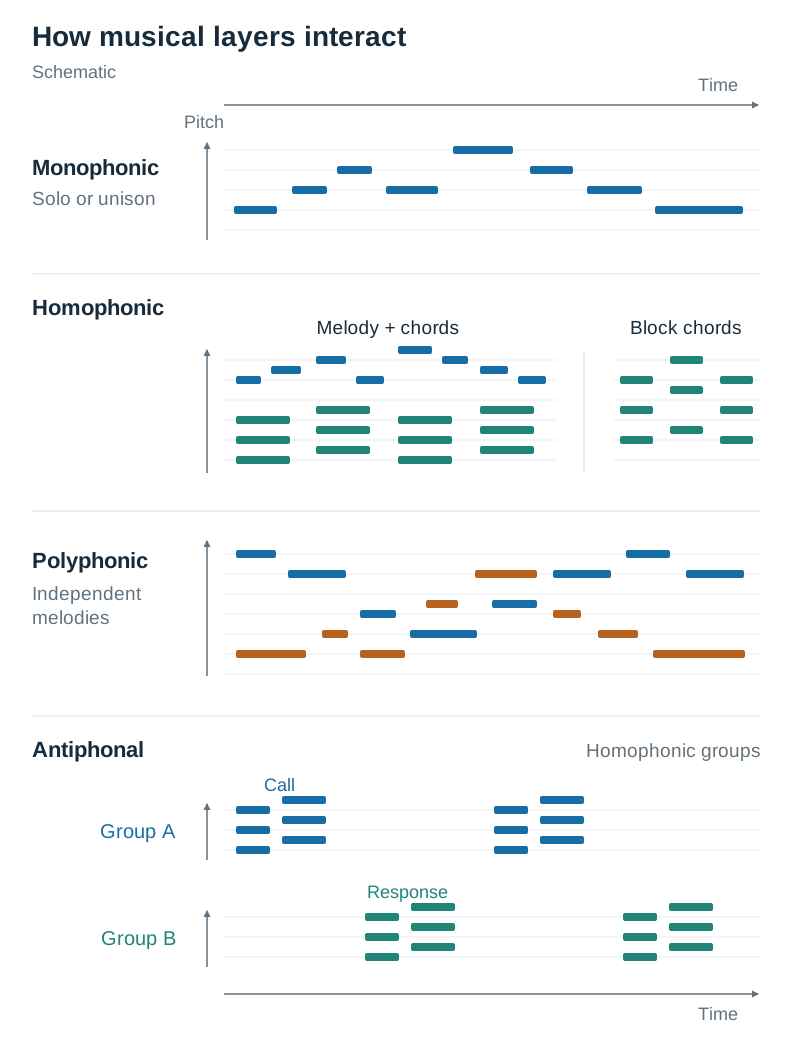
Texture describes how melodic and harmonic layers interact. In your exam responses, state both the technical label and what the performers are doing.
Textures
- Monophonic: a single, unaccompanied melody line. A solo singer, an unaccompanied tin whistle, or a full choir singing in unison with no chords is monophonic.
- Homophonic: a clear lead melody supported by chordal accompaniment, or all parts moving together in block chords (chordal homophony). This is the most common texture across classical, pop, and folk music.
- Polyphonic (contrapuntal): two or more independent melodies weaving together at the same time. Different parts have distinct melodic shapes and independent rhythms, as heard in Baroque fugues.
- Antiphonal: a call-and-response dialogue alternating back and forth between two separate vocal or instrumental groups. Antiphonal writing describes how groups interact, so it can co-exist with homophonic or polyphonic textures.
Structural Forms
- Binary form (AB): two contrasting, balanced sections.
- Ternary form (ABA): an opening section (A), a contrasting middle section (B), and a return to the opening material (A).
- Rondo form (ABACA): a recurring main theme (A) alternating with fresh episodes (B and C).
- Theme and variations (A, A1, A2, A3): a main theme is stated and then altered in successive versions. For example, a simple string theme (A) may be followed by Variation 1 adding fast semiquaver runs, Variation 2 switching to the tonic minor key, and Variation 3 changing instrumentation to woodwinds.
Compositional, Studio, and 20th-Century Devices
Examiners regularly play short excerpts and award marks for identifying and describing the compositional devices, studio effects, and performance techniques used.
Compositional Devices
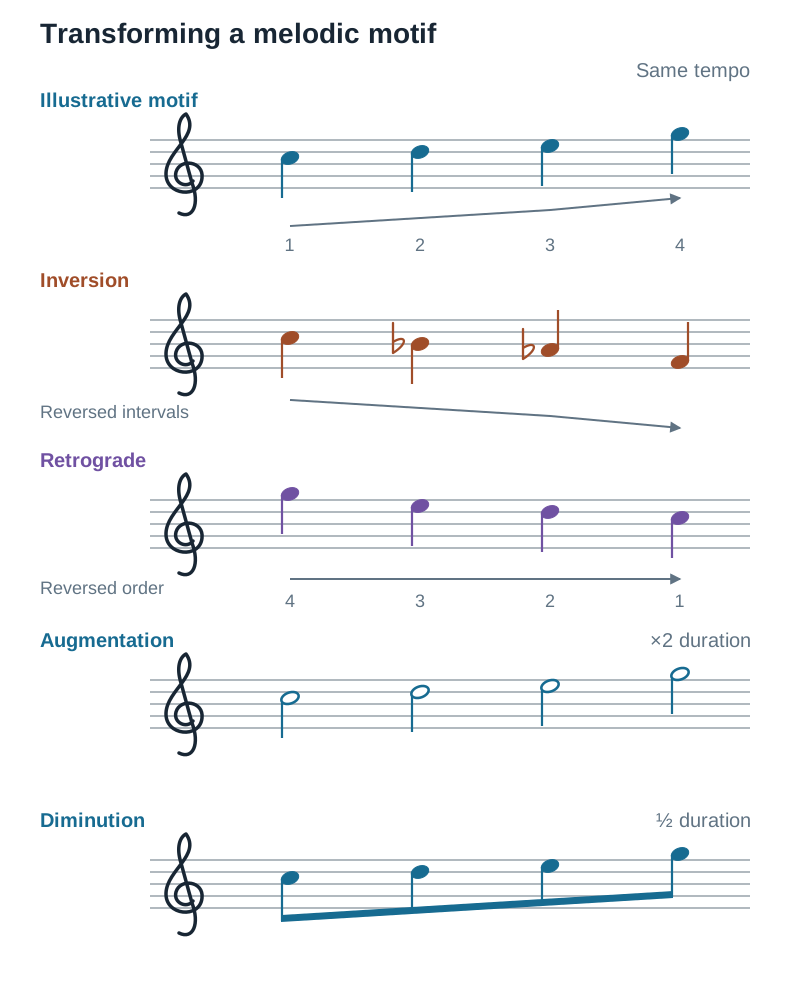
- Sequence: an immediate repetition of a melodic motif at a higher or lower pitch.
- Imitation: one voice or instrument plays a melodic idea, and another part copies it shortly afterwards while the original part continues.
- Inversion: turning a melody upside down so that upward steps become matching downward steps.
- Retrograde: playing a melodic line backwards from the final note to the first note.
- Augmentation: restating a melody with its note values lengthened (usually doubled), making it sound slower and broader.
- Diminution: restating a melody with its note values shortened (usually halved), making it sound quicker.
- Ostinato: a persistently repeated melodic, rhythmic, or chordal pattern.
20th-Century Rhythmic and Metric Devices
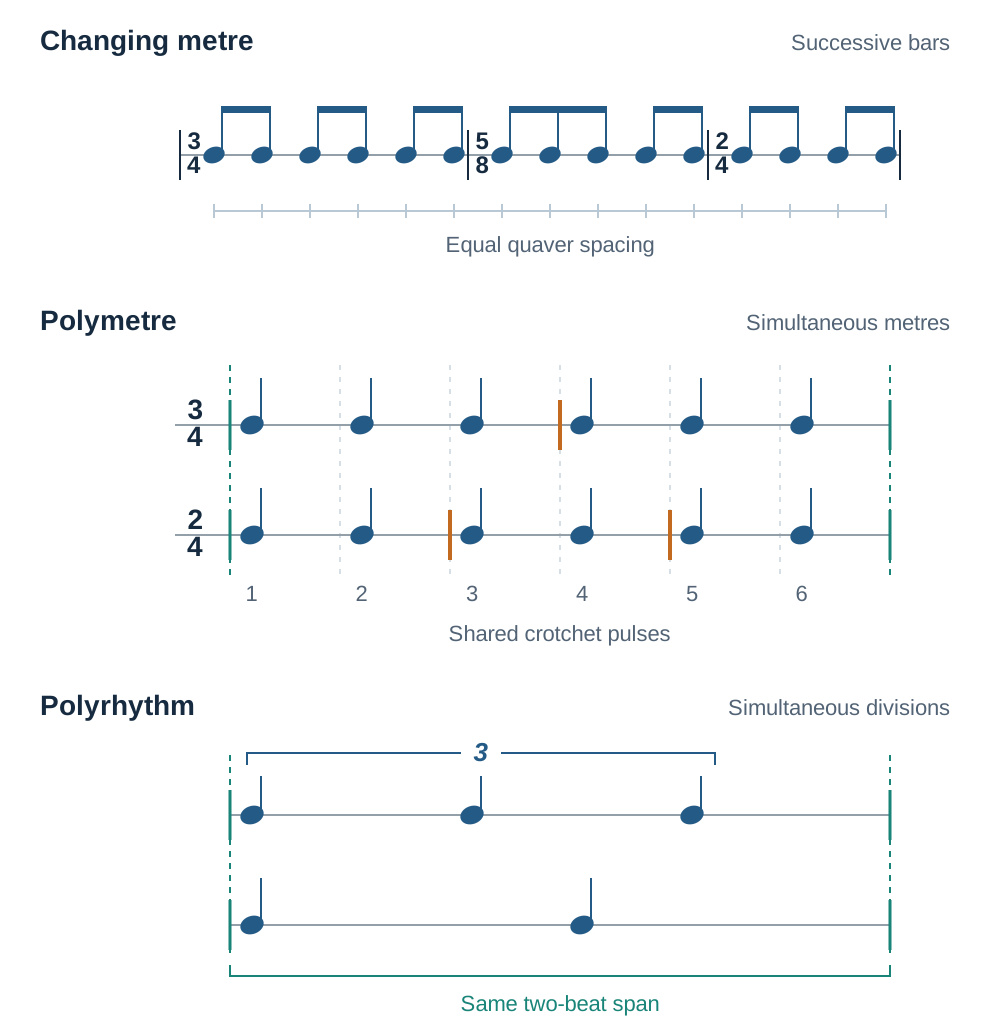
- Changing time signatures (changing metre): the time signature shifts from bar to bar (such as 3/4 to 5/8 to 2/4), disrupting a predictable pulse.
- Polymetre: two or more parts perform in different time signatures at the same time, causing bar lines and accents to clash.
- Polyrhythm: two conflicting rhythmic divisions sounding simultaneously, such as three notes played against two.
Instrumental and Vocal Techniques
- Pizzicato: plucking string instrument strings with the fingers.
- Sul ponticello: bowing very close to the bridge to produce a glassy, thin, metallic tone.
- Tremolo: rapid, back-and-forth bowing on a single note to create shimmer or tension.
- Melisma: singing several different notes across a single syllable of text.
- Falsetto: a light head voice that allows male vocalists to sing notes above their normal tenor or baritone range.
- Vibrato: a slight, expressive fluctuation in pitch that warms a sustained note.
Studio Recording Techniques
- Overdubbing / multitracking: recording separate musical layers at different times and mixing them together, such as layering vocal harmonies.
- Panning: placing sounds at distinct positions across the stereo field between left and right speakers.
- Flanging: mixing two identical audio signals together with a tiny, continually varying delay to create a swirling 'whoosh'.
- Distortion: deliberately overloading an audio signal to create a fuzzy, gritty tone, typical of rock electric guitar.
- Reverb: simulating the acoustic reflections of a physical room or hall.
The Unprepared Listening Question: Style, Mood, and Comparison Strategy
The unprepared listening question (regularly Question 6) examines unfamiliar audio excerpts. It tests dictation, cadence identification, time signatures, instruments, textures, mood portrayal, and comparative analysis.
Identifying Historical Style Periods
- Baroque (1600–1750): basso continuo (harpsichord and cello), polyphonic textures, decorative trills, and sudden terraced dynamics.
- Classical (1750–1820): balanced, symmetrical phrases, homophonic melody-and-accompaniment, functional diatonic harmonies, and standard orchestra with strings and paired woodwinds.
- Romantic (1820–1900): rich chromatic harmony, extreme dynamic swings, lyrical melodies, expanded brass and percussion, and emotional drama.
- 20th Century / Modern Contemporary: dissonance, irregular or changing metres, polyrhythm, unusual registers, extended techniques (such as sul ponticello or col legno), or minimalist repetition.
- Irish Fusion: traditional reels or jigs played on fiddle, pipes, or whistle, combined with jazz elements (walking bass, syncopation, drum kit) or classical string writing (as in Mícheál Ó Súilleabháin's Hiberno Jazz).
Portraying Mood and Emotion
When asked how a composer creates a specific atmosphere (such as suspense or a dance of death), use a three-step link: name the element, state what it does in the excerpt, and explain the emotional effect. For instance: 'The rapid allegro tempo and driving dance rhythm create a frantic, relentless feel, while staccato pizzicato strings produce a dry, skeletal sound.'
Comparative Listening Strategy
When asked for differences between two excerpts, examiners require a direct comparison of both recordings under the same musical parameter (such as tempo, dynamic, texture, or instrumentation). Always link both excerpts with 'whereas' or 'while':
- Tempo: adagio (slow), andante (walking pace), moderato (moderate), allegro (fast), presto (very fast), accelerando (speeding up), ritardando (slowing down), rubato (flexible timing).
- Dynamics: pp (very soft), p (soft), mp, mf, f (loud), ff (very loud), crescendo (gradually louder), diminuendo (gradually softer), sforzando (sudden accent).
Key terms
- Perfect Cadence
- A two-chord progression moving from the dominant to the tonic chord (V–I or V–i), sounding completely finished and resolved.
- Imperfect Cadence
- A chord progression ending on the dominant chord (V), sounding expectant and unfinished while remaining in the home key.
- Plagal Cadence
- A chord progression moving from the subdominant to the tonic chord (IV–I or iv–i), giving a gentle, resolved 'Amen' finish.
- Interrupted Cadence
- A deceptive chord progression where chord V resolves unexpectedly to chord vi (or VI in a minor key) instead of resolving to chord I.
- Monophonic
- A musical texture consisting of a single, unaccompanied melody line, whether performed by a soloist or an ensemble in unison.
- Homophonic
- A texture featuring a clear lead melody supported by chordal accompaniment, or all parts moving together in block chords.
- Polyphonic
- A contrapuntal texture where two or more independent melodic lines sound simultaneously with separate rhythms and contours.
- Antiphonal
- A performance style featuring an alternating call-and-response dialogue between two distinct vocal or instrumental groups.
- Sequence
- The immediate repetition of a melodic motif or phrase at a higher or lower pitch.
- Sul Ponticello
- A string-playing technique where the player draws the bow very close to the bridge, creating a brittle, glassy, metallic sound.
- Sean-nós
- A traditional solo, unaccompanied singing style, usually in Irish, featuring free metre, nasal tone quality, and regional ornamentation.
- Overdubbing
- A studio recording process where new audio parts are tracked and layered onto previously recorded performances.
- Flanging
- An audio effect created by mixing two identical signals together with a slight, fluctuating delay, producing a swirling 'whoosh' sound.
- Changing Time Signatures
- A 20th-century rhythmic device where the metre shifts frequently from bar to bar, disrupting a regular underlying pulse.
Check yourself
Which cadence ends on chord V and leaves a musical phrase sounding open and expectant?
An imperfect cadence.
A bar in 4/4 time is missing one beat made up of four fast, even notes. What rhythm do you write?
Four semiquavers.
How does the beat division of compound duple time (6/8) differ from simple triple time (3/4)?
6/8 has two dotted-crotchet beats per bar, each dividing into three quavers, whereas 3/4 has three crotchet beats per bar, each dividing into two quavers.
What string-playing technique involves bowing very close to the bridge to produce a thin, glassy sound?
Sul ponticello.
Name the 20th-century rhythmic device where the time signature keeps changing from bar to bar.
Changing time signatures (or changing metre).
At the end of a phrase, the bass moves one step up from scale degree 5 to scale degree 6. Which cadence has occurred?
An interrupted cadence.