

Four past tenses are outlined in the Leaving Certificate Italian syllabus: the passato prossimo, the imperfetto, the trapassato prossimo, and the passato remoto. Each performs a distinct grammatical role across reading, listening, oral narration, and written production. Developing control over auxiliary selection, participle agreement, and the contrast between background descriptions and completed actions allows you to recount past events with precision and decode literary texts effectively.
Passato Prossimo: Formation, Auxiliaries, and Agreement
The passato prossimo is your main tense for completed, discrete events in the past. It reports actions that took place at a specific moment or over a defined duration.
Form it with two elements:
- Passato Prossimo = Present tense of avere or essere + Past Participle (participio passato)
Regular Past Participles
Remove the infinitive ending and add the appropriate suffix:
- -are verbs become -ato: parlare → parlato (spoken)
- -ere verbs become -uto: credere → creduto (believed)
- -ire verbs become -ito: dormire → dormito (slept)
Choosing Between Avere and Essere
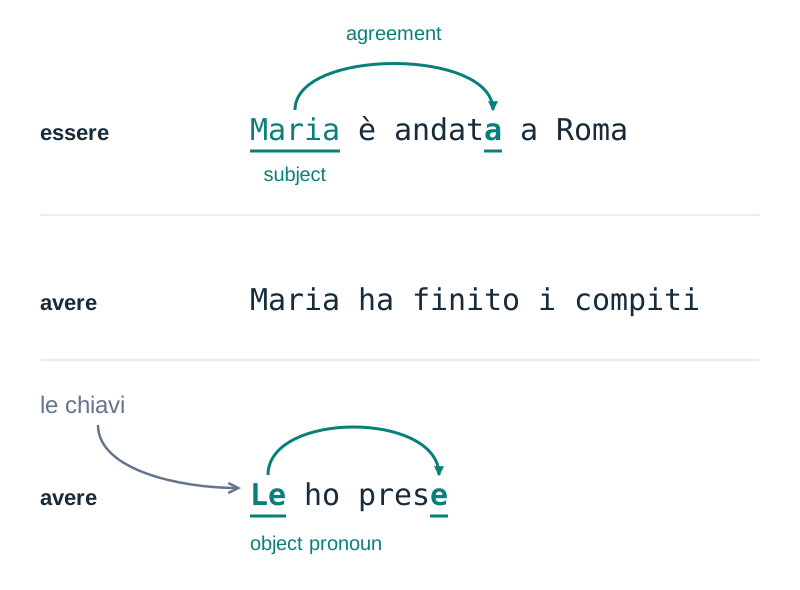
Most Italian verbs take avere. With avere, the past participle does not change to match the subject; it ends in -o:
- Ho comprato una guida. (I bought a guidebook.)
- Maria ha finito i compiti. (Maria finished her homework.)
- I ragazzi hanno mangiato una pizza. (The boys ate a pizza.)
A specific group of verbs requires essere:
- Verbs of movement to or from a destination: andare, venire, partire, arrivare, tornare, uscire, entrare, salire, scendere.
- Careful: verbs that describe the activity of movement rather than travel from A to B take avere: camminare, viaggiare, nuotare, guidare, ballare, passeggiare. For example: Abbiamo viaggiato in treno (We travelled by train), Ho camminato per due ore (I walked for two hours).
- Verbs indicating a change of state: nascere, morire, diventare.
- Reflexive verbs: all reflexive verbs take essere (alzarsi, svegliarsi, accorgersi).
- Full pattern: mi sono alzato/a, ti sei alzato/a, si è alzato/a, ci siamo alzati/e, vi siete alzati/e, si sono alzati/e.
- Other common verbs that take essere:
- piacere: Mi è piaciuto il concerto (I liked the concert); Mi sono piaciute le vacanze* (I liked the holidays). The participle agrees with the thing liked, not with the person.
- succedere: Che cosa è successo?* (What happened?)
- rimanere / restare: Sono rimasto/a a casa tutto il giorno* (I stayed at home all day).
- costare: Il biglietto è costato venti euro* (The ticket cost twenty euro).
- sembrare: Mi è sembrato strano* (It seemed strange to me).
- The verbs essere and stare themselves (sono stato/a).
Participle Agreement Rule with Essere
When essere is the auxiliary, the participle functions like an adjective and agrees in gender and number with the grammatical subject:
- Masculine singular (-o): Marco è andato a Roma. (Marco went to Rome.)
- Feminine singular (-a): Maria è andata a Roma. (Maria went to Rome.)
- Masculine or mixed plural (-i): I ragazzi sono andati a Roma. (The boys went to Rome.)
- Feminine plural (-e): Le ragazze sono andate a Roma. (The girls went to Rome.)
Exception: Avere with Direct-Object Pronouns (lo, la, li, le)
With avere, the participle normally stays in -o. The key exception occurs when a direct-object pronoun comes before the verb. In that case, the participle agrees with the pronoun:
- Ho comprato la guida. → *L'ho comprata. (I bought it — feminine singular -a*).
- Ho visto i ragazzi. → *Li ho visti. (I saw them — masculine plural -i*).
- Ho preso le chiavi. → *Le ho prese. (I took them — feminine plural -e*).
- Ho trovato il portafoglio. → L'ho trovato. (I found it — masculine singular -o).
Note that lo and la contract to l' before ho, hai, ha, hanno, so the participle ending tells you the gender of the noun replaced.
Essential Irregular Past Participles
- fare → fatto
- dire → detto
- scrivere → scritto
- leggere → letto
- vedere → visto
- prendere → preso
- aprire → aperto
- chiudere → chiuso
- decidere → deciso
- mettere → messo
- chiedere → chiesto
- rispondere → risposto
- scegliere → scelto
- vivere → vissuto
- perdere → perso
- correre → corso
- rimanere → rimasto
- succedere → successo
- nascere → nato
- morire → morto
- accorgersi → accorto (mi sono accorto/a)
Imperfetto: Formation, Irregular Stems, and Uses
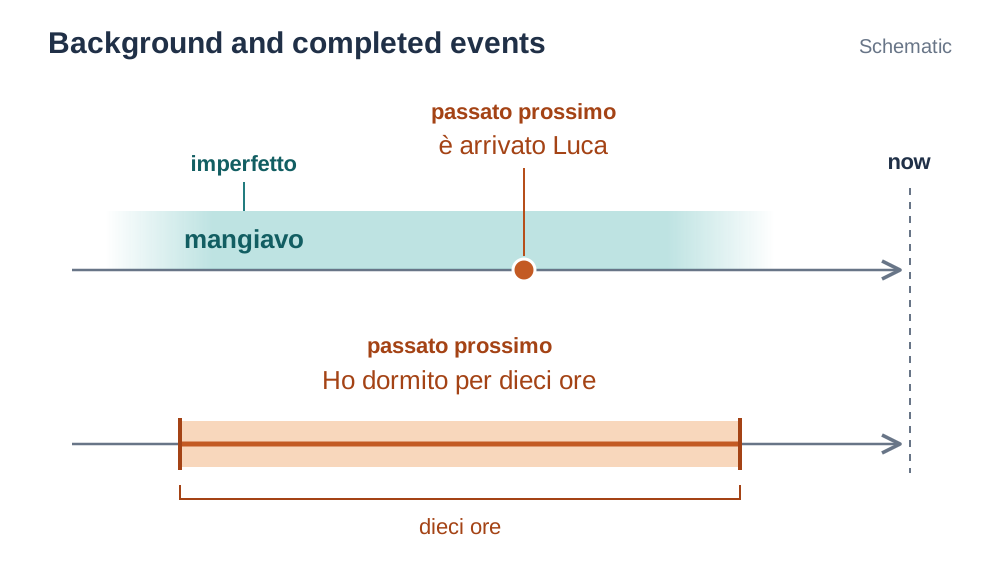
The imperfetto is an ongoing, descriptive past tense. Instead of narrating an event from beginning to end, it paints the backdrop, describes habits, or tells what was happening at a particular moment.
Regular Formation
Take the infinitive, drop the final -re, and attach the universal endings: -vo, -vi, -va, -vamo, -vate, -vano.
| Person | parlare (-are) | scrivere (-ere) | dormire (-ire) |
|---|---|---|---|
| io | parlavo | scrivevo | dormivo |
| tu | parlavi | scrivevi | dormivi |
| lui/lei | parlava | scriveva | dormiva |
| noi | parlavamo | scrivevamo | dormivamo |
| voi | parlavate | scrivevate | dormivate |
| loro | parlavano | scrivevano | dormivano |
Irregular Forms
The imperfetto has very few irregular verbs. The only entirely irregular verb is essere:
- ero, eri, era, eravamo, eravate, erano
Three other common verbs build on older infinitive roots before taking the standard endings. Focus on memorising their stems:
- fare (stem fac-) → facevo, facevi, faceva, facevamo, facevate, facevano
- dire (stem dic-) → dicevo, dicevi, diceva, dicevamo, dicevate, dicevano
- bere (stem bev-) → bevevo, bevevi, beveva, bevevamo, bevevate, bevevano
When to Use the Imperfetto
- Background descriptions, feelings, and physical states:
- Faceva freddo ed ero stanco. (It was cold and I was tired.)
- La casa era grande e aveva un bel giardino. (The house was big and had a lovely garden.)
- Habitual or repeated actions ('used to' or 'would'):
- Ogni estate andavamo in vacanza in Italia. (Every summer we used to go on holiday to Italy.)
- Da bambino giocavo sempre a calcio. (As a child I always played football.)
- Actions in progress interrupted by a completed action ('was/were doing'):
- Mentre mangiavo, è arrivato Luca. (While I was eating, Luca arrived.)
- Age and time in the past:
- Avevo sedici anni. (I was sixteen years old.)
- Erano le tre del pomeriggio. (It was three in the afternoon.)
Passato Prossimo vs Imperfetto: Choosing the Correct Tense
Choosing between the passato prossimo and the imperfetto is one of the most important accuracy points in your own writing and speaking. A useful way to decide is to picture a stage play:
- The imperfetto sets the scene. It sets up the scenery, controls the lighting, defines the weather, and describes what the characters were wearing, feeling, or doing as an ongoing state.
- The passato prossimo carries the action. It represents the entrance of a character, a sudden noise, an accident, or any event that advances the storyline.
| Feature | Imperfetto (Scene, Habit, State) | Passato Prossimo (Completed Event) |
|---|---|---|
| Core function | Ongoing background, mental state, repeated routine | Finished action, turning point, specific occurrence |
| English equivalents | 'was/were doing', 'used to do', was/were (states), had (age/possession), felt | simple past ('did', 'happened', 'arrived') |
| Words that often go with it | mentre, sempre, spesso, di solito, ogni giorno, da piccolo, da bambino, una volta (meaning formerly) | ieri, improvvisamente, all'improvviso, un giorno, sabato scorso, una volta (meaning once on a single occasion) |
Note: A limited, completed time period takes the passato prossimo even if the duration was long: Ho dormito per dieci ore (I slept for ten hours).
Reporting Accidents and Emergencies (Syllabus 1.6)
The syllabus includes dealing with emergencies, such as giving an account of an accident, breakdown, theft, or assault. That requires switching naturally between setting the scene with the imperfetto and reporting the event with the passato prossimo.
- Pronto? C'è stato un incidente sull'autostrada. Un uomo è caduto dalla moto e non si muove. Mandate un'ambulanza, è urgente! (Hello? There has been an accident on the motorway. A man fell off his motorbike and isn't moving. Send an ambulance, it's urgent!)
- Mentre guidavo verso Firenze, ho sentito uno strano rumore e la macchina si è fermata. (While I was driving towards Florence, I heard a strange noise and the car stopped.)
- C'era molta gente e non c'era luce; allora un ladro mi ha rubato lo zaino. (There were a lot of people and there was no light; then a thief stole my backpack.)
Narrating Stories and Picture Sequences
The oral examination includes a picture sequence alongside general conversation and a role-play. Recounting a story across pictures or in an account of an event relies on sequencing connectors combined with accurate tense shifts.
Key Connectors and Time Expressions
- Prima (first)
- Poi / Dopo (then / afterwards)
- Allora (so / at that point)
- All'improvviso (suddenly)
- Mentre... ho visto che... (While... I saw that...)
- Alla fine (in the end)
Model Narrative Structure
Era una bella giornata di sole e la famiglia faceva un picnic in campagna. Mentre mangiavano, hanno visto che il cielo diventava nero. Poi è cominciato a piovere forte. Allora sono corsi alla macchina, ma alla fine erano tutti bagnati.
(It was a lovely sunny day and the family were having a picnic in the countryside. While they were eating, they saw that the sky was turning black. Then it started to rain heavily. So they ran to the car, but in the end they were all soaked.)
Notice how the tenses share the work:
- Scene-setting (imperfetto): era, faceva, mangiavano, diventava, erano bagnati.
- Key events (passato prossimo): hanno visto, è cominciato, sono corsi.
- Sequencing connectors: mentre, poi, allora, alla fine create a cohesive, fluent narrative.
Trapassato Prossimo: Expressing the Earlier Past
The trapassato prossimo corresponds to the English past perfect (had done). It describes an action that was completed before another past event took place.
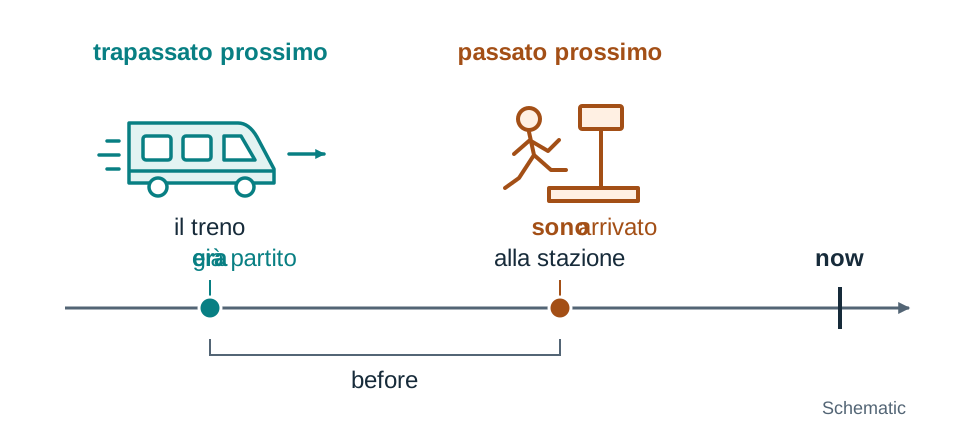
- Trapassato Prossimo = Imperfetto of avere or essere + Past Participle
Auxiliary selection and agreement rules remain identical to the passato prossimo:
- Verbs using avere: the auxiliary appears in the imperfetto, and the participle normally ends in -o: avevo mangiato, avevi visto, aveva finito.
- Verbs using essere: the auxiliary appears in the imperfetto, and the participle agrees with the subject: ero andato/a, eravamo arrivati/e.
Typical Chronological Markers
The trapassato prossimo is often used with time words such as già, non ancora, and appena, which make the order of events clear:
- già (already): Quando sono arrivato alla stazione, il treno era già partito. (When I arrived at the station, the train had already left.)
- non ancora (not yet): Non avevo ancora finito i compiti quando mi ha chiamato Giulia. (I had not yet finished my homework when Giulia phoned me.)
- appena (just): Ero appena arrivato a casa quando è suonato il telefono. (I had just got home when the phone rang.) Notice that appena sits between the auxiliary and the participle, exactly like già.
Listening Comprehension Awareness
In the listening comprehension, questions are answered in English or Irish. Candidates must render the tense correctly in their translation. If an audio track says Il concerto era già iniziato quando siamo entrati, writing 'the concert started' misses the meaning; write 'the concert had already started', because the tense tells you which event happened first.
Passato Remoto: Written and Literary Recognition
The passato remoto describes completed historical actions perceived as distant, with no active link to the present moment. The passato remoto appears mainly in literature, newspaper extracts, and historical accounts. Your first priority is to recognise it quickly in reading texts. In your own speaking and writing about recent personal events, the passato prossimo is the natural choice. In your own writing, the passato remoto is typically used for distant historical events (for example, Dante nacque a Firenze nel 1265).
Regular Endings
- -are (parlare): parlai, parlasti, parlò, parlammo, parlaste, parlarono
- -ere (credere): credei (credetti), credesti, credé (credette), credemmo, credeste, crederono (credettero)
- -ire (dormire): dormii, dormisti, dormì, dormimmo, dormiste, dormirono
Note that regular -ere verbs often take alternate -etti endings, especially in the third person: credette (he/she believed), credettero (they believed). Similarly, dovere frequently appears as dovette (he/she had to) and dovettero (they had to).
The 1-3-3 Irregular Pattern
Most irregular verbs deviate from the regular stem only in three persons: io (person 1 singular), lui/lei (person 3 singular), and loro (person 3 plural). The other three persons (tu, noi, voi) use the regular infinitive root.
Examining scrivere shows the 1-3-3 pattern clearly:
- io scrissi
- tu scrivesti
- lui/lei scrisse
- noi scrivemmo
- voi scriveste
- loro scrissero
High-Frequency Third-Person Forms for Reading
Because comprehension passages focus on narrative character actions, memorise these third-person singular and plural forms:
| Infinitive | lui/lei | loro | Meaning |
|---|---|---|---|
| essere | fu | furono | was / were |
| avere | ebbe | ebbero | had |
| dire | disse | dissero | said |
| fare | fece | fecero | did / made |
| vedere | vide | videro | saw |
| prendere | prese | presero | took |
| mettere | mise | misero | put |
| chiedere | chiese | chiesero | asked |
| rispondere | rispose | risposero | answered |
| leggere | lesse | lessero | read |
| scrivere | scrisse | scrissero | wrote |
| rimanere | rimase | rimasero | stayed |
| sapere | seppe | seppero | found out / knew |
| volere | volle | vollero | wanted |
| conoscere | conobbe | conobbero | met / got to know |
| nascere | nacque | nacquero | was / were born |
| stare | stette | stettero | stayed / was |
| dare | diede | diedero | gave |
| andare | andò | andarono | went |
Format Phrases and Present with 'da'
Written production tasks (diaries and letters) and the oral conversation frequently require specific structural formulas for past events, as well as an important distinction when talking about continuous time.
Format Phrases for Past-Tense Writing
Diary (diario):
- Opening: Mercoledì, 12 maggio / Caro diario,
- Introductory lines: Che giornata! (What a day!) / Oggi è stata una giornata indimenticabile. (Today was an unforgettable day.)
- Closing: Adesso devo andare a dormire. A domani! (Now I must go to sleep. Until tomorrow!)
Informal letter (lettera):
- Opening: Cara Giulia, / Caro Marco,
- Introducing past news: Ti scrivo per raccontarti che cosa mi è successo la settimana scorsa. (I am writing to tell you what happened to me last week.)
- Closing: Scrivimi presto! Un abbraccio, ... (Write soon! A hug, ...)
Talking About Language Experience: Present Tense + da
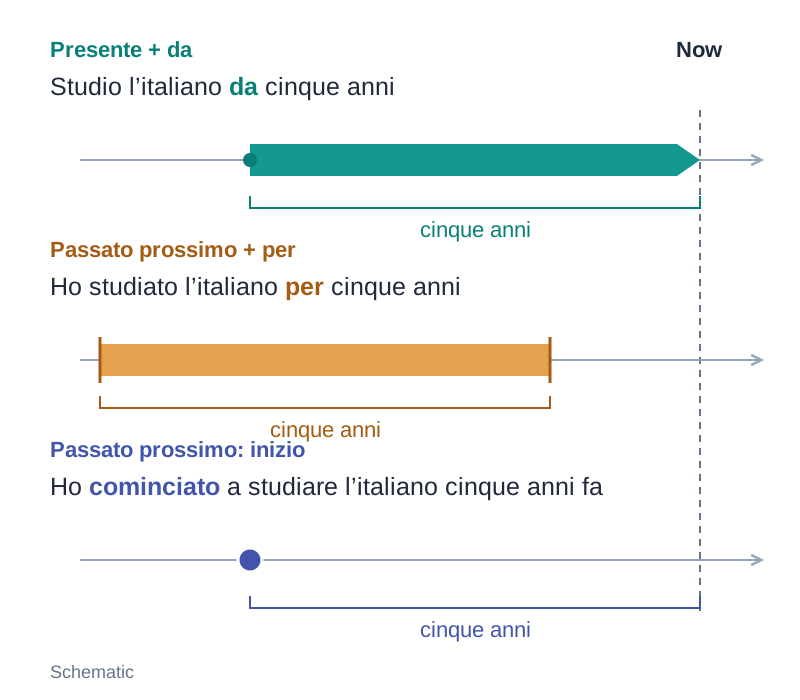
The syllabus includes talking about your experience of Italian, such as how long you have been learning it (II.4), so be ready to say this accurately. When an action started in the past and is still continuing today, Italian uses the present tense + da, not a past tense:
- Studio l'italiano da cinque anni. (I have been studying Italian for five years.)
If you mistakenly use the passato prossimo (Ho studiato l'italiano per cinque anni), you imply that the period is finished and you no longer study it.
- To name the starting point, use the passato prossimo: Ho cominciato a studiare l'italiano cinque anni fa (I started studying Italian five years ago).
Key terms
- Auxiliary Verb (Verbo Ausiliare)
- The helper verb (either avere or essere) conjugated in a personal tense and combined with a past participle to build compound tenses.
- Past Participle (Participio Passato)
- The form of the verb meaning 'done', 'eaten', or 'gone' (e.g. parlato, creduto, dormito, fatto) that combines with an auxiliary to form compound past tenses.
- Passato Prossimo
- A compound past tense formed with a present-tense auxiliary and a past participle, used for completed actions and discrete events.
- Imperfetto
- A simple past tense used to express continuous background states, descriptions, habitual past routines, or actions in progress.
- Trapassato Prossimo
- A compound past tense formed with an imperfect auxiliary and a past participle, expressing an action completed prior to another past event.
- Passato Remoto
- A simple past tense used in written literature, historical narrative, and journalism to describe completed events without connection to the present.
- Past Participle Agreement (Accordo del Participio)
- The rule requiring the participle ending to change (-o, -a, -i, -e) to match the subject when essere is the auxiliary, or to match a preceding direct-object pronoun (lo, la, li, le) with avere.
Check yourself
Insert the correct auxiliary and participle endings: Ieri (io [female] – uscire) _ con le amiche e (noi – mangiare) _ una pizza.
'sono uscita' (uscire takes essere and agrees with the female singular subject) and 'abbiamo mangiato' (mangiare takes avere, so the participle stays in -o).
Translate into Italian: 'I liked the holidays.'
'Mi sono piaciute le vacanze.' (Piacere takes essere in compound tenses, and the participle agrees with the plural feminine subject 'le vacanze').
Choose the correct past tense for each verb: 'Quando (io – essere) _ piccolo, (abitare) _ a Cork. Un giorno mio padre (trovare) ___ un lavoro a Dublino.'
'ero', 'abitavo', 'ha trovato'. Being young and living in Cork describe continuous background states (imperfetto), whereas finding a job is a single completed turning point (passato prossimo).
Rewrite the sentence replacing the noun with a direct-object pronoun: 'Ho comprato le scarpe nuove.'
'Le ho comprate.' (The pronoun 'le' replaces feminine plural 'scarpe', forcing the participle of avere to agree: comprate).
Translate into English: 'Ero appena uscito quando ha cominciato a piovere.'
'I had just gone out when it started to rain.' ('Ero uscito' is a trapassato prossimo with 'appena' meaning 'just', and 'ha cominciato' is a passato prossimo).
In a literary reading passage, identify the infinitives and meanings of 'rimase' and 'diedero'.
'rimase' comes from rimanere (meaning 'he/she stayed'), and 'diedero' comes from dare (meaning 'they gave'). Both are irregular passato remoto forms.