

Household budgeting is the systematic planning and management of income against expenditure over a defined period. In Leaving Certificate Home Economics, the family is examined as a financial unit within the economy that receives income, buys goods and services, pays taxes, and saves. Effective financial management requires balancing net take-home pay against essential and discretionary costs, understanding social factors that alter earning power, planning for savings and credit costs, and taking practical steps to resolve budget deficits.
The Household as a Financial Unit within the Economy
A household is a small financial unit within the economy: money comes in (wages, social welfare) and goes out (spending, taxes, savings). Budgeting means preparing a structured financial plan that balances anticipated income against estimated outgoings over a set period, such as a week, a month, or a year.
A realistic household budget provides several key advantages:
- Financial control: It tracks exactly where money comes from and where it goes, showing where money is wasted so that unnecessary spending can be cut.
- Prioritising essentials: It makes sure essential costs such as housing, heating and food are paid before money is spent on wants.
- Debt prevention: It keeps living costs strictly within income, avoiding reliance on expensive borrowing like credit cards, overdrafts, or moneylenders.
- Future security: Treating savings as a planned outgoing lets a family build an emergency reserve and save for future goals such as education or retirement.
Sources of Household Income and Social Influences
Household income is classified into two broad types:
- Earned income: Money received for work, such as weekly wages, monthly salaries, overtime, commission, and bonuses.
- Unearned income (including social welfare payments): Money not received for current work. This includes state supports, pensions, and returns on savings or investments such as interest, share dividends, and rental income.
Wages, Salaries, and Pensions
- Wage: Payment for work, usually calculated at an hourly rate multiplied by hours worked and paid weekly. Wages vary with the hours completed and can include overtime rates.
- Salary: A fixed annual sum divided into equal payments, usually paid monthly or fortnightly.
- Pension: A regular income paid after retirement. Pensions include the State Pension (contributory or non-contributory), an occupational pension organised through an employer, and a personal/private pension arranged by an individual (such as a PRSA).
The syllabus refers to actual and potential income. Actual income is money currently coming into the home. Potential income is money a household could receive but has not yet claimed, such as an unclaimed social welfare payment, a tax refund, or maintenance. Checking entitlements is therefore an important part of family budgeting.
Social Welfare Payments: Benefits, Allowances, and Universal Payments
- Social insurance (benefit) payments: Paid to individuals who have accumulated enough PRSI contributions while working. These are not means-tested. Examples include Jobseeker's Benefit, Illness Benefit, Maternity Benefit, and the State Pension (Contributory).
- Social assistance (allowance) payments: Intended for people who do not have enough PRSI contributions. These payments are means-tested, meaning the person's income, savings, and capital assets are assessed to decide if they qualify and how much they receive. Examples include Jobseeker's Allowance, the State Pension (Non-Contributory), One-Parent Family Payment, and the Working Family Payment (a weekly top-up for low-income employees with children).
- Universal payments: Paid regardless of income or PRSI record. The primary Irish example is Child Benefit, paid monthly for each qualifying child.
Social Factors Influencing Household Income
The syllabus names four specific social factors that influence household income:
- Age: Young workers starting their careers typically earn lower entry-level wages. Earnings usually rise and peak during mid-career with experience and promotions, before dropping to a fixed income from a pension in retirement.
- Sex: Although equal pay is legally mandated, differences in average earnings persist. Women are statistically more likely to work part-time or take unpaid career breaks for family caregiving, which can limit promotional opportunities and lifetime pension entitlements.
- Social class: Socio-economic background influences access to higher education, professional training, and networks. Households from higher social classes are more likely to have well-paid, secure jobs with benefits such as occupational pensions and employer-paid health insurance, which raise their overall income.
- Culture: Cultural attitudes influence whether a household operates with dual earners or a single breadwinner, and whether mothers work outside the home. In certain cultural groups, financial commitments such as sending remittances to extended family members abroad directly reduce the income available for the household budget.
Income Tax, Deductions, and Calculating Net Pay
A household budget must always be built on net income (disposable take-home pay) rather than gross income. Budgeting on gross pay causes an instant deficit because statutory deductions are subtracted before the money ever reaches the household bank account.
- Gross income: Total earnings before any tax, statutory levies, or voluntary deductions are removed.
- Statutory deductions: Compulsory deductions required by Irish law:
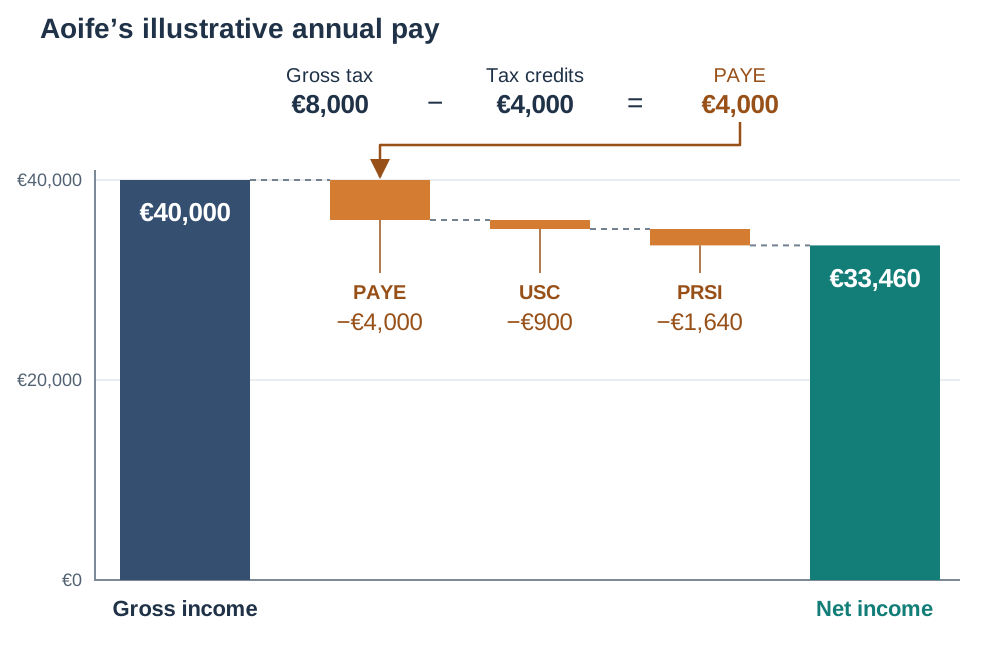
- PAYE (Pay As You Earn) income tax: Employers deduct income tax from gross pay. Income up to the standard rate cut-off point is taxed at the standard rate (20%), and income above it is taxed at the higher rate (40%), producing the gross tax figure. When working out PAYE, tax credits are subtracted from gross tax (gross tax − tax credits = net tax payable). Tax credits reduce income tax only; they are not a deduction from pay and do not reduce USC or PRSI.
- USC (Universal Social Charge): A compulsory tax charged on gross income, calculated at progressive percentage rates across specific income bands.
- PRSI (Pay-Related Social Insurance): A compulsory contribution collected from workers and employers. It funds the Social Insurance Fund, building the worker's entitlement to social insurance benefits and the State Pension (Contributory).
- Voluntary deductions: Optional sums an employee chooses to have deducted at source from their pay, such as occupational pension contributions, private health insurance, trade union subscriptions, and credit union savings.
Illustrative Net Pay Calculation
Aoife earns €40,000 gross a year, entirely within the 20% tax band. Her annual tax credits total €4,000, her USC is €900, and her PRSI is €1,640.
- Gross tax = €40,000 × 20% = €8,000
- Net tax = €8,000 − €4,000 = €4,000
- Total deductions = €4,000 (tax) + €900 (USC) + €1,640 (PRSI) = €6,540
- Net annual income = €40,000 − €6,540 = €33,460 (approximately €2,788 per month)
Aoife's household budget must be planned around €2,788 a month, not the €3,333 gross monthly figure.
Classifying Household Expenditure and Expenditure Patterns
Spending can be described in two ways. First, spending is either essential expenditure (money that has to be spent on necessities for living, such as housing, food, and heat) or discretionary expenditure (spending on non-essentials or wants, which should happen only after essential costs and savings are covered, such as holidays or entertainment).
Second, when setting out a budget sheet, essential spending is split into fixed and irregular expenditure, giving three standard headings:
| Category | Definition | Characteristics | Realistic Household Examples |
|---|---|---|---|
| Fixed expenditure | Essential outgoings paid regularly, in amounts that are known in advance. | These must be paid on time. Missing them has serious consequences, such as arrears and possible repossession on a mortgage, eviction for unpaid rent, or cancelled insurance cover. A variable-rate mortgage is classed as fixed expenditure because it must be paid monthly, even though the repayment amount can change when interest rates rise or fall. | Rent, mortgage repayments, home insurance, motor tax, TV licence, refuse collection charges. |
| Irregular expenditure | Essential outgoings where the payment amount or timing varies. | Outgoings fluctuate based on consumption habits, seasons, and market price changes. Defaulting can lead to accumulating arrears, supplier penalties, or disconnection of utility services. | Weekly groceries, electricity and heating bills, motor fuel, routine medical and pharmacy expenses. |
| Discretionary expenditure | Outgoings on non-essential lifestyle choices, leisure, and entertainment. | Spending can be postponed, scaled back, or eliminated immediately without harming family health, shelter, or safety. | Dining out, cinema, streaming subscriptions, holidays, designer clothing, gym memberships. |
Expenditure Patterns Relative to Household Income
The Central Statistics Office (CSO) Household Budget Survey shows clear expenditure patterns across income groups in Ireland:
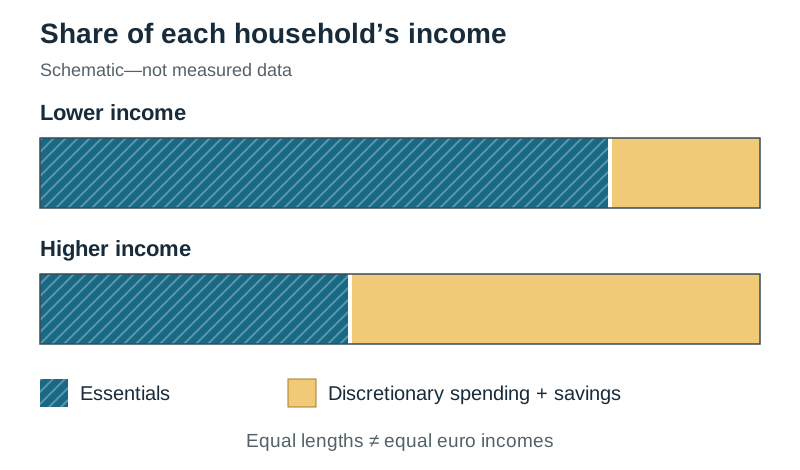
- Lower-income households: Spend a much larger share of their total income on essentials such as food, rent, electricity, and home heating. Because essentials consume most of their income, very little remains for discretionary spending or saving.
- Higher-income households: Spend more money in absolute terms, but essentials account for a significantly smaller share of their total income. They retain a much higher proportion of income for discretionary spending, holidays, transport, private education, and savings.
Steps in Drawing up a Household Budget
Planning a personal or family budget requires a methodical process:
- Calculate total net income: Add up all regular net income from all household earners, including net wages and salaries, social welfare payments, pensions, and maintenance.
- List fixed expenditure first: Record all regular contractual commitments (rent, mortgage, insurance, loan repayments). Because these amounts are predictable and compulsory, they must be ring-fenced first.
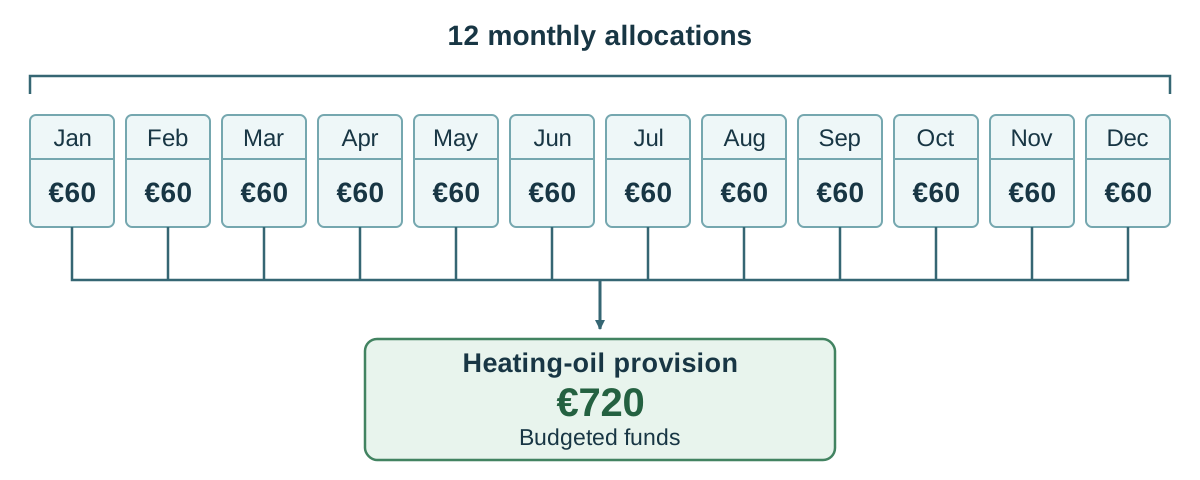
- Estimate irregular expenditure: Use past utility bills and receipts from the previous year to estimate seasonal costs. Spread periodic bills across the year (for example, budgeting an expected €720 of winter heating oil as €60 per month).
- Include savings as a planned outgoing: Treat savings as a necessary expenditure line rather than an afterthought. An allocated savings amount builds a financial cushion for emergencies and long-term targets.
- Allocate the remainder to discretionary spending: Any income left after essentials and savings are covered is apportioned across leisure, hobbies, and personal treats.
- Involve the family: Discussing the budget with family members ensures everyone understands priorities and spending limits.
- Keep records, review, and adjust: File receipts, track actual spending against planned figures each month, and adjust categories when family circumstances change (such as the birth of a child, job change, or children starting college).
Useful budgeting aids include utility budget accounts (which spread seasonal heating costs into equal monthly debits), direct debits, standing orders, and household budgeting spreadsheets or apps.
Budget States, Credit Management, and MABS
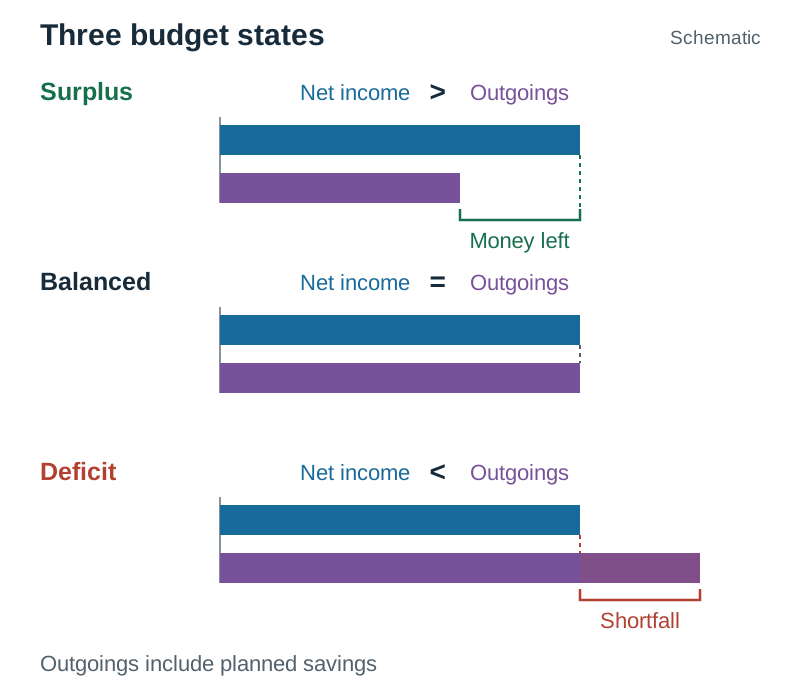
Comparing net income with total expenditure produces one of three states:
- Surplus (income is greater than expenditure): Money is left over. This should be allocated to savings, an emergency reserve, or clearing existing debt.
- Balanced budget (income equals expenditure): Every euro of income is accounted for, with savings included as a planned outgoing.
- Deficit (expenditure is greater than income): Outgoings exceed income, leading directly to debt if uncorrected.
Credit in Budget Planning
Using credit means purchasing goods or services now and paying for them later. Credit almost always costs more than paying cash because interest and administrative fees are added.
- APR (Annual Percentage Rate): The true annual cost of borrowing, which includes interest and compulsory charges expressed as a percentage. Comparing APRs helps consumers find the cheapest credit option.
- Cost of credit: The extra amount paid for using credit rather than cash:
If a household uses credit, repayments must be listed under fixed expenditure. As a rule, credit should only be used for essential, durable items that will outlast the loan term, and high-interest borrowing (such as credit cards or moneylenders) should be avoided.
Managing a Budget Deficit
If a budget shows a deficit, relying on credit cards or overdrafts compounds debt. The household should take practical steps:
- Eliminate discretionary spending: Immediately stop dining out, pause streaming services, and postpone non-essential clothing purchases.
- Reduce irregular expenses: Write shopping lists to stop impulse buying, choose supermarket own-brand items, batch-cook, turn the home thermostat down by 1°C, and switch utility suppliers for discounts.
- Keep up fixed payments: Prioritise mortgage, rent, and loan repayments so arrears do not build up. If repayments cannot be met, contact lenders early to agree restructured terms.
- Increase income: Check entitlement to social welfare payments, such as the Working Family Payment, take on extra working hours, or sell unused household items.
Money Advice and Budgeting Service (MABS)
MABS is a free, confidential, independent service funded through the Citizens Information Board under the Department of Social Protection. It assists people who are struggling with debt or money management. Advisers examine household income and expenditure, help draw up workable budgets, and negotiate directly with creditors (such as banks, landlords, and utility companies) to reschedule debts. MABS does not provide loans or cash hand-outs.
Key terms
- Budget
- A realistic financial plan that records, estimates, and balances anticipated income against projected expenditure over a specified time period.
- Essential expenditure
- Spending that is necessary to manage family life and maintain health and shelter, such as housing costs, food, and heat.
- Discretionary expenditure
- Spending on non-essential items or wants, which should occur only after all essential living costs and planned savings are covered.
- Fixed expenditure
- Essential outgoings paid regularly, in amounts that are known in advance, such as rent, mortgage, or insurance.
- Irregular expenditure
- Essential outgoings where the payment amount or timing varies based on usage, season, or price changes, such as groceries and heating bills.
- Gross income
- Total earnings received from employment or investments before any compulsory taxes or voluntary deductions are removed.
- Net income
- The actual take-home pay remaining after all statutory deductions (PAYE, PRSI, USC) and voluntary deductions are subtracted from gross earnings.
- Statutory deductions
- Compulsory deductions required by Irish law, collected directly from earnings at source, consisting of PAYE income tax, PRSI, and USC.
- Voluntary deductions
- Payments an employee chooses to have deducted directly from their pay, such as private health insurance, trade union subscriptions, or occupational pensions.
- Tax credit
- A sum that directly reduces gross tax to determine net income tax payable; it does not reduce USC or PRSI.
- USC (Universal Social Charge)
- A compulsory tax charged on gross income, calculated at progressive percentage rates across specific income bands.
- PRSI (Pay-Related Social Insurance)
- A compulsory contribution from workers and employers to the Social Insurance Fund that establishes entitlement to social insurance benefits and pensions.
- Social insurance (benefit)
- A state payment made to individuals who have accumulated sufficient PRSI contributions; it is not means-tested.
- Social assistance (allowance)
- A state payment for individuals without sufficient PRSI contributions; it is means-tested based on income and property.
- Means-tested
- An official financial assessment of a person's income, savings, and capital to determine if they qualify for social assistance and the amount payable.
- Surplus
- A financial state in which total income is greater than total expenditure, leaving unallocated funds.
- Deficit
- A financial state in which total expenditure is greater than total income, leading to debt if left uncorrected.
- Balanced budget
- A financial state where planned expenditure and savings exactly match total net income.
- APR (Annual Percentage Rate)
- The true annual cost of borrowing, which includes interest and compulsory charges expressed as a percentage rate.
- MABS
- The Money Advice and Budgeting Service; a free, confidential, state-funded service in Ireland that assists people with budgeting and debt restructuring.
Check yourself
Differentiate between essential expenditure and discretionary expenditure, giving one example of each.
Essential expenditure is money that has to be spent on necessities to manage family life (e.g. mortgage or rent). Discretionary expenditure is spending on non-essentials or wants, made only after essentials and savings are covered (e.g. holidays or streaming subscriptions).
Explain the difference between a social insurance benefit and a social assistance allowance.
A benefit is paid on the basis of having paid enough PRSI contributions and is not means-tested (e.g. Jobseeker's Benefit). An allowance is for those without enough PRSI contributions and is means-tested on income and property (e.g. Jobseeker's Allowance).
A washing machine has a cash price of €600, or can be bought on credit for 10 monthly payments of €68. Calculate the cost of credit.
Total repaid = 10 × €68 = €680. Cost of credit = €680 − €600 = €80.
How do expenditure patterns on essentials differ between lower-income and higher-income households according to national survey data?
Lower-income households must spend a much larger share of their total income on essentials like food, housing, and heat, leaving little for saving or discretionary spending. Higher-income households spend more overall, but essentials represent a much smaller percentage of their total income.
What is the purpose of a tax credit in the Irish PAYE income tax system?
A tax credit reduces the calculated gross tax liability to determine the net tax payable. It reduces income tax only, not USC or PRSI.
Why should savings be included as a planned outgoing when drawing up a household budget?
Treating savings as a planned outgoing ensures money is put aside systematically for emergencies and future financial goals, rather than hoping money will be left over at the end of the month.