

The marketing mix is the practical toolkit a business uses to turn broad strategic aims into customer sales. Under the Leaving Certificate Business specification, this framework covers seven connected elements: product/service, pricing, promotion, place, packaging, people, and process. Instead of treating these elements as isolated decisions, a business coordinates them to satisfy a distinct target market while earning a steady profit. Success requires managers to test their decisions against external pressures using tools like STEEPLE analysis and power-interest grids, while keeping pace with digital disruption, fair trading rules, and genuine environmental sustainability.
The Marketing Mix and the Target Market
Every marketing campaign starts with a simple choice: who is the customer? A target market is the specific group of consumers a business wants to reach and serve. Because no enterprise can be everything to everyone, owners carry out market research to uncover customer habits, spending power, and real day-to-day problems before spending capital.
The current specification covers seven distinct elements for both tangible goods and commercial services:
- Product / Service: The item or intangible support that solves a buyer's problem, including its functional design, brand reputation, and Unique Selling Point (USP).
- Price: The financial charge paid by the buyer, which has to cover running costs, match customer expectations, and generate a gross margin.
- Place: The route or distribution channel used to transport goods and services from the maker to the final shopper.
- Promotion: The communications mix—advertising, sales promotions, public relations, and personal selling—used to inform and convince buyers.
- Packaging: The protective casing and visual presentation that protects the item, complies with statutory labelling rules, and sells the brand on the shelf.
- People: The staff who interact directly with customers, shaping customer loyalty through their attitude, product knowledge, and tone.
- Process: The booking systems, digital payment gateways, queue arrangements, and delivery mechanisms that make the buying experience fast and painless.
Take a busy independent coffee shop beside an Irish railway station. The product centres on speciality roasted coffee and fresh breakfast pastries. The price is €4.00 for a flat white, which signals quality beans and skilled barista work. The place is a small kiosk right beside the station turnstiles. The promotion relies on a digital phone stamp card and short video posts on Instagram. The packaging features certified home-compostable cups. The people are quick, warm baristas who recognise daily commuters, and the process uses an order-ahead smartphone app so travellers can grab their drinks without missing the train.
To pick the right mix, businesses use market research. Desk research examines existing secondary information, like Central Statistics Office (CSO) reports, trade articles, and past sales receipts. It is cheap and quick, but the figures can be outdated or open to rivals. Field research gathers brand-new, first-hand data straight from consumers using surveys, tasting panels, and structured interviews. It gives fresh, tailored answers, though it costs far more in staff time and money.
Businesses also divide wide consumer populations into smaller groups through market segmentation. Geographic segmentation separates buyers by location or climate, such as a regional farm supply merchant in rural Kerry. Demographic segmentation splits consumers by age, gender, income, or household size, like discounted mobile data bundles tailored for college students. Psychographic segmentation groups buyers by personal lifestyle and core values, such as cruelty-free cosmetics. When an enterprise zeroes in on a very small, specialised corner of a market, it operates in a niche market. A bakery that crafts certified gluten-free wedding cakes faces fewer direct rivals and commands high prices, but it depends completely on that single buyer group remaining financially secure.
Product: Design, Branding, and Life Cycle
A product needs a clear Unique Selling Point (USP)—a distinct feature, raw ingredient, or functional perk that sets it apart from competing items on the shelf. When developing a product or service, designers have to balance four core practical requirements:
- Function: The product must do its primary job safely and reliably, meeting statutory standards set out in consumer legislation like the Consumer Rights Act 2022.
- Materials and Manufacturing: Inputs should be ethically and sustainably sourced, using clean methods that cut waste and support the circular economy.
- Form: The physical shape, ergonomic grip, visual colours, and overall styling must appeal to the target customer.
- Cost: Total development, assembly, and transport bills must stay low enough to let the business earn a gross margin at retail.
Businesses can legally protect original designs. A brand-new mechanical innovation or functional mechanism can be registered as a patent under the Patents Act 1992, giving the inventor exclusive commercial rights for up to twenty years. Trading names, symbols, and logos can be registered as trademarks under the Trade Marks Act 1996, which stops copycats from trading off established customer goodwill.
Branding means building a recognised identity, name, and visual look for an offering, like Kerrygold or Apple. A strong brand helps distinguish the product from supermarket rivals and builds emotional loyalty, which keeps repeat purchases steady when budgets tighten. It also lets the company set premium prices and makes launching new product spin-offs simpler because shoppers already trust the label.
Supermarket groups compete against branded goods using own-brand lines, such as Dunnes Stores Simply Better or SuperValu Signature Tastes. Grocers hire contract manufacturers to supply goods packaged under the store's private banner. This cuts retail prices for frugal families, secures solid retailer margins, and locks shoppers into returning to that specific chain.
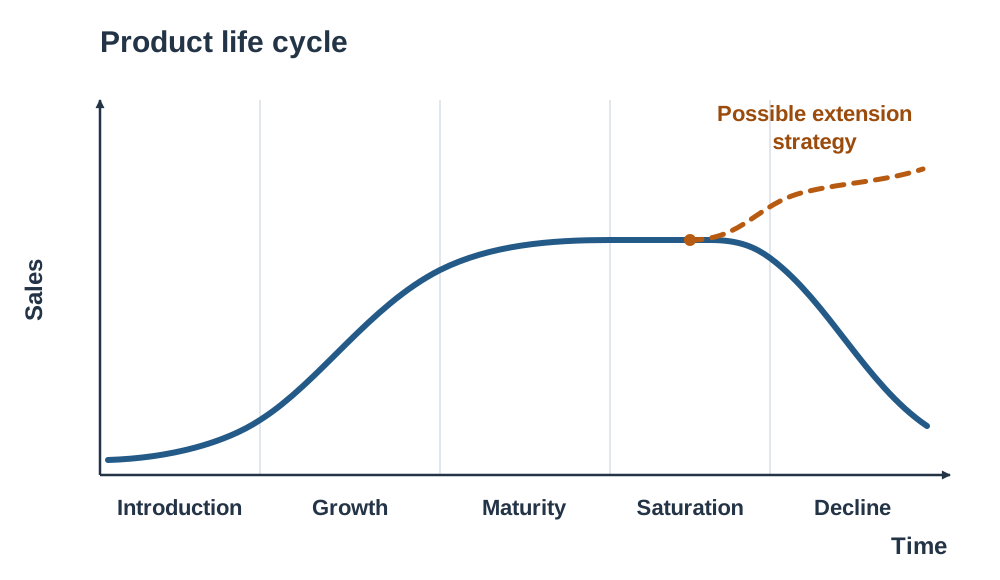
The product life cycle tracks sales volume and cash returns over time through five successive stages:
- Introduction: Slow sales growth, high marketing bills, and negative net cash flow while building basic distributor stocking.
- Growth: Rapid sales climb, wider retail availability, and first operational profits as mainstream buyers take notice (e.g. electric family cars).
- Maturity: Sales growth flattens because most potential buyers already own the item, making competition intense (e.g. touch-screen smartphones).
- Saturation: The market is full, customer acquisition stops, and the firm relies on brand loyalty and matching rival deals (e.g. tea bags).
- Decline: Sales fall permanently as fresh technology, newer substitutes, or changing lifestyles make the product obsolete (e.g. standalone DVD players).
To avoid terminal decline at saturation, companies use extension strategies. They might tweak the product by adding new features or flavours, like Tayto introducing limited-edition spicy snack options. They might pitch the product to fresh customer groups, like Lucozade moving from hospital recovery drinks to gym sports energy. They can also discount the price, run fresh advertising blitzes, or sell through modern online direct channels.
USP Analysis: Product and Service Comparisons
A strong USP analysis explains the exact feature that makes an offering better than rivals, explains why that difference matters to the target audience, and shows how the wider marketing mix backs up that promise.
Consider an Irish physical product: a reusable stainless steel water bottle made from recovered Irish marine steel. The USP is a bottle made from recovered marine steel (helping to clean up coastlines) that keeps drinks cold for 24 hours. The target market includes outdoor hikers and university students who want to cut plastic waste. To back up this claim, the price is set above standard plastic bottles to signal industrial durability, the packaging uses unbleached cardboard printed with vegetable ink, the promotion relies on outdoor influencers demonstrating the bottle on mountain trails, and distribution runs through high-end outdoor retailers alongside the brand's own website.
Now look at an intangible service: a mobile dog-grooming van. The USP is a self-contained warm-water grooming parlour that arrives on the customer's driveway, removing pet travel sickness and messy drop-offs. The target market comprises remote workers with busy schedules and owners of nervous older dogs. The price is higher than a high-street grooming salon to reflect personal door-to-door convenience. The place is the customer's own driveway. The people element relies on patient, qualified pet handlers who know how to calm distressed animals. The process uses automated text alerts and tap-to-pay card terminals, while promotion focuses on local neighbourhood community groups showing before-and-after grooming clips.
Physical goods are tangible, separate from the maker, and sit in a stockroom until bought. Services are intangible, perishable, and created at the exact moment of delivery. Because you cannot package a service in a box, people and process become the real differentiators. The manners of your front-line workers and the speed of your booking system become the actual product the customer evaluates.
Pricing Strategies and Numerical Costing
Pricing requires finding the balance between internal accounting costs and external market pressures. A business has to cover fixed overheads and unit supplies, but the price must also match competitor rates, reflect brand prestige, and fit the customer's disposable income.
Several core factors shape the final price tags:
- Production costs: The selling price must exceed unit variable costs and help pay company rent to generate a net margin. When commercial electricity or flour costs climb, bakeries are forced to adjust loaf prices.
- Rival pricing: Charging more than direct competitors without a distinct USP causes fast customer losses, which is why Pepsi constantly watches Coca-Cola.
- Target consumer demand: High disposable income permits comfortable margins, whereas targeting student populations calls for keen prices and discount cards.
- Brand image: Luxury resorts like Adare Manor set high accommodation tariffs deliberately to preserve an atmosphere of exclusivity.
- Life cycle stage: Introductory tech products often carry high skimming prices to recover heavy research spending, while mature items rely on discounts to keep stock moving.
- Economic trends: During steep inflation, households cut back on treats, forcing brands to launch affordable family-value packs.
Businesses pick from several established pricing approaches depending on their commercial aims:
- Cost-Plus: Adds a set percentage profit mark-up onto the total unit manufacturing cost, common in building trades.
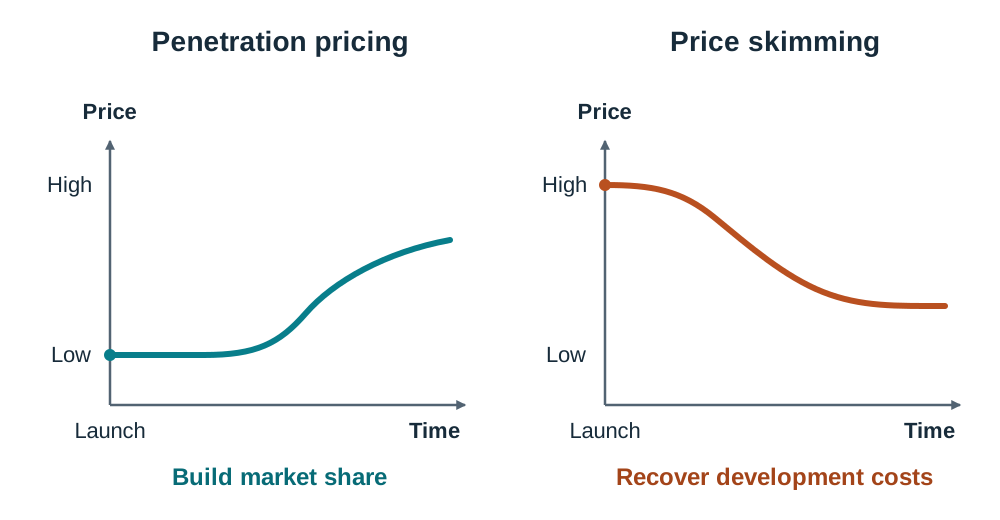
- Penetration: Charges a low introductory price to undercut rivals, win market share, and build buyer volume before stepping prices up later.
- Price Skimming: Sets a high initial price to recoup development spending from eager early buyers before dropping prices for the mainstream market.
- Loss Leader: Sells a common staple like milk or sliced bread below wholesale cost to pull footfall into the shop, expecting customers to buy profitable items on the same trip.
- Premium Pricing: Keeps prices permanently high to project luxury craftsmanship and social status, like Rolex watches.
- Psychological: Sets prices just under a round number, such as €19.99 instead of €20.00, making the item feel cheaper.
- Price Discrimination: Charges different customer segments different rates for the exact same service, like peak commuter rail fares versus student off-peak tickets.
- Predatory: Sells goods far below cost for a long period to drive rival businesses out of the market. It can breach competition law when a dominant business uses it.
To calculate cost-plus pricing, add direct materials, direct labour, and unit factory overheads together. Then multiply this unit cost by your required mark-up percentage and add the two figures together.
For example, suppose a workshop produces bespoke garden benches:
- Direct timber per bench: €50.00
- Direct carpentry wages: €30.00
- Factory rent and power apportioned per bench: €20.00
- Total production cost: €50.00 + €30.00 + €20.00 = €100.00
- Mark-up target: 40%
- Profit calculation: €100.00 × 0.40 = €40.00
- Final selling price: €100.00 + €40.00 = €140.00
Remember that cost-plus pricing only delivers a real operating profit if the workshop sells enough units to cover its fixed annual overheads.
Place: Channels of Distribution
Place is about getting the right item to the right customer at the right time. A channel of distribution is the commercial route a product takes from the original manufacturer to the final consumer.
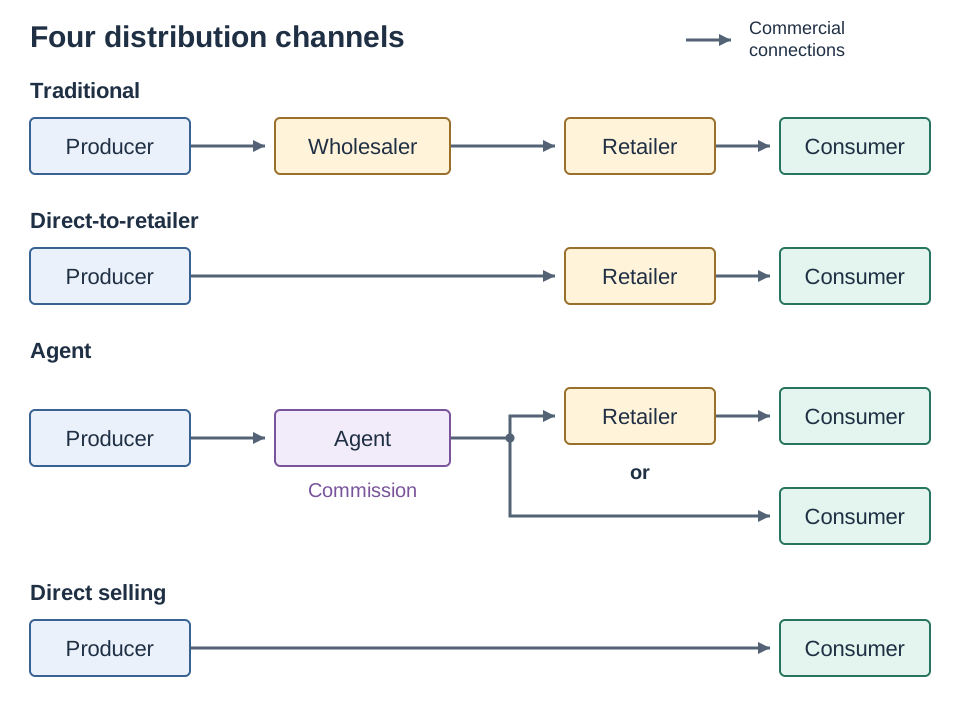
There are four common distribution channels:
Traditional Multi-Tier Channel: Producer → Wholesaler → Retailer → Consumer. The manufacturer runs massive production lines and sells bulk pallets to wholesalers like Musgrave. The wholesaler stores the goods and breaks bulk, splitting shipments into smaller cartons for independent corner shops and newsagents. This fits inexpensive, fast-moving items like chewing gum, soft drinks, and newspapers, where nationwide availability across thousands of small stores is essential.
Direct-to-Retailer Channel: Producer → Retailer → Consumer. Supermarket chains like Dunnes Stores, Tesco, and Lidl skip the wholesaler entirely. Their massive buying power lets them order directly from food producers and route products through central company distribution depots. This suits chilled yoghurts, fresh bakery goods, and dedicated own-brand supplier contracts.
Agent Channel: Producer → Agent → Retailer / Consumer. An overseas agent works on a commission basis to represent a manufacturer in an unfamiliar export territory. The agent navigates local buyer meetings, trade habits, and import rules. Irish craft distilleries and speciality cheese makers frequently hire local agents when breaking into European or North American retail chains.
Direct Selling: Producer → Consumer. The maker sells straight to the public via an online shop, a factory outlet, or a farmers' market stall. This cuts out distributor margins completely, letting the maker keep all gross profit. However, the business takes on all parcel shipping, warehouse packing, website upkeep, and customer return costs.
Four factors determine which channel works best: product nature (fresh seafood needs short paths to prevent spoiling, whereas concrete blocks need direct transit to limit handling fees), buyer location (local shoppers allow direct van delivery, while nationwide sales demand wholesale networks), unit value (luxury jewellery calls for selective boutiques, while cheap sweets demand mass retail presence), and business resources (small firms without delivery vans must use established freight and wholesale partners).
The Promotional Mix
Promotion encompasses all communication tools used to inform, persuade, and remind customers about a brand's products. An effective promotional mix combines four elements:
1. Advertising: Paid, non-personal messages spread through mass or digital media. Informative advertising explains practical specifications and operating instructions, which helps when introducing a technical product. Persuasive advertising uses emotional appeals and lifestyle imagery to convince shoppers they want the item. Competitive advertising highlights direct advantages over rival brands, common among mobile networks. Generic advertising promotes an entire sector rather than a single company, like National Dairy Council campaigns encouraging people to drink fresh milk. Reminder advertising keeps established brands fresh in consumers' minds during maturity.
When picking advertising media, managers must balance five practical issues: the target audience (teenagers on TikTok versus older rural demographics on local radio), cost and available cash (prime-time television commercials cost thousands of euro compared to budget social media promotions), product traits (fashion garments need glossy visual media, while industrial software suits trade magazines), geographic coverage (national press versus local village flyers), and statutory rules (strict legal bans on tobacco ads and firm limits on alcohol promotions near schools).
2. Sales Promotion: Short-term financial incentives and giveaways used to trigger fast, immediate purchases. Typical methods include buy-one-get-one-free offers, discount codes, loyalty club points, free tasting samples, and front-of-store display units. These tactics encourage hesitant shoppers to try a new brand and help clear seasonal stock. However, running continuous discounts trains customers never to pay full price and can erode brand reputation.
3. Public Relations (PR): Activities designed to build goodwill, trust and positive coverage for the business with the public and the media. Unlike advertising, the business does not buy the media space directly, although some PR tools, such as sponsorship, still cost money. PR tools include issuing media press releases, holding launch events, supporting local charities, and running high-profile sports sponsorships, like Irish businesses backing county GAA teams or track athletes. PR carries higher credibility than paid advertising because shoppers view an independent news article as an unbiased recommendation. PR teams also manage media statements during product recalls to protect brand reputation.
4. Personal Selling: Face-to-face or direct telephone conversations between a company sales representative and a customer. This is common in high-value business-to-business sales, company vehicle fleets, and commercial insurance. The sales rep answers technical worries, tailors specifications to the client's operation, and closes complex contracts.
Analytical Tools: Power-Interest Grid and STEEPLE Analysis
Businesses use analytical models to examine shifting customer expectations and wider market trends, adjusting their seven marketing elements to protect their position.
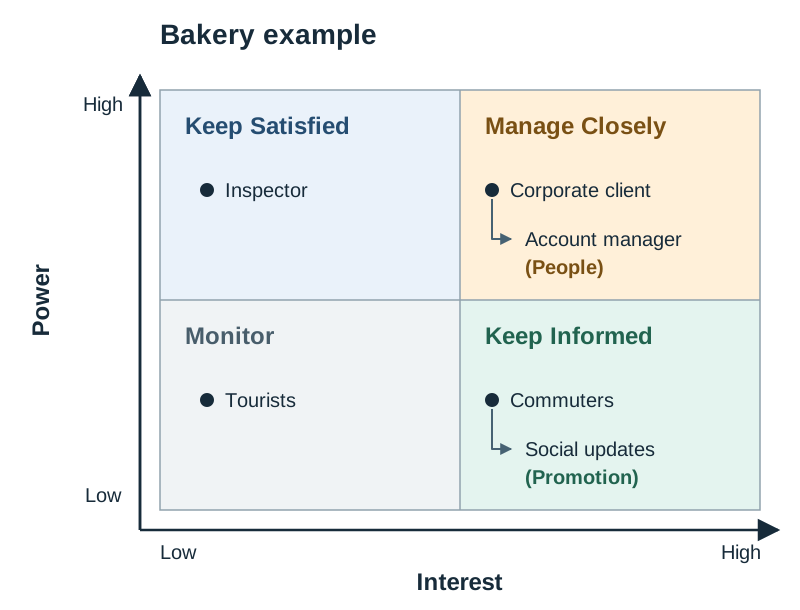
A power-interest grid is a stakeholder mapping grid that sorts customer groups or external organisations by their power to affect the company and their interest in its daily decisions. It creates four management quadrants:
- Manage Closely (High Power, High Interest): Key players who can make or break the business. Imagine a corporate client that accounts for 40% of an artisan bakery's daily catering revenue. The bakery manages them closely by assigning a dedicated account manager (People), building an online invoice portal (Process), and giving them tiered volume discounts (Price).
- Keep Satisfied (High Power, Low Interest): Influential stakeholders who have strong authority but little daily involvement. A national food safety inspector or a prominent newspaper restaurant critic falls here. The bakery keeps them satisfied by maintaining spotless kitchen hygiene (Product) and sending formal invitations to annual menu launches (Promotion).
- Keep Informed (Low Power, High Interest): Regular, passionate buyers whose individual spending is small but whose collective voice matters, such as local morning commuters buying single coffees. The bakery keeps them informed using a phone loyalty app and quick social media updates about seasonal muffin batches (Promotion).
- Monitor (Low Power, Low Interest): Occasional shoppers with minimal commercial impact, such as tourists passing through town once a year. The bakery monitors them with minimal effort, relying on eye-catching shop signage (Promotion) and clear location listings on online map apps (Place).
A STEEPLE analysis audits seven external macro-environmental forces to uncover market risks and opportunities, prompting direct adjustments across the marketing mix:
- Social: Healthier consumer eating habits encourage an Irish soft drinks company to launch a natural sparkling water infused with real fruit (Product).
- Technological: The rise of smartphone shopping apps prompts a retail clothing boutique to launch click-and-collect ordering (Place, Process).
- Economic: Higher household heating and mortgage bills reduce disposable income, leading a food brand to introduce budget family-size pasta packs (Price).
- Environmental: Public concern over single-use plastic waste pushes a brand to switch shampoo packaging to aluminium bottles (Packaging).
- Political: Government public health initiatives like the sugar-sweetened drinks tax push beverage makers to reformulate recipes with natural alternatives to avoid the levy (Product, Price).
- Legal: Stricter consumer regulations restrict misleading food packaging descriptions and ban junk food adverts on children's television channels (Promotion, Packaging).
- Ethical: Growing public backlash against sweatshop labour leads a clothing manufacturer to source fair-trade cotton and audit overseas stitching factories (Product, Promotion).
Digital Disruption and Ethical Marketing
Rapid shifts in digital technology have caused significant disruption across the commercial landscape, transforming how businesses study consumer habits and deliver campaigns, while also creating new vulnerabilities.
In market research, software algorithms and online platforms let businesses monitor consumer activity in real time through website clicks, digital checkout histories, social media sentiment tools, and loyalty apps. This provides immediate, low-cost behavioral data. At the same time, online data can mislead managers if older or less tech-savvy groups are excluded from the sample. Collecting customer information also brings serious compliance responsibilities under the General Data Protection Regulation (GDPR), where mishandling private records attracts heavy fines.
Digital transformation has shifted every corner of the marketing mix. Cloud storefronts let small rural craft producers sell globally (Place). Machine-learning advertising engines direct paid messages at hyper-specific interest groups (Promotion). Dynamic pricing software recalculates airline seat fares and hotel room rates every minute based on live demand spikes (Price). Automated chatbots answer standard customer delivery questions around the clock (Process).
Yet digital tools also increase business risks. Comparison websites make it easy for shoppers to swap brands over small price differences. Furthermore, a handful of poor online reviews or viral customer complaints can damage a brand's trading reputation in hours.
Ethical marketing means running commercial promotions with honesty, fairness, and respect for consumers. Under the Consumer Protection Act 2007, enforced by the Competition and Consumer Protection Commission (CCPC), businesses cannot publish misleading advertisements, print fake original prices, or claim false awards. Ethical marketing also requires keeping customer data secure under GDPR, presenting transparent billing without surprise subscription traps, and refusing to push sugary snacks or predatory gaming microtransactions at young children.
Sustainable marketing focuses on green operations, using recyclable packaging, local supply networks, and repair schemes. When an enterprise fakes or exaggerates environmental actions to look green, it commits greenwashing.
Investing in honest ethics and sustainability brings clear commercial benefits. It earns long-term customer trust, protects the business from CCPC fines or consumer boycotts, and justifies fair premium prices among environmentally aware shoppers. The trade-off is higher unit production costs. Ethical raw ingredients, certified green packaging, and living-wage labour standards raise total bills. In tough economic times, price-sensitive shoppers might abandon green products for cheaper mass-produced alternatives.
Evaluating the options, authentic ethical marketing remains the best commercial strategy. Sourcing better materials costs more upfront, but the long-term dangers of deceptive greenwashing—including formal investigations, legal penalties, and permanently broken consumer trust—carry far greater financial risks.
Key terms
- Marketing Mix
- The coordinated set of seven tactical elements—product/service, price, promotion, place, packaging, people, and process—used by an enterprise to satisfy target customer needs and achieve commercial goals.
- Target Market
- The specific group of consumers toward which a business directs its products, services, and promotional campaigns.
- Market Research
- The systematic gathering, recording, and analysing of data about consumers, competitors, and market trends to support commercial decisions.
- Market Segmentation
- Dividing a broad consumer market into distinct sub-groups based on shared geographic, demographic, or psychographic characteristics.
- Niche Market
- A small, highly specialised segment of a broader market with distinct consumer demands, often overlooked by mainstream competitors.
- Unique Selling Point (USP)
- A distinctive feature, benefit, or characteristic that separates a product or service from rival offerings in the eyes of the consumer.
- Product Life Cycle
- The commercial path of a product across five stages: introduction, growth, maturity, saturation, and decline.
- Extension Strategies
- Marketing steps taken during the maturity or saturation stages to boost sales and prevent a product from sliding into terminal decline.
- Own-Brand
- Products made for and sold under the private label of a retail supermarket chain rather than an independent manufacturer's name.
- Channel of Distribution
- The commercial pathway and network of intermediaries that moves a good or service from the original producer to the final customer.
- Cost-Plus Pricing
- A pricing approach where a business calculates the total unit cost of production and adds a set percentage profit mark-up to establish the selling price.
- Price Skimming
- Setting a high initial price at product launch to recoup development outlays from early adopters before gradually lowering the price.
- Penetration Pricing
- Setting a low introductory price to undercut rivals, win rapid market share, and build customer volume before raising prices later.
- Loss Leader
- A popular item retailed below cost price to draw customer footfall into a shop in the expectation they will buy other, profitable goods.
- Premium Pricing
- Setting a permanently high price to create an image of superior quality, status, and exclusivity.
- Price Discrimination
- Charging different prices to different customer groups for the exact same product or service based on criteria like age, time, or location.
- Promotional Mix
- The combination of advertising, sales promotion, public relations, and personal selling used to communicate with target buyers.
- Power-Interest Grid
- A stakeholder mapping tool that plots groups by their relative power and interest to direct business engagement and marketing adjustments.
- STEEPLE Analysis
- An analytical model that reviews social, technological, economic, environmental, political, legal, and ethical external influences on a business.
- Disruptive Impact
- The transformative effect of digital technology in reshaping traditional business models, competitive rivalries, and consumer habits.
- Greenwashing
- The deceptive practice of making exaggerated, unsubstantiated, or misleading claims about environmental credentials to look sustainable.
Check yourself
A product incurs €40 in direct materials, €20 in direct labour, and €15 in overheads. Calculate the selling price using a 40% cost-plus mark-up.
Total unit cost is €75 (€40 + €20 + €15). The 40% mark-up is €30 (€75 × 0.40). Adding mark-up to cost gives a selling price of €105.
A corporate client represents 30% of a gym's total annual membership revenue and regularly reviews employee wellness benefits. In which quadrant of the power-interest grid does this client sit, and how should the gym adjust its marketing mix?
The corporate client sits in the 'Manage Closely' quadrant (high power, high interest). The gym should adjust its mix by assigning a dedicated account manager (People), creating an automated corporate booking portal (Process), and negotiating a tailored volume discount (Price).
How does price skimming differ from penetration pricing at product launch?
Price skimming sets a high initial price to recover development expenses from early adopters, whereas penetration pricing sets a low initial price to capture mass market share rapidly.
Identify two methods a business can use to extend the product life cycle during the saturation stage.
Modifying the product by adding new features or flavour variations, and finding new target markets or repositioning the product's primary use.
Distinguish between desk research and field research, giving one advantage of each.
Desk research analyses existing secondary information (such as CSO reports) and has the advantage of being cheap and fast. Field research collects original, first-hand data (such as surveys) and has the advantage of being up to date and tailored to specific business needs.
What are the seven elements of the marketing mix specified in the Leaving Certificate Business syllabus?
Product/service, pricing, promotion, place, packaging, people, and process.