

Getting started in business turns an entrepreneurial idea into a viable commercial reality. Under the Leaving Certificate Business specification, this topic centres on the role of the business plan, choosing an effective business model, and mapping operations with the Business Model Canvas. It also examines how ethics and sustainability are integrated into commercial planning, and how digital transformation—driven by digitalisation, big data, and artificial intelligence—creates disruptive impacts across both traditional and technology-driven business models.
The Business Plan and Its Functions
A business plan is a comprehensive written document outlining an enterprise's goals, operations, marketing strategy, and financial projections. It serves as a vital management and decision-making tool across all stages of enterprise development, from start-up and day-to-day operations to future expansion.
Key Functions of a Business Plan
- Raising finance: Financial institutions, investors, and state agencies such as Local Enterprise Offices (LEOs) or Enterprise Ireland require a coherent business plan before approving loans, equity investments, or grants. It demonstrates that the enterprise is commercially viable and capable of meeting its financial obligations.
- Setting goals and direction: The plan defines clear targets for sales, market share, and break-even milestones. This gives management and employees a unified direction.
- Control and monitoring: Actual performance can be measured against planned projections. Variances are identified early so corrective action can be taken, such as arranging an overdraft facility if a cashflow forecast reveals a projected deficit.
- Reducing risk: Researching markets, competitors, resources, and cost structures exposes potential pitfalls before capital is committed.
- Attracting key partners and staff: A well-structured plan reassures prospective suppliers, distributors, and senior staff of the firm's credibility and long-term viability.
Business Planning across Development Stages
- Start-up: The plan focuses on proving market feasibility, establishing operational capability, and securing seed funding.
- Operations: It becomes an operational benchmark to monitor budgets, manage cashflow, and evaluate day-to-day trading.
- Expansion: The plan is updated with historical records and forecasts to justify expansion capital for new premises, exporting, or diversification.
Ethical and sustainability considerations must be embedded across the business plan. This includes setting out commitments to fair employment, transparent supply chains, sustainable packaging, and reporting on Environmental, Social, and Governance (ESG) factors.
The Business Model and the Canvas (BMC)
A business model is an element within the business plan which outlines how a company will operate, create, deliver, and capture value in economic, social, and cultural contexts.
- Creates value: Defines the features, benefits, and problem-solving solutions that make a product or service worthwhile to buyers.
- Delivers value: Sets out the distribution channels, logistical operations, and communication methods used to get the offering to the customer.
- Captures value: Determines how the business generates income from what it creates. This covers pricing strategies and revenue streams (single transactions or recurring payments) so income exceeds expenses and yields a profit.
The Nine Elements of the Business Model Canvas
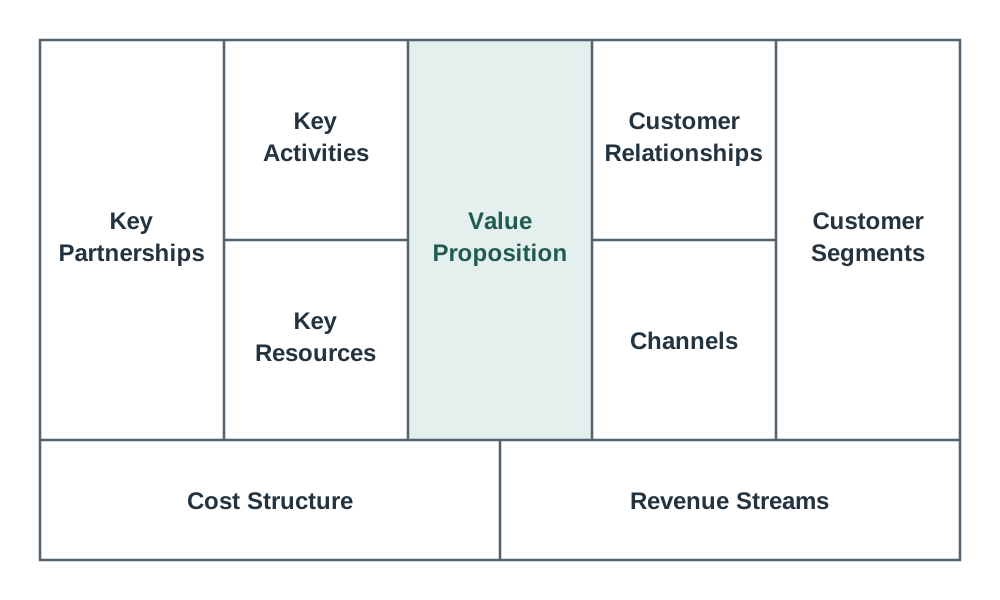
The Business Model Canvas is a one-page strategic management tool that maps an enterprise across nine interconnected building blocks.
- Value Proposition: The central block connecting customer demand with operational capability. It is the distinct bundle of products or services that solves a specific customer problem or satisfies a need, giving buyers a compelling reason to choose this business over competitors.
- Customer Segments: The specific groups of individuals or organisations the business aims to serve (for example, budget shoppers or niche commercial clients).
- Channels: The touchpoints through which the enterprise communicates with customer segments and delivers its value proposition (such as retail premises, e-commerce platforms, or wholesale networks).
- Customer Relationships: The type of interaction established with each segment, ranging from dedicated personal assistance to automated self-service.
- Key Activities: The essential operational tasks the firm must execute to make the model work, such as manufacturing, software design, or distribution.
- Key Resources: The crucial physical, financial, intellectual (patents, brands), and human capital required to deliver the offering.
- Key Partnerships: The network of suppliers and strategic partners that provide resources or perform activities to reduce risk and achieve economies of scale.
- Cost Structure: The financial outlay required to run the model, categorised into fixed costs (rent, insurance) and variable costs (raw materials, delivery charges).
- Revenue Streams: The cash inflows generated from each customer segment through one-off sales, subscription fees, or service charges.
Practical Application: CraftKitchen Bakery
- Value Proposition: Certified fresh artisan gluten-free bread.
- Customer Segments: Coeliac consumers and health-conscious local shoppers.
- Channels: Physical bakery shop in Galway and an online postal delivery service.
- Customer Relationships: Warm over-the-counter service and automated online order tracking.
- Key Activities: Artisan baking, recipe formulation, and local packaging.
- Key Resources: Commercial ovens, skilled artisan bakers, and gluten-free certification.
- Key Partnerships: Certified gluten-free flour suppliers and a reliable nationwide courier.
- Cost Structure: Premises rent and equipment depreciation (fixed), plus baking ingredients and postage fees (variable).
- Revenue Streams: Over-the-counter shop transactions and recurring weekly box subscriptions.
Common Business Models
The specification outlines several common business models that operate across the economy:
1. Retailer Model
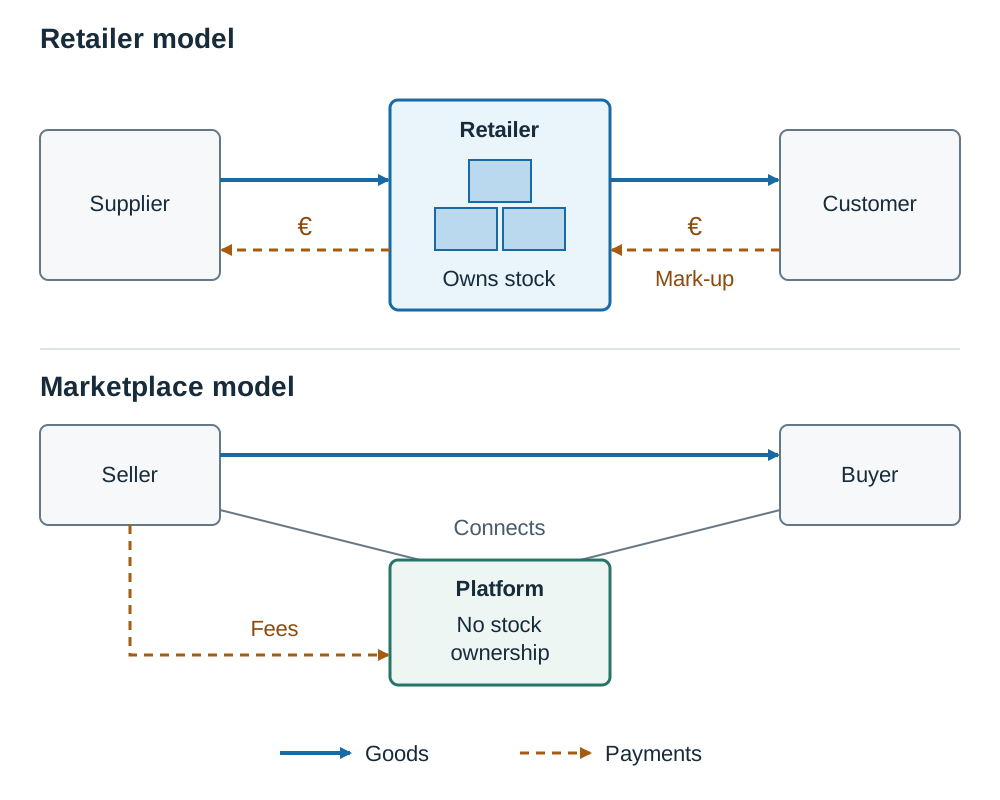
The retailer buys finished goods from manufacturers or wholesalers, adds a percentage mark-up to cover overhead expenses (such as rent, utilities, and wages), and sells directly to the end consumer. Profit is generated from the margin between the wholesale purchase cost and the retail selling price.
2. Manufacturing Model
The business acquires raw materials and transforms them into finished goods using machinery, facilities, and labour. Manufacturers sell downstream to wholesalers, retailers, or directly to consumers. It involves high initial capital expenditure on physical assets, balanced by economies of scale as unit costs fall with higher production volumes.
3. Subscription Model
Customers pay a recurring fee at regular intervals (weekly, monthly, or annually) for continuous access to a product or service. This replaces one-off transactions with predictable, steady cash inflows. Non-digital examples include a monthly gym membership or daily newspaper home delivery.
4. Franchise Model
A franchisor licenses an established, proven business concept, brand name, and operational system to an independent franchisee. The franchisee owns and runs their own outlet, paying an initial fee and an ongoing royalty (a percentage of turnover) to the franchisor in return for operational training, marketing support, and supply chain access. Examples include Supermac's and Insomnia Coffee.
5. Affiliate Model
A business or individual promotes third-party goods or services through digital content. When a consumer clicks a tracked link and completes a purchase, the affiliate earns a performance-based commission fee. The affiliate carries no stock and handles no fulfilment, but relies on building an engaged audience.
Technology-Driven Business Models
The specification identifies four core models of the digital economy:
1. Marketplace Model
A digital platform connecting independent third-party buyers and sellers. The platform facilitates commercial transactions without owning the underlying inventory. It earns revenue by charging transaction commissions, listing fees, or premium seller subscriptions. Examples include DoneDeal, Etsy, and Amazon Marketplace.
2. Subscription Model (Digital)
Users pay recurring fees for continuous access to digital media, cloud software, or online services. Extra subscribers can be served with near-zero marginal cost, and providers collect detailed user data to refine their offerings. Examples include Spotify, Netflix, and Microsoft 365. Many software providers combine this with a freemium pricing structure, where basic features are free but advanced tools require a paid monthly subscription.
3. Crowdfunding Model
A digital platform allowing individuals, charities, or businesses to pitch a project and collect financial contributions from a large public audience. The platform operator earns income by deducting a percentage commission fee from funds successfully raised. Key variants include:
- Reward-based: Backers receive a physical product or perk once produced (e.g., Kickstarter).
- Donation-based: Backers donate without financial return, commonly used for community or social causes (e.g., GoFundMe).
- Lending / Debt-based: Backers lend capital and receive repayment with interest over time.
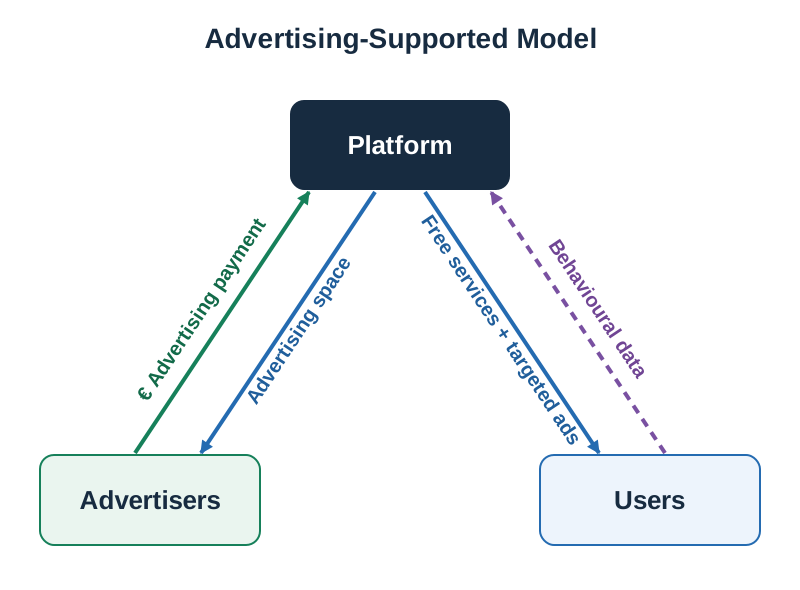
4. Advertising-Supported Model
The platform provides free content, search tools, or communication services to end users. It earns revenue by selling targeted advertising space to businesses, using consumer behavioural data to show advertisements to relevant demographics. Examples include Google Search, YouTube, and Meta (Instagram).
Comparing Digital and Non-Digital Models
When answering exam questions that ask you to compare commercial models, give an account of their similarities and/or differences, referring to both models throughout your answer.
| Comparison Criteria | Traditional Model | Digital Equivalent |
|---|---|---|
| Stock Ownership (Retailer vs. Marketplace) | A retailer (e.g., Dunnes Stores) buys and owns inventory, taking on the financial risk of unsold stock and earning profit through a mark-up. | A digital marketplace (e.g., DoneDeal) owns no stock. It acts as an intermediary connecting third parties and earns fees on transactions. |
| Marginal Cost (Print vs. Digital Subscription) | A print newspaper incurs ongoing printing, ink, and physical transport costs for every single additional subscriber added. | A digital streaming service (e.g., Spotify) serves an extra subscriber with near-zero extra delivery cost via existing cloud infrastructure. |
| Geographic Reach | Traditional physical businesses are restricted by their geographic location and store opening hours. | Digital platforms can trade nationally and globally 24 hours a day, 7 days a week, from launch. |
| Audience Data (Print vs. Digital Advertising) | A local free newspaper delivers print advertisements to all households blindly, with no mechanism to track exact reader engagement. | A digital platform uses big data algorithms to target advertisements based on individual user interests, browsing habits, and demographics. |
How Established Businesses Adapt to the Digital Economy
- Retailers: Physical shops add e-commerce storefronts with click-and-collect services to combine high-street presence with online convenience.
- Publishers: Print newspapers move readership behind digital paywalls, replacing declining physical circulation with recurring digital subscriptions.
- Service Providers: Traditional fitness gyms launch companion apps featuring live-streamed workouts and on-demand nutrition advice.
Digital Transformation as a Driver of Change
Digital transformation describes how ongoing developments in digital technology revolutionise the business landscape and alter how businesses operate. It acts as a powerful driver of change across four major areas:
- How the business operates: Digitalisation replaces manual and paper-based processes with integrated enterprise software, cloud accounting, and automated stock systems. This streamlines workflows, reduces human administrative errors, and cuts operating expenses.
- How customers engage with business: Consumers shop through mobile apps, compare prices in real time, expect instant digital customer support, and consult public reviews before buying. Businesses must maintain an active digital presence and respond rapidly.
- The world of work: Digital tools support remote and hybrid work practices, collaborative cloud workspaces, and videoconferencing. While manual and repetitive clerical jobs may be displaced by automation, new roles emerge in data analysis, software engineering, and digital marketing.
- How decisions are made:
- Big data: Businesses gather vast quantities of real-time information on consumer purchasing patterns, website visits, and supply chain delays. Managers use evidence-based predictive analytics rather than intuition to make stocking, staffing, and pricing decisions.
- Artificial intelligence (AI): Machine learning systems automate customer interactions (e.g., customer service chatbots), detect payment fraud, and forecast consumer demand patterns.
Disruptive Impact: Opportunities and Challenges
The disruptive impact of digital technology can be both positive and negative:
- Opportunities: Rapid national and international scalability without heavy investment in premises, lower communication overheads, and personalised customer marketing.
- Challenges: Established firms face loss of trade to nimble digital-first entrants. Furthermore, implementing cloud systems and staff retraining requires significant upfront capital investment. Digital firms must also comply with the EU General Data Protection Regulation (GDPR), which applies directly in Ireland; the Data Protection Act 2018 gives further effect to it, and the Data Protection Commission can impose substantial fines for failing to protect customer data.
Ethics, Sustainability, and the Circular Economy
Modern enterprise planning requires incorporating ethics and sustainability directly into the business model, rather than treating them as optional marketing add-ons.
- Ethical Supply Chains and Value Propositions: Modern consumers actively seek out businesses with transparent practices, fair pay for workers, and ethically sourced raw materials (such as Fairtrade certified produce). Building ethical sourcing into key partnerships enhances brand reputation and shields against consumer boycotts.
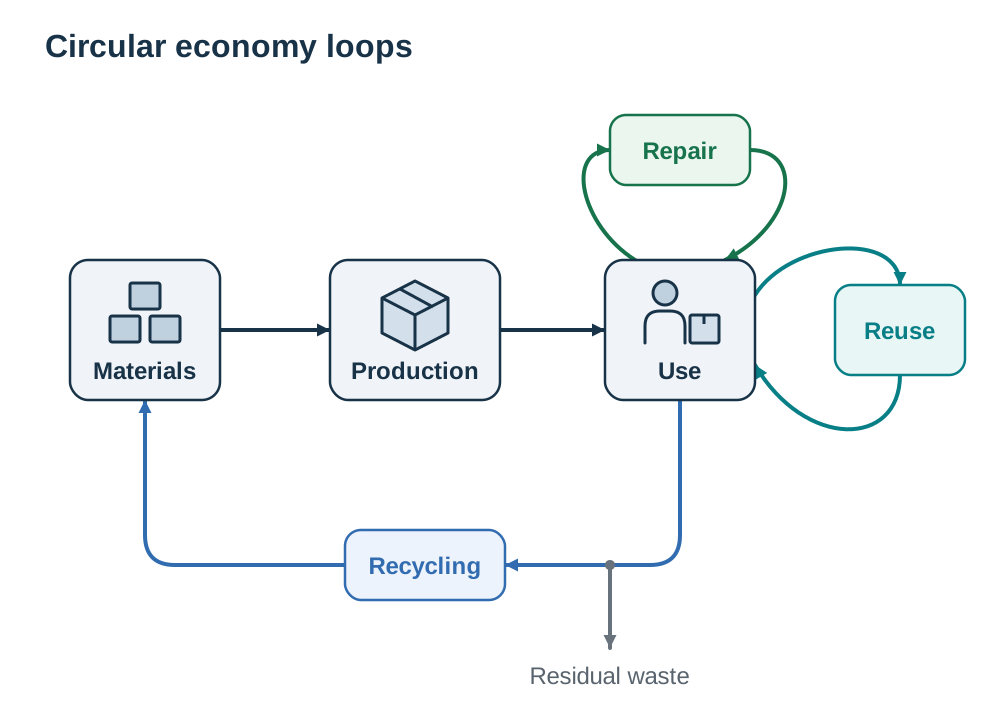
- Environmental Sustainability and the Circular Economy: A circular economy is a model of production and consumption which extends the lifecycle of products, reduces waste, and creates further value through repair, reuse, and recycling. In business planning, this involves designing durable products, cutting single-use packaging, and operating low-carbon distribution networks.
- Governance and Risk Management: Incorporating sustainability into core planning helps businesses prepare for stricter environmental regulations, avoid carbon levies, and appeal to commercial investors who require formal Environmental, Social, and Governance (ESG) reporting.
Key terms
- Business Model
- An element within the business plan which outlines how a company will operate, create, deliver, and capture value in economic, social, and cultural contexts.
- Business Model Canvas
- A one-page strategic tool used to map out a business model under nine elements: key partners, key activities, key resources, value proposition, customer relationships, channels, customer segments, cost structure, and revenue streams.
- Value Proposition
- The distinct collection of products or services that solves a customer problem or satisfies a distinct customer need, giving buyers a reason to choose that business over rivals.
- Disruptive Impact
- How digital technology changes the way businesses operate (including within the workplace) and how consumers interact with business, with consequences that can be both positive and negative.
- Marketplace Model
- A digital platform connecting independent buyers and sellers to conduct transactions without the platform operator owning the underlying inventory.
- Crowdfunding
- A platform business model that connects project creators with a wide public audience to raise funds through donations, rewards, or loans, earning fees on the money raised.
- Advertising-Supported Model
- A commercial model providing free content, search tools, or communication to users while generating revenue by selling targeted advertising space to commercial clients.
- Affiliate Model
- A revenue structure where an individual or publisher earns a commission by driving sales to a third-party merchant through tracked referral links.
- Circular Economy
- A model of production and consumption which extends the lifecycle of products, reduces waste, and creates further value through repair, reuse, and recycling.
- Digital Transformation
- The integration of digital technology across all areas of a business, fundamentally altering how it operates, delivers customer value, and adapts to changing markets.
- Big Data
- Extremely large volumes of diverse data analysed computationally to reveal consumer patterns, operational trends, and associations that guide evidence-based decision-making.
- Artificial Intelligence (AI)
- Software systems capable of performing tasks that normally require human intelligence, such as visual perception, predictive demand forecasting, and automated decision-making.
Check yourself
State the glossary definition of a business model.
A business model is an element within the business plan which outlines how a company will operate, create, deliver, and capture value in economic, social, and cultural contexts.
State one key similarity and one key difference between a gym membership and a digital subscription like Spotify.
Similarity: both models charge a regular recurring fee for continuous access. Difference: serving an additional Spotify user costs almost zero marginal cost and has global reach, whereas an extra gym member requires physical space and equipment in a specific geographic location.
How does big data change how managers make decisions in retail businesses?
Big data provides vast amounts of real-time evidence regarding customer purchases and habits, enabling managers to base stock, pricing, and promotional decisions on data patterns rather than intuition or guesswork.
What is the primary way a crowdfunding platform earns revenue as a business model?
The platform charges a percentage fee or transaction commission deducted from the funds successfully pledged or raised on its website.