

Market research and identifying target markets allow businesses to understand consumer demand, reduce commercial risk, and allocate marketing resources efficiently. Under the Leaving Certificate Business specification, this topic explores how enterprises collect and evaluate primary and secondary data, apply analytical models such as STEEPLE and the power-interest grid to customer groups, adapt to digital disruption, and embed ethics and sustainability into the marketing mix.
The Purpose and Scope of Market Research
Market research is the systematic gathering, recording, and analysing of data about problems relating to the marketing of goods and services. Its core purpose is to reduce commercial risk and uncertainty before investing capital. Launching a new enterprise or expanding a product line involves high costs. High-quality market research protects a firm from sinking money into goods or services that lack viable consumer demand.
When explaining why businesses carry out market research, treat each reason as a distinct heading with an explanation and an example. A helpful memory aid for these reasons is S-N-C-P-F:
- Strengths and Weaknesses: Identifying what existing products do well and pinpointing areas needing improvement relative to buyer expectations.
- Needs Identification: Determining whether a genuine market exists, assessing total potential demand, and identifying unmet customer needs.
- Consumer and Competitor Analysis: Discovering why consumers buy, their spending habits, who the rival businesses are, and what market share those rivals hold.
- Promotion and Product Testing: Testing brand names, packaging styles, and promotional messages on sample audiences before committing to a full launch.
- Future Trends: Tracking upcoming demographic changes, economic shifts, or new consumer priorities such as environmental sustainability.
How Research Shapes the Marketing Mix
Market research connects directly to the marketing mix (product/service, pricing, promotion, people, packaging, process, and place). Research identifies the target market, the target market determines how a firm shapes each of those seven elements, and customer feedback reveals the firm's unique selling point (USP). For instance, customer research might reveal that buyers want fragrance-free lotions (Product), buy primarily online (Place), and demand plastic-free containers (Packaging).
Desk Research vs Field Research
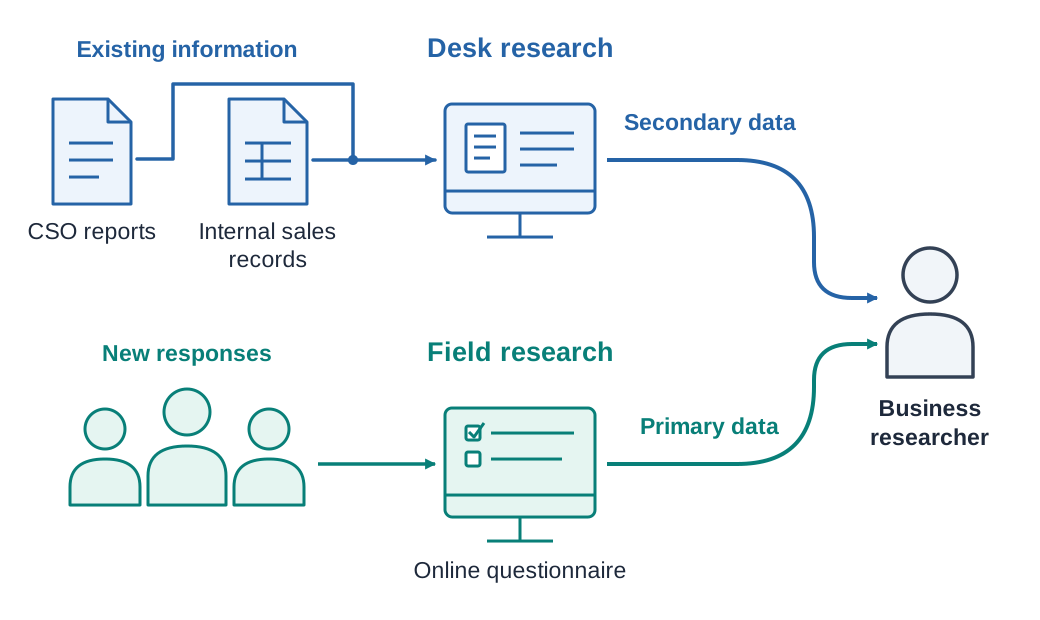
To build a dependable profile of the market, businesses gather secondary data through desk research and primary data through field research.
Desk Research (Secondary Research)
Desk research involves examining information that already exists, collected previously by the business itself (internal sources) or by another organisation (external sources). Common sources include:
- Official publications from the Central Statistics Office (CSO) and state agencies such as Enterprise Ireland.
- Commercial market reports from specialist research agencies.
- Internal records, including previous sales invoices, customer relationship management (CRM) records, and financial accounts.
- Trade publications, industry reports, and national media coverage.
Advantages and Disadvantages of Desk Research
- Advantages: It is inexpensive, readily accessible, and delivers large volumes of background data quickly.
- Disadvantages: Because the data was collected for another purpose, it may lack specific detail for the firm's exact problem. It can also be out of date or subject to reporting bias.
Field Research (Primary Research)
Field research involves gathering original, first-hand data directly from consumers in the marketplace for a specific project. Common methods include:
- Surveys and Questionnaires: Administered face-to-face, over the phone, or digitally through targeted online forms using open and closed questions.
- Focus Groups: Facilitated discussions with small groups of target consumers (usually 6 to 10 people) to gather qualitative opinions on product concepts, packaging, or tastes.
- Observation: Watching and recording real consumer behaviour in retail aisles or tracking navigation clicks on websites without direct questioning.
- Mystery Shopping: Sending trained evaluators disguised as everyday shoppers into service outlets to assess customer service quality and operational standards.
- Test Marketing: Launching a product in one limited geographical area or through a small number of outlets before a full national launch to measure actual purchasing behaviour. For example, a food company might sell a new snack flavour only in Munster shops for three months. This shows what customers actually buy rather than what they claim they would buy, letting the firm adjust price or packaging before committing full capital. However, test marketing is expensive, and competitors can see and copy the idea early.
Advantages and Disadvantages of Field Research
- Advantages: The information is up to date, answers the business's own questions, and belongs to the business, so competitors do not have access to it.
- Disadvantages: Collecting primary data requires considerable time, trained fieldworkers, and high expenditure. Poorly phrased questions can also introduce bias.
These research competencies mirror the skills required in the Business Alive Investigative Study (worth 40% of your Leaving Certificate grade), where you must select credible primary and secondary sources, evaluate their value, and acknowledge them accurately.
Data Types, Sampling, and Assessing Reliability
Conducting effective market research requires an understanding of what kind of data is being collected, who is being asked, and whether the findings can be trusted.
Quantitative vs Qualitative Data
- Quantitative data is numerical and measurable (e.g. '68% of surveyed commuters would pay €3 for an oat-milk coffee'). It usually comes from closed questions in surveys and is straightforward to analyse, compare, and display in charts.
- Qualitative data describes opinions, feelings, attitudes, and reasons (e.g. 'shoppers reported that the lotion felt greasy and had an overpowering scent'). It usually comes from focus groups and open-ended interview questions. It explains why people behave the way they do, but it is harder to categorise and evaluate objectively.
Sampling
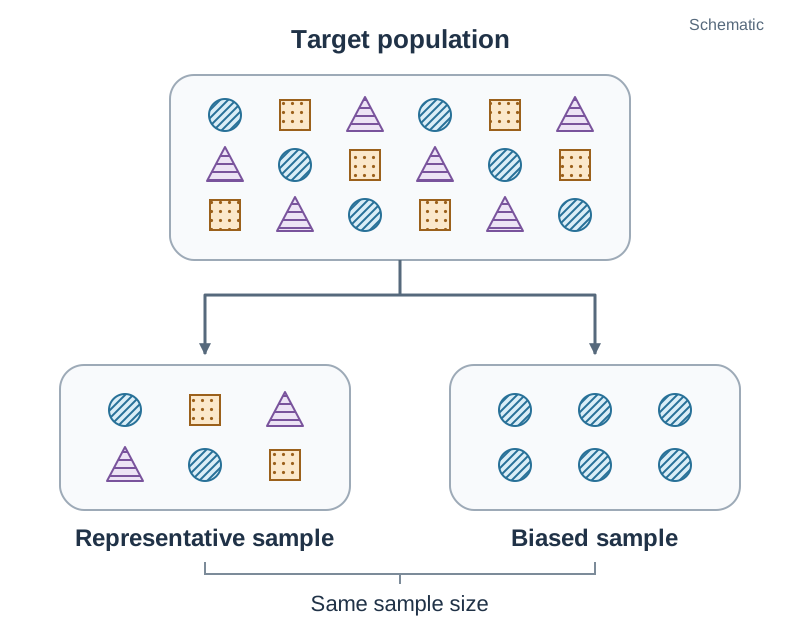
A business rarely has the time or money to survey every potential buyer. Instead, it selects a sample, which is a smaller sub-group chosen to represent the entire target market.
- The sample must be representative, meaning it reflects the demographic proportions (such as age, gender, income, and location) of the broader target population. A sports-nutrition brand surveying only male university athletes would obtain unrepresentative data that misleads decisions about the general fitness market.
- The sample must be large enough to provide reliable patterns. Surveying ten friends does not provide a sound statistical basis for an expensive commercial launch.
Evaluating the Reliability of Market Research
Before committing funds based on research findings, a business must assess data on five criteria:
- Source Credibility: Who gathered the data? Official statistics from the CSO or peer-reviewed market analyses are more credible than claims published in a supplier's promotional brochure.
- Currency: When was the data collected? Consumer shopping habits change rapidly; pre-2020 retail footfall figures may be inaccurate in a post-pandemic market.
- Potential Bias: Was the sample skewed, or were questionnaire items phrased as leading questions? Surveys funded by an industry interest group often highlight findings favourable to their members.
- Sample Size and Representation: Was the sample large enough and sufficiently diverse to reflect the full target group?
- Information Gaps: What key data is missing, and how do these omissions limit the conclusions management can draw?
Target Markets, Market Segmentation, and Niche Markets
A target market is the specific group of consumers with shared characteristics at whom an enterprise aims its products, services, and marketing campaigns. Because no single business can satisfy every consumer, firms use market segmentation to identify their target market.
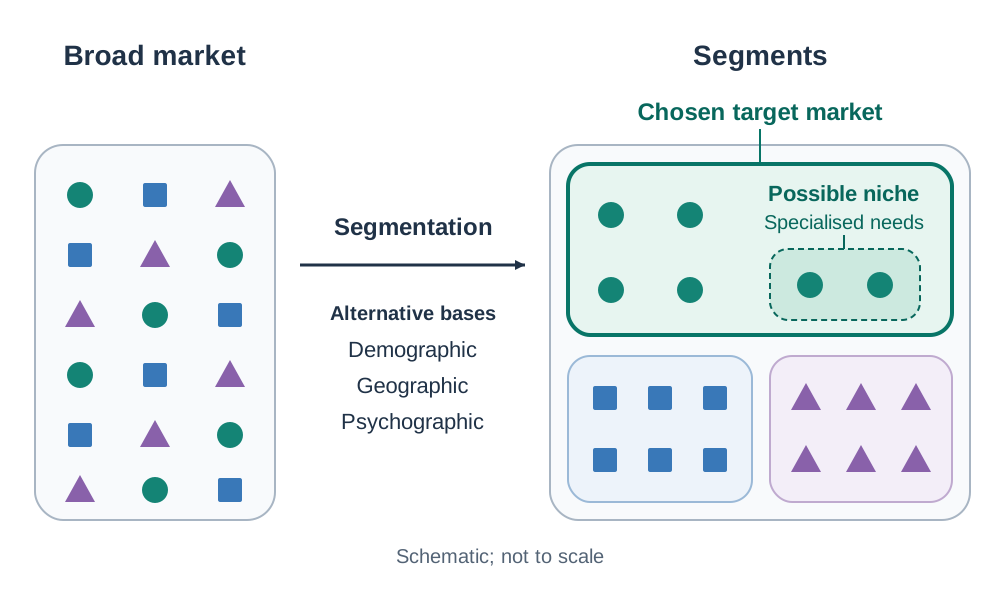
Market segmentation is the process of dividing a broad, varied commercial market into smaller, distinct sub-groups of consumers who share similar characteristics, needs, or purchasing habits. It helps businesses design tailored products, avoid wasted advertising expenditure, and build stronger customer loyalty.
Businesses segment markets using three primary bases:
- Demographic Segmentation: Dividing buyers according to measurable population statistics such as age, gender, household income, occupation, family size, or education. For example, Cadbury targets Dairy Milk Buttons at children and parents, while vehicle manufacturers target compact city hatchbacks at younger drivers and executive saloons at higher earners.
- Geographic Segmentation: Dividing the market by physical location, such as counties, regions, urban versus rural districts, or climatic zones. For instance, regional newspapers like The Clare Champion focus editorial content and retail distribution specifically on County Clare.
- Psychographic Segmentation: Dividing consumers by lifestyle choices, personal values, social attitudes, and opinions. For example, specialty food producers target consumers who deliberately buy certified organic produce or ethical goods regardless of a higher retail price.
Niche Markets
When an enterprise directs its entire marketing mix toward a small, highly specialised segment of a broader market with unique requirements, it operates in a niche market (such as bespoke handcrafted violins or vegan bridal footwear).
- Implications: Operating in a niche market means facing fewer direct competitors and enjoying strong customer loyalty, which allows the firm to charge premium prices. However, sales volumes are naturally small, leaving the firm vulnerable if consumer tastes change or if a larger rival enters that specialist space.
Analytical Tools: STEEPLE and the Power-Interest Grid
Businesses use structured analysis tools to understand what is happening in their external environment and to plan how to deal with different groups of customers.
Conducting a STEEPLE Analysis
A STEEPLE analysis examines the external environment of a business across seven headings. These forces originate outside the firm and sit largely beyond management's direct control, but their commercial impact must be anticipated. Below is an applied STEEPLE analysis for an Irish retail coffee chain:
- Social: Increased remote and hybrid working patterns mean reduced weekday commuter footfall in Dublin city centre. Issue of concern: The business may need to open suburban drive-through or neighbourhood outlets.
- Technological: Consumers increasingly expect pre-ordering via smartphone apps and digital loyalty cards. Issue of concern: The capital cost of developing and maintaining reliable app software.
- Economic: Inflation in coffee-bean prices, rising commercial energy tariffs, and increased labour costs put pressure on margins. Issue of concern: Deciding whether to increase cup prices without losing price-sensitive shoppers.
- Environmental: Public and statutory pressure to eliminate single-use takeaway cups and curb commercial landfill waste. Issue of concern: The operating cost of introducing reusable deposit-return cup schemes.
- Political: Government enterprise initiatives channelled through Local Enterprise Offices support new independent cafés, increasing high-street rivalry. Issue of concern: Protecting market share against agile local competitors.
- Legal: Statutory duties under the Consumer Rights Act 2022 regarding service quality, remedies, and refunds. Issue of concern: Ensuring all counter staff are trained to resolve customer service complaints lawfully.
- Ethical: Growing consumer expectation that coffee beans are sourced with fair pay guarantees for overseas growers. Issue of concern: Sourcing certified Fairtrade beans, which raises direct raw material costs.
Evaluation Judgement: The most immediate issue of concern is economic. Surging input costs squeeze profit margins instantly across every branch, leaving the firm no choice but to adjust pricing or streamline operations.
The Power-Interest Grid for Customer Groups
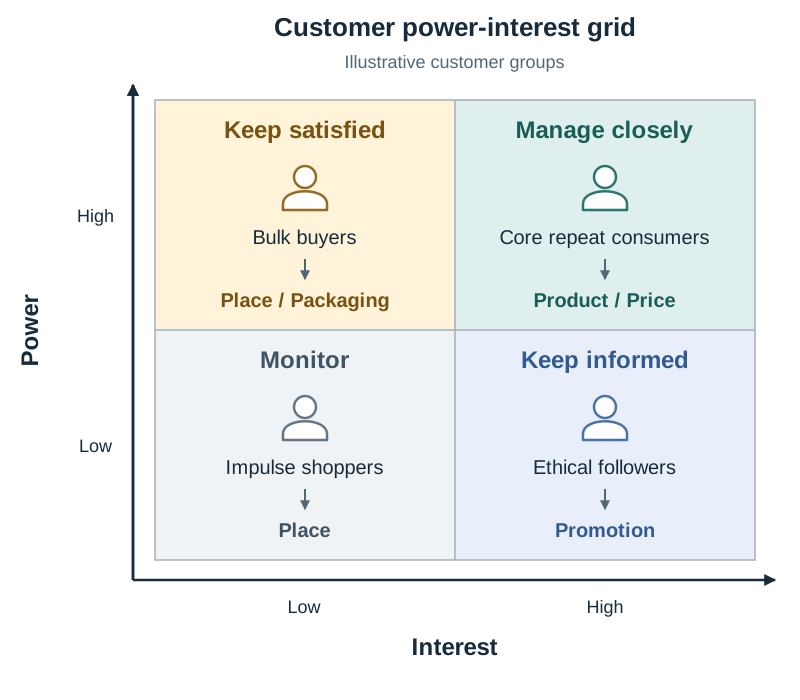
A power-interest grid is an analytical stakeholder mapping tool. For customer groups, power reflects how much their buying decisions, spending volume, or public feedback can affect the firm. Interest reflects how closely they care about the firm's decisions, ethics, and product updates. Mapping customer groups onto the grid allows the business to adjust its marketing mix:
| Power \ Interest | Low Interest | High Interest |
|---|---|---|
| High Power | Keep Satisfied: Large pharmacy or retail chains that buy in bulk but treat the line as one of many suppliers. Strategy: Adjust Place and Packaging by offering reliable pallet delivery and durable outer cartons. | Manage Closely: Core repeat consumers who purchase weekly, follow brand campaigns, and post reviews. Strategy: Adjust Product by seeking their input on new formulations, and adjust Price by offering dedicated loyalty discounts. |
| Low Power | Monitor: Occasional impulse shoppers who buy only when a standard product is out of stock. Strategy: Minimal marketing expenditure; maintain standard supermarket shelf presence (Place). | Keep Informed: Ethical consumer groups or social media followers who love the brand's sustainability story but rarely buy. Strategy: Adjust Promotion by sharing regular social media posts detailing carbon reduction progress. |
Digital Disruption and Transformation in Marketing
The specification defines disruptive impact as the way digital technology transforms how businesses operate and how consumers interact with enterprises. This disruption brings both commercial opportunities and operational risks.
How Digital Technology Has Changed Marketing
- Big Data and Behavioural Analytics: Instead of waiting weeks for postal questionnaires, businesses track website visits and clicks, customer search queries, and loyalty-card purchases as they happen to detect buying patterns.
- Targeted Online Advertising: Social media channels and search engines allow an enterprise to display advertisements specifically to narrow demographics (for example, targeting 25- to 34-year-olds in Galway interested in outdoor hiking) at a modest daily cost.
- Influencer Marketing: Brands collaborate with digital content creators who review products directly to engaged audiences. Under consumer protection guidelines, paid promotional posts must be clearly labelled as advertisements.
- Personalisation: Automated e-commerce algorithms recommend companion products tailored to individual customer browsing and order histories, driving repeat transactions.
- E-Commerce Expansion: Businesses can sell directly to domestic and international markets without maintaining expensive high-street retail premises.
Negative Impacts of Digital Disruption
- Reputational Exposure: Negative online customer reviews or viral social media complaints can damage brand equity rapidly.
- Intense Price Competition: E-commerce enables consumers to compare competitor prices instantly on their phones, eroding profit margins.
- Customer Fatigue: Consumers are increasingly weary of intrusive tracking, repetitive banner ads, and spam emails.
- Algorithmic Bias: Automated customer segmentation tools can deliver flawed insights if the underlying sales data is incomplete or unrepresentative.
- Regulatory Penalties: In Ireland, the General Data Protection Regulation (GDPR), an EU Regulation, alongside the Irish Data Protection Act 2018, strictly regulates how consumer data is collected and processed. Enforced by the Data Protection Commission (DPC), non-compliance can result in substantial fines and lasting damage to brand reputation.
Ethics and Sustainability across the Marketing Mix
Many consumers now expect businesses to be honest about how their goods are made and to limit harm to the environment. This gives firms a commercial reason, alongside a moral duty, to act responsibly.
Ethical Issues and Regulatory Controls
Unethical marketing practices include misleading advertising (such as deceptive health claims or hidden charges), greenwashing (making false or exaggerated environmental claims to appear eco-friendly), targeting aggressive promotions at vulnerable children, and processing customer records without explicit consent.
Key Irish bodies and legal frameworks govern these practices:
- The Consumer Protection Act 2007 outlaws misleading, false, and aggressive commercial practices.
- The Competition and Consumer Protection Commission (CCPC) is the statutory body enforcing consumer protection and competition law in Ireland.
- The Advertising Standards Authority for Ireland (ASAI) is the advertising industry's self-regulatory body. It enforces an industry code requiring all commercial marketing to be legal, decent, honest, and truthful.
- The Data Protection Commission (DPC) enforces compliance with GDPR and privacy rules.
Applying Ethics and Sustainability to the Marketing Mix
To demonstrate genuine corporate social responsibility, businesses must embed ethics across the seven elements of the marketing mix:
- Product/Service: Formulating products using non-toxic, sustainably sourced ingredients (such as Fairtrade cocoa) and designing durable goods that can be repaired, reused, or recycled within a circular economy.
- Pricing: Setting fair retail prices that reflect the genuine cost of ethically sourced materials while paying primary producers equitable, living wages.
- Promotion: Communicating verified environmental certifications honestly, avoiding all greenwashing, and ensuring paid digital endorsements are clearly identified.
- People: Paying fair wages to staff and suppliers throughout the supply chain, while training customer service staff to offer honest product advice rather than aggressive sales tactics.
- Packaging: Eliminating single-use plastics, choosing biodegradable or compostable containers, and minimising excess wrapping.
- Process: Operating energy-efficient production systems, reducing water waste, and running operations on renewable green energy.
- Place: Minimising distribution emissions by sourcing inputs locally where possible, using regional hubs, and transitioning to electric delivery fleets.
Key terms
- Market Research
- The systematic gathering, recording, and analysing of data about problems relating to the marketing of goods and services to reduce risk and make informed decisions.
- Desk Research
- Secondary research examining information that already exists, collected previously by the business itself or by external organisations.
- Field Research
- Primary research that involves gathering brand-new, first-hand data directly from consumers in the marketplace for a specific purpose.
- Primary Data
- Original, first-hand data collected directly from respondents for a specific research project.
- Secondary Data
- Pre-existing data that has already been compiled, processed, or published by another party for a different purpose.
- Quantitative Data
- Numerical, measurable information that can be statistically analysed, compared, and presented in charts or graphs.
- Qualitative Data
- Descriptive, non-numerical data examining the feelings, opinions, motivations, and reasons behind consumer behaviour.
- Sample
- A selected sub-group of individuals surveyed from a broader population, which must be representative to yield reliable insights.
- Test Marketing
- A field research technique where a product is launched in a limited geographical area to observe actual consumer buying behaviour before a national roll-out.
- Market Segmentation
- The process of dividing a broad commercial market into distinct sub-groups of consumers who share common characteristics, needs, or buying behaviours.
- Target Market
- The specific group of consumers with shared characteristics toward whom an enterprise directs its products, services, and marketing mix.
- Niche Market
- A small, highly specialised segment of a broader market with unique requirements, usually served by few competing firms.
- STEEPLE Analysis
- An analytical framework used to assess external macro-environmental forces: Social, Technological, Economic, Environmental, Political, Legal, and Ethical.
- Power-Interest Grid
- A 2x2 stakeholder mapping matrix that categorises groups based on their power and interest to determine appropriate management and marketing strategies.
- Disruptive Impact
- The transformational effect of digital technology on how businesses operate and how consumers interact with enterprises, generating both positive opportunities and operational challenges.
- Greenwashing
- The deceptive practice of making false, misleading, or exaggerated environmental claims to present an enterprise or product as eco-friendly.
- Circular Economy
- A model of production and consumption that extends the life cycle of products (for example through repair, reuse and recycling), reduces waste, and creates further value.
Check yourself
State three distinct reasons why an enterprise carries out market research before launching a new product.
To identify unmet customer needs and check if genuine demand exists; to analyse competitor strengths, weaknesses, and market share; and to test product attributes, brand names, and promotional messages on sample audiences to reduce financial risk.
A business surveys 15 customers in one local shop and concludes that 80% of Irish consumers want the product. Give two reasons why this research finding is unreliable.
First, the sample size (15 people) is far too small to be statistically reliable. Second, surveying shoppers in a single shop creates an unrepresentative sample that does not reflect the diverse demographic, regional, and income profile of the national Irish population.
Place 'surging inflation increases raw material and utility costs' under the correct STEEPLE heading and identify one resulting issue of concern for management.
Heading: Economic. Issue of concern: Management must decide whether to raise retail prices to protect profit margins, which risks losing price-sensitive customers to cheaper rivals.
How should a business adjust its marketing mix for a customer group placed in the High Power / High Interest quadrant of a power-interest grid?
The business should 'Manage Closely' by adjusting Product (consulting them on product formulation or features) and Price (offering exclusive loyalty terms or volume discounts) to retain their vital support.
Name two Irish regulatory bodies or legal statutes that protect consumers from unethical marketing practices such as misleading advertising.
The Competition and Consumer Protection Commission (CCPC) enforcing the Consumer Protection Act 2007, and the Advertising Standards Authority for Ireland (ASAI) enforcing its industry advertising code.