

Leaders establish direction and inspire commitment, whereas managers organise resources, coordinate teams, and control daily operations. This topic explores how different leadership styles shape workplace culture and drive innovation, how motivational theories explain employee effort, and how organisations handle workforce planning, ethical recruitment, and staff appraisal. It also covers modern working arrangements like blended working and teamwork, alongside practical routes for resolving workplace disputes using internal grievance procedures and statutory bodies like the Workplace Relations Commission and the Labour Court.
Leading vs Managing and Leadership Styles
Leadership and management are different sides of running an organisation, but a healthy business needs both.
- Management is about systems and order. A manager coordinates resources, sets weekly rotas, drafts budgets, and monitors daily output. Their main concern is getting current work done smoothly, predictably, and on schedule.
- Leadership is about direction and people. A leader sets out a future vision, builds trust, models values, and carries people through uncertain changes. While managers direct work from behind a desk, leaders motivate staff to want to do the work.
Leadership Styles in Practice
Different business situations call for different approaches to leading staff:
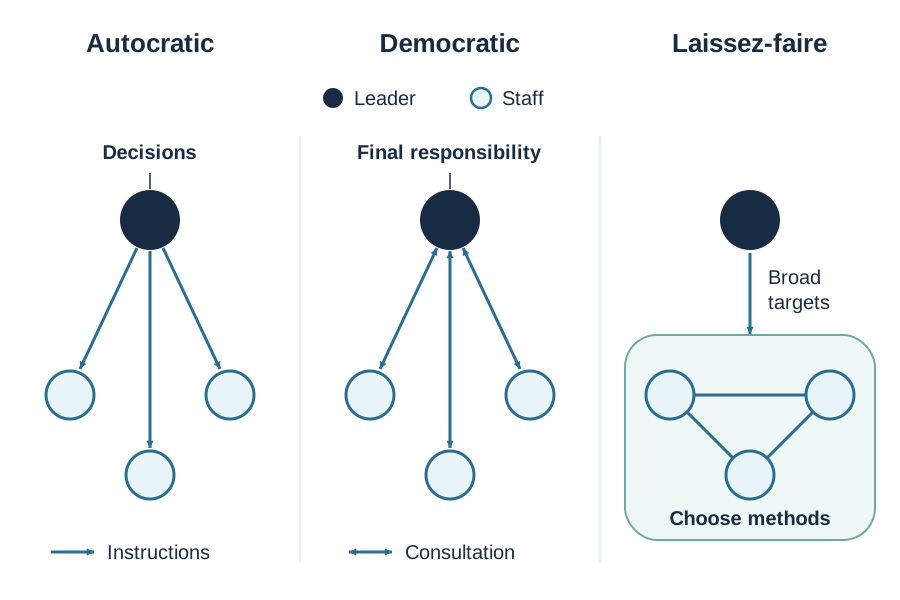
- Autocratic Leadership: The leader holds total decision-making power, issues direct instructions, and expects immediate compliance. Communication flows one way, from top to bottom. It works well during a genuine emergency, on safety-critical sites, or when saving a firm from imminent liquidation. If kept up for too long, it destroys employee morale, causes high labour turnover, and stops staff showing any initiative.
- Democratic Leadership: The leader consults employees, welcomes two-way discussion, and delegates tasks while keeping final responsibility. This style suits knowledgeable, experienced staff because it draws on their insights and makes them feel valued. The trade-off is time: building consensus can slow down urgent commercial moves.
- Laissez-Faire Leadership: The leader sets broad targets and steps back, leaving staff free to decide how they reach those goals. This hands-off method thrives in specialised environments like research laboratories, design agencies, or software teams where experts know their work intimately. The danger is drift and patchy standards if staff lack clear direction or discipline.
- Transformational Leadership: The leader acts as an energetic role model who inspires employees to look beyond immediate targets and buy into an ambitious long-term vision. They encourage team members to experiment and take calculated risks.
- Transactional Leadership: This style treats work as an explicit trade. The manager sets precise targets and rewards employees when they hit them, using bonuses or commissions, while applying penalties or warnings when standards drop.
Organisational Culture and Corporate Wellness
Organisational culture is often described as 'the way we do things around here'. It consists of the shared values, unwritten rules, beliefs, and attitudes that shape how staff behave and treat each other on the job.
The Iceberg Model of Culture
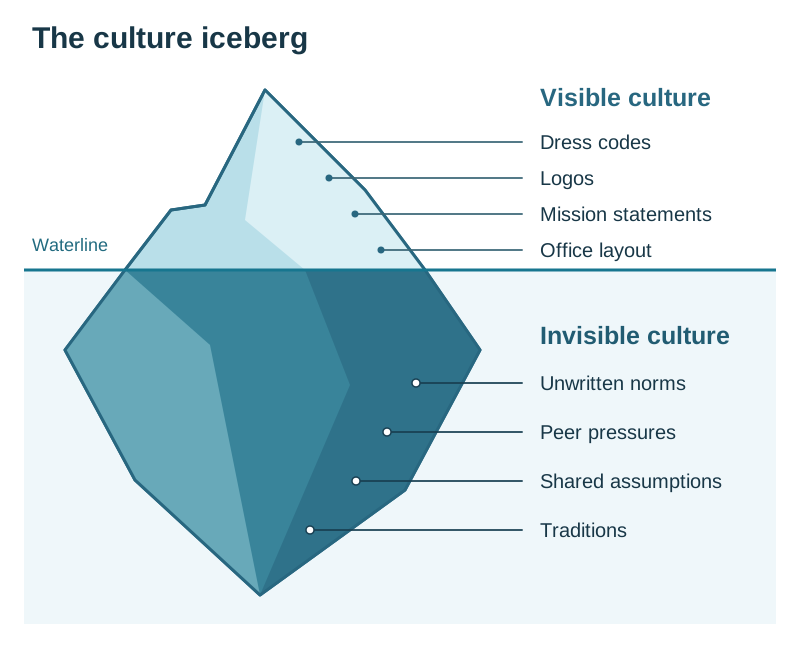
Culture works very like an iceberg, with obvious signs visible above the surface and deeper influences hidden below:
- Visible Culture (Above the Waterline): These are the formal elements anyone can see immediately, including dress codes, company logos, published mission statements, office layouts, and employee handbooks. This reflects the way a firm says work gets done.
- Invisible Culture (Below the Waterline): These are the hidden norms, peer pressures, unspoken expectations, shared assumptions, and workplace traditions that sit beneath the surface. This represents how work actually gets done. Because these attitudes run deep, a new management policy that clashes with invisible culture will almost always fail.
How Leadership Shapes Culture and Innovation
The way a leader behaves every day sets the tone for the entire enterprise:
- Autocratic leaders create a culture of caution. Workers simply wait for orders, so few fresh ideas ever bubble up from the shop floor.
- Democratic leaders build a climate of openness and psychological safety. When staff know their opinions matter, they step forward with intrapreneurial suggestions that solve operational headaches and save money.
- Transformational leaders encourage calculated risk-taking. They treat honest mistakes as learning steps, which keeps the business innovating faster than competitors.
Corporate Wellness and the Role of the Leader
The Leaving Certificate specification defines corporate wellness as an organisational focus on equality, diversity, inclusivity, and the overall wellbeing of the workforce to nurture a diverse, inclusive, and healthy workplace.
Leaders protect wellness by setting healthy boundaries, such as respecting the right to disconnect outside working hours, funding Employee Assistance Programmes (EAPs), and investing in safe, ergonomic workstations. When employees see their wellbeing taken seriously, stress drops, absenteeism falls, and retention improves.
Motivation Theories and Workplace Rewards
Motivation is the mix of internal drives and external incentives that makes an employee care about their job and push to achieve company goals.
Maslow's Hierarchy of Needs
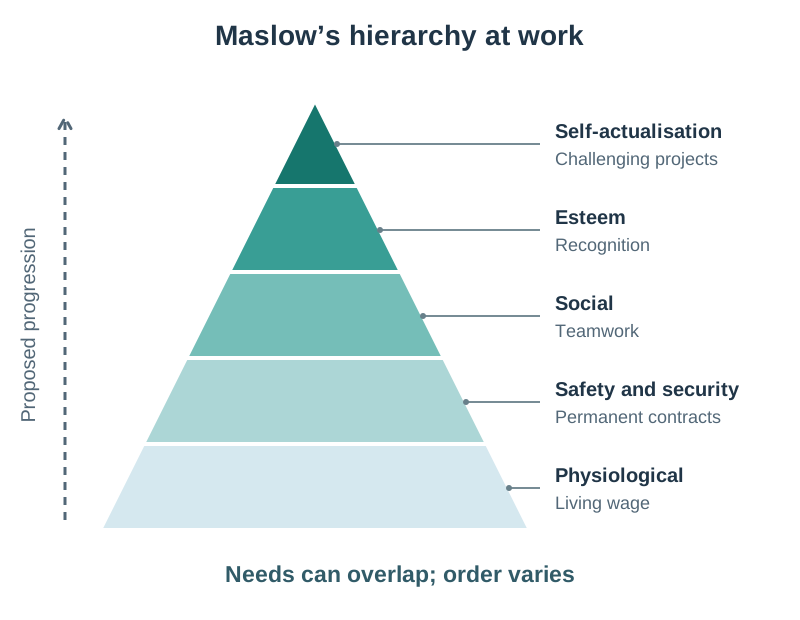
Abraham Maslow argued that human needs are arranged in five tiers. A person focuses on meeting lower-tier needs first, and once a need is largely satisfied, it stops acting as a primary motivator:
- Physiological Needs: Basic physical survival (food, water, warmth). In business, this means a fair living wage, clean facilities, and a comfortable working temperature.
- Safety and Security Needs: Protection from danger and financial anxiety. Employers satisfy this through permanent contracts, clear health and safety procedures, sick leave schemes, and pension contributions.
- Social Needs: The desire to belong, make friends, and feel accepted. Companies meet this through collaborative teamwork, peer mentoring, and staff social gatherings.
- Esteem Needs: Personal self-respect, status, and recognition. Managers meet this through public praise, job titles with clear authority, and delegating meaningful tasks.
- Self-Actualisation: Fulfilling a person's individual potential. This is supported by funding further study, giving challenging projects, and letting staff lead novel initiatives.
- Limitations: People do not always climb these steps in strict sequence. An entrepreneur might risk their financial security and health for years to achieve a personal dream. Needs also vary between individuals, and workers often feel motivated by several tiers at the same time.
Herzberg's Two-Factor Theory
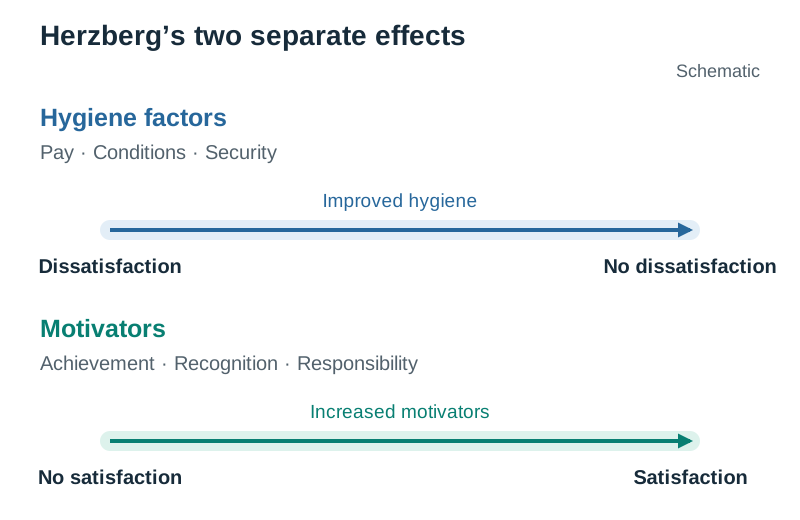
Frederick Herzberg showed that the factors creating job satisfaction are entirely separate from those causing dissatisfaction:
- Hygiene Factors: The environment surrounding the job, such as basic pay, clean toilets, job security, and company rules. If these are poor, employees feel resentful. Fixing them removes dissatisfaction, but it only brings staff to a neutral baseline; it will not make them work harder on its own.
- Motivators: Elements built directly into the job itself, such as achievement, recognition, responsibility, and opportunities to learn. These give employees a sense of pride and inspire higher performance.
- Job Enrichment vs Job Enlargement: Herzberg argued for job enrichment (vertical loading), which means giving a worker more autonomy and decision-making power. By contrast, job enlargement (horizontal loading) just piles on more tasks of the same basic skill level, which can cause fatigue rather than motivation.
McGregor's Theory X and Theory Y
Douglas McGregor highlighted two opposing sets of assumptions that managers make about people:
- Theory X Managers believe staff are inherently lazy, dislike work, dodge responsibility, and only respond to close supervision and threats. This creates an autocratic, low-trust environment. A manager might rely on this mindset when handling repetitive, low-skilled work or dealing with an immediate health and safety emergency.
- Theory Y Managers believe staff find work natural, want responsibility, and enjoy solving problems when given the right conditions. This mindset drives delegation, teamwork, and democratic leadership.
Financial and Non-Financial Rewards
- Time Rate: Payment per hour worked, useful where quality cannot be rushed.
- Piece Rate: Payment per unit produced, which encourages speed on a production line.
- Commission: Payment based on a percentage of sales generated, motivating sales representatives.
- Salary: A fixed monthly sum providing financial security for professional and administrative roles.
- Profit-Sharing Schemes and Share Options: Handing workers a share of annual profits or giving them the right to buy shares helps staff think like business owners.
- Non-Financial Rewards: Benefits in Kind (BIK) like healthcare or company cars, flexitime, and employee empowerment (giving workers genuine authority to make decisions without asking for permission every time).
Workforce Planning and Ethical Recruitment
Workforce planning means forecasting future labour needs so a business has the right number of people, with the right skills, in the right jobs at the right time.
The Four-Step Workforce Planning Process
- Assess Future Labour Requirements: Examine corporate expansion plans, expected sales, and technological upgrades to forecast how many workers will be needed.
- Audit Present Staff Resources: Run a skills audit to review the qualifications, capabilities, ages, and contract types of existing workers.
- Identify Deficits or Surpluses: Compare future demand against present supply to spot staffing shortages or excess headcount.
- Formulate an Action Plan: Clear shortages by recruiting externally, offering training, or redeploying existing staff. Clear surpluses through voluntary redundancy or natural wastage (leaving vacancies unfilled when workers retire or move on).
Factors Influencing Workforce Planning
- Internal Factors: The firm's objectives and expansion plans, what it can afford (cash flow and budgets), the skills and ages of current staff, new technology, and how the business is organised.
- External Factors: The state of the economy (workers are harder to find when the economy is growing and easier to find in a recession), the supply of skilled labour locally, changes in population, employment law, and market demand for the product.
Stages in Recruitment and Selection
Recruitment attracts applicants, while selection picks the best candidate:
- Define the Vacancy: The human resource manager drafts a job description (outlining duties, responsibilities, working conditions, and reporting lines) and a person specification (setting out the required qualifications, experience, skills, and personal attributes).
- Advertise: Roles are advertised internally via staff intranets or externally through online job boards, recruitment agencies, and professional networks like LinkedIn.
- Screen Applications: Candidates submit CVs or forms, which HR compares against the person specification to create a manageable shortlist.
- Select Candidates: Shortlisted applicants attend interviews (individual or panel) and may complete practical aptitude tests. References are checked to confirm background details.
- Job Offer and Contract: The chosen candidate receives a formal job offer followed by a written contract of employment outlining terms and conditions.
Ethical and Digital Recruitment
Employers must abide by the Employment Equality Acts 1998–2015, which prohibit discrimination across nine distinct grounds: gender, civil status, family status, sexual orientation, religion, age, disability, race, and membership of the Traveller community.
Ethical hiring practices include using standardised scoring rubrics, running interview panels, and adopting blind CV screening (removing names and personal details to eliminate unconscious bias).
Digital tools have sped up hiring through video interviews and automated screening software. While these tools reduce paperwork and broaden reach, companies must watch out for automated screening algorithms that reflect hidden biases, and ensure they do not alienate candidates who prefer a human touch.
Appraisal, Training, and Human Capital Management
Appraisal is the regular, formal review of an employee's performance, achievements, and future potential against agreed benchmarks.
Features of Effective Appraisal
An effective appraisal works best when it is a two-way discussion rather than a one-sided lecture. It should occur on a predictable schedule, rely on objective evidence rather than personal bias, highlight successes alongside areas needing improvement, and end with clear action steps for training or new duties.
Appraisal Methods
- Self-Appraisal: The employee completes an honest assessment of their own strengths and difficulties before meeting their manager. This gives staff a direct say in their development and encourages personal accountability.
- Formative Appraisal: Regular, informal reviews (such as monthly check-ins) focused on coaching and development. These spot small problems early before they turn into major crises.
- Summative Appraisal: A formal review conducted annually or bi-annually that evaluates overall achievement. It links directly to decisions on pay increments, promotions, or contract extensions.
- Management by Objectives (MBO): Manager and employee sit down to agree on SMART targets (Specific, Measurable, Achievable, Relevant, Time-bound). Because the worker helped shape the goals, they feel genuine ownership of the outcome.
- 360-Degree Feedback: The manager collects confidential reviews from everyone who works closely with the employee: line managers, peers, direct reports, and even regular clients. Employees view this multi-angle feedback as fairer than relying on one person's opinion.
Human Capital and Training
Human capital refers to the collective skills, knowledge, and experience held by a workforce. Developing this asset requires ongoing investment:
- Induction Training: Welcomes newcomers, introducing them to office culture, safety rules, and daily routines.
- On-the-Job Training: Learning by doing at the workstation through coaching, peer mentoring, job shadowing, or role rotation.
- Off-the-Job Training: Specialist learning away from the day-to-day desk, including professional diplomas, external seminars, and online certification.
- Continuing Professional Development (CPD): Lifelong structured learning that keeps skills up to date as technologies and industry standards evolve.
- Why Ongoing Training Matters: Staff keep up with new technology, productivity and quality improve, employees become ready for promotion, and workers feel valued so they are more likely to stay.
- Organisational Environment: Human capital grows best where managers make time and money available for training, delegate real responsibility, and treat mistakes as chances to learn.
Evolving Work Practices and Workplace Teamwork
Work arrangements have changed rapidly in recent years, reshaping how employees collaborate.
Remote and Blended Working
- Remote working means carrying out job duties away from the employer's physical premises, usually from home, using digital collaboration tools.
- Blended working (hybrid working) combines days in the office with days working remotely.
- Benefits: Workers cut out long commutes, saving travel expenses and gaining time for family life. Employers can downsize costly office space and recruit talented people from across the country.
- Drawbacks: Home working can lead to feelings of isolation and make it hard to switch off at the end of the day. It also cuts down on spontaneous hallway conversations that often spark creative ideas.
- Sustainability and Ethics: Fewer commutes cut fuel use and carbon emissions, and smaller offices use less energy. However, some energy use simply moves to employees' homes, and employers should consider who pays for home heating and electricity. Employers must also supply safe home-office equipment and follow the official WRC Code of Practice on the Right to Disconnect (2021). This ensures employees are not penalised for ignoring emails, calls, or messages outside their agreed working hours.
Teamwork in the Modern Workplace
Teamwork happens when a group works together to hit a shared target.
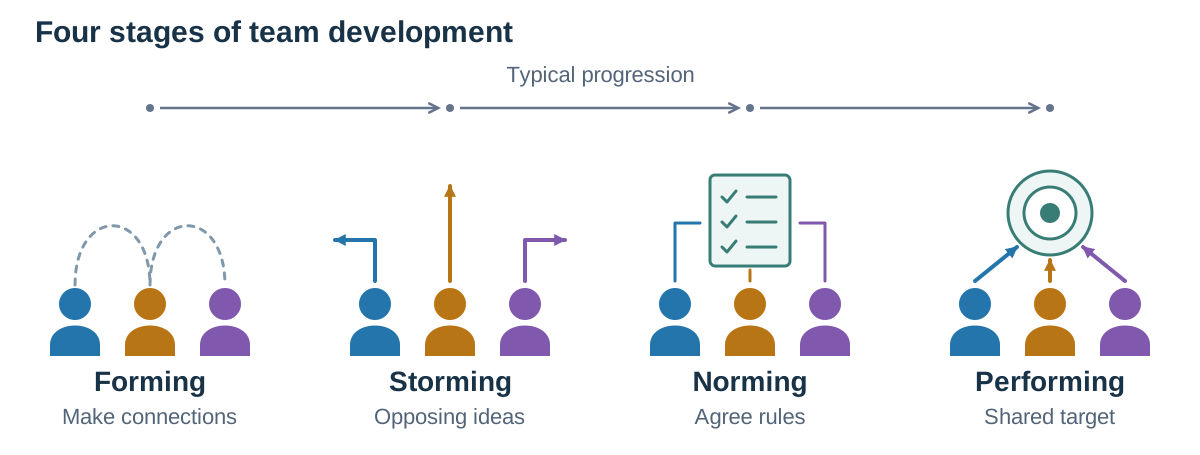
- Stages of Team Development: Teams usually progress through four recognisable stages:
- Forming: Members meet, act politely, and explore their roles.
- Storming: Disagreements flare as members push different ideas and test boundaries.
- Norming: The team establishes ground rules, resolves friction, and agrees on standards.
- Performing: Members work efficiently together, focusing on completing the task.
- Benefits: Collaboration generates synergy, meaning the group achieves far more than individuals working alone. It satisfies social needs and draws on diverse viewpoints.
- Risks: Group discussions take more time than top-down instructions, strong personalities can clash, and some individuals may let others carry the workload (free-riding).
Resolving Workplace Conflict
Conflict in business happens when disagreements flare between employees or between staff and management. Common sparks include vague job boundaries, poor communication, heavy workloads, personality clashes, and contrasting leadership styles. If ignored, workplace disputes quickly lead to absenteeism, low morale, and lost business.
Internal Dispute Resolution
Firms should always try to resolve disputes internally before involving third parties:
- Active Listening: Managers give their complete attention to the employee's concern without interrupting, observing body language, taking notes, and reflecting back what they have heard.
- Direct Negotiation: The conflicting parties meet face-to-face to talk through differences and agree on a practical compromise.
- Internal Grievance Procedures: Most staff handbooks set out clear formal steps. The worker brings the issue first to their direct supervisor. If it stays unresolved, it moves to the human resource manager, and finally to a formal hearing before senior executives.
External Dispute Resolution Mechanisms
When internal talks break down, parties can access external support services:
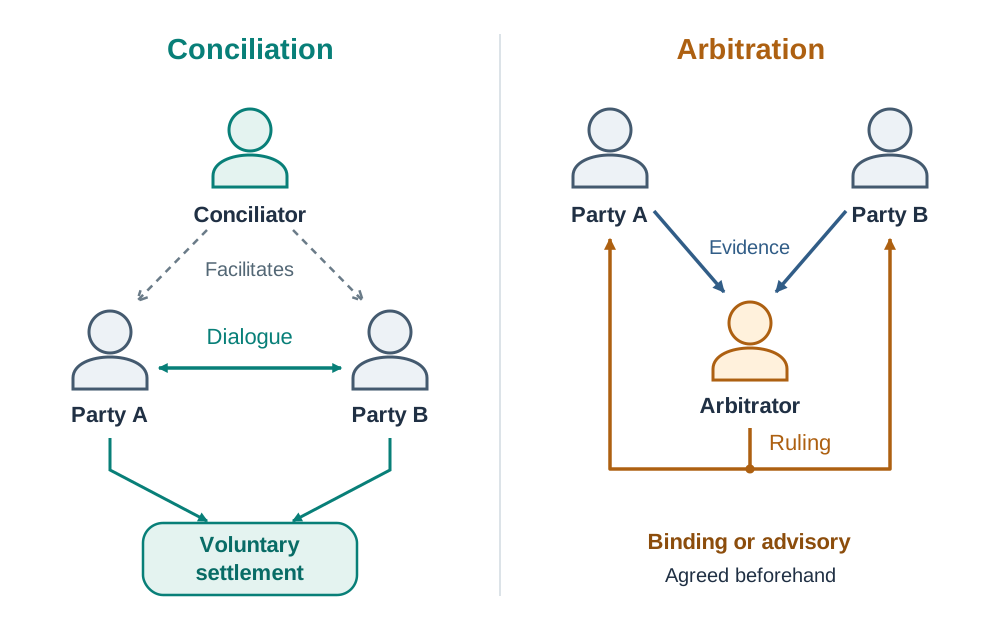
- Conciliation: A neutral third party brings both sides together, encourages constructive dialogue, and suggests compromise solutions. The conciliator helps the parties build their own voluntary settlement, but has no power to force a decision on anyone.
- Arbitration: An agreed independent third party investigates the dispute, hears evidence from both sides, and issues a formal decision. The parties decide in advance whether the arbitrator's ruling will be legally binding or advisory.
- Workplace Relations Commission (WRC): The state body responsible for industrial relations in Ireland. It provides advisory services, workplace mediation, conciliation for collective disputes, and employment compliance inspections. Its Adjudication Officers hear individual complaints on employment rights and equality, issuing legally binding rulings.
- The Labour Court: Ireland's industrial relations tribunal of last resort. It is not a court of law. In collective industrial disputes, it investigates and issues formal recommendations that carry great moral weight, though they are not legally binding. It also hears legally binding appeals against rulings made by WRC Adjudication Officers.
Key terms
- Organisational Culture
- The shared values, beliefs, attitudes, and accepted behaviours that establish 'how we do things around here' within a business.
- Corporate Wellness
- An organisational focus on equality, diversity, inclusivity, and the overall wellbeing of the workforce to nurture a diverse, inclusive, and healthy workplace.
- Motivation
- The internal drives and external factors that stimulate employee commitment, energy, and enthusiasm towards achieving work goals.
- Workforce Planning
- The strategic process of forecasting labour needs to ensure a business has the right number of staff, with the right skills, in the right jobs at the right time.
- Skills Audit
- A systematic review of the skills, competencies, and qualifications of existing employees to spot training gaps or staffing surpluses.
- Job Description
- A formal document setting out the title, duties, key tasks, working conditions, and reporting relationships for a specific job.
- Person Specification
- A document detailing the qualifications, experience, skills, and personal attributes needed by the ideal candidate for a role.
- Natural Wastage
- Trimming workforce size without compulsory redundancies by leaving vacancies unfilled when employees resign or retire.
- Employee Appraisal
- A regular, formal review of an employee's job performance, achievements, and future potential against agreed benchmarks.
- Human Capital Management
- An approach that treats the collective skills, knowledge, and experience of employees as valuable assets requiring continuous investment and development.
- Autocratic Leadership
- A leadership style where the manager keeps all decision-making power, issues direct commands without consultation, and uses one-way communication.
- Democratic Leadership
- A leadership style where the manager consults staff, encourages two-way discussion, and delegates authority while keeping ultimate responsibility.
- Hygiene Factors
- Job context elements in Herzberg's theory (such as pay, working conditions, and job security) that prevent dissatisfaction but do not actively motivate on their own.
- Motivators
- Job content elements in Herzberg's theory (such as achievement, recognition, and responsibility) that actively inspire workers to perform at a higher level.
- Job Enrichment
- Redesigning a job to include greater responsibility, variety, and decision-making power, providing intrinsic satisfaction.
- Remote Working
- An arrangement where an employee carries out their regular duties away from the company premises, usually from home, using digital tools.
- Blended Working
- A flexible work model combining remote working from home with working on-site at the company premises.
- Teamwork
- When a group of individuals work together collaboratively to achieve a common objective.
- Active Listening
- A communication technique where the listener concentrates fully, understands, takes note of body language, and reflects back without interrupting.
- Conciliation
- A dispute resolution process where a neutral third party brings the sides together and suggests compromises to help them reach their own voluntary agreement.
- Arbitration
- A dispute process where an independent third party hears evidence from both sides and issues a formal ruling that can be advisory or legally binding.
- Workplace Relations Commission (WRC)
- The primary Irish state body for workplace relations, providing conciliation, mediation, advisory services, inspections, and binding adjudication.
- The Labour Court
- Ireland's industrial relations tribunal of last resort that investigates collective disputes, makes formal recommendations, and hears binding appeals against WRC decisions.
Check yourself
What are the four sequential steps in workforce planning?
The four steps are: (1) Assess future labour requirements, (2) Audit present staff resources using a skills audit, (3) Identify resource gaps or surpluses, and (4) Formulate an action plan for recruitment, redeployment, training, or redundancies.
How does democratic leadership encourage innovation compared to an autocratic style?
Democratic leadership consults staff and delegates authority, creating an open culture where workers feel safe to pitch intrapreneurial ideas. Autocratic leadership relies on one-way orders, which leads to passive compliance and stifles employee creativity.
Why does a 360-degree appraisal motivate employees more than a traditional review?
It gathers feedback confidentially from line managers, peers, direct reports, and clients. Employees view this multi-angle input as fairer and more objective than relying on a single manager's opinion, which boosts confidence and pinpoints genuine areas for development.
Where does an employee in Ireland lodge a formal complaint about employment equality or unfair dismissal first, and where can it be appealed?
The complaint is lodged first with an Adjudication Officer at the Workplace Relations Commission (WRC). The officer's ruling can then be appealed to the Labour Court.
How does the Leaving Certificate specification define Corporate Wellness?
Corporate wellness is an organisational focus on equality, diversity, inclusivity, and the overall wellbeing of the workforce to nurture a diverse, inclusive, and healthy workplace.