

Communication is the two-way exchange of clear, meaningful information between a sender and a receiver, confirmed by an effective feedback loop. In business management, communication ties together core leadership activities: planning, organising, motivating, and controlling. For Leaving Certificate Higher Level, students must explain why effective communication is vital to an organisation, analyse how messages travel along downward, upward, and horizontal routes, evaluate the efficacy of different communication modes (oral, non-verbal, written, visual, and multimodal), discuss how digital technology transforms workplace interaction, and suggest practical ways to overcome communication barriers.
The Strategic Importance of Communication in Business
Communication is an active two-way process. It requires a sender to turn an idea into a message, a channel or medium through which the message travels, a receiver to decode it, and a feedback loop. The cycle is only complete when the receiver sends back confirmation that the message was correctly understood.
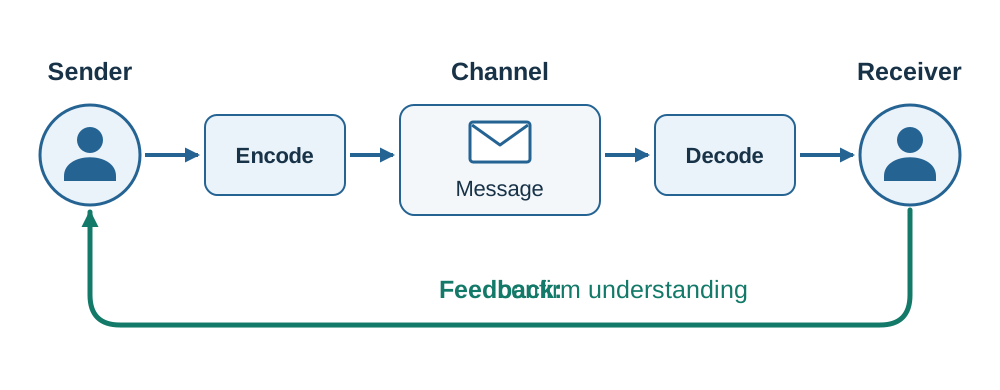
Good communication matters to a business for six main reasons:
- Supporting collaboration: Modern enterprises rely on teams drawn from different departments. Clear communication prevents duplicated effort and keeps staff aligned. For example, marketing and production teams meet weekly to coordinate stock levels before an advertising campaign launches.
- Avoiding and resolving conflict: Vague instructions and role confusion cause frustration. Communicating targets, duties, and workplace procedures openly resolves grievances before they turn into industrial disputes. For example, clear written rosters stop arguments about weekend shifts.
- Increasing engagement: When workers see how their daily effort feeds into company goals, commitment rises. Open dialogue lifts morale and reduces absenteeism. For example, sharing quarterly sales figures openly with retail staff shows them how their customer service drove business growth.
- Promoting a positive culture: Honest, two-way communication makes staff feel safe to speak up, ask questions, and admit mistakes without fear of being blamed. For example, regular team check-ins where managers listen to staff concerns build mutual respect.
- Managing change: Restructuring and new technologies trigger anxiety about job security. Explaining the reasons for change early and honestly eases resistance. For example, a hotel management team meets staff two months before introducing a self-service check-in system, explaining that front-desk staff will be retrained for customer relations rather than let go.
- Promoting innovation: Encouraging intrapreneurship requires accessible channels for frontline staff to share ideas. For example, a supermarket introduces an employee suggestion app that leads to a shelf-stacker's idea for faster shelf restocking being adopted across all branches.
Routes and Directional Flows of Communication
Information travels through an enterprise along formal operational lines and informal personal networks.
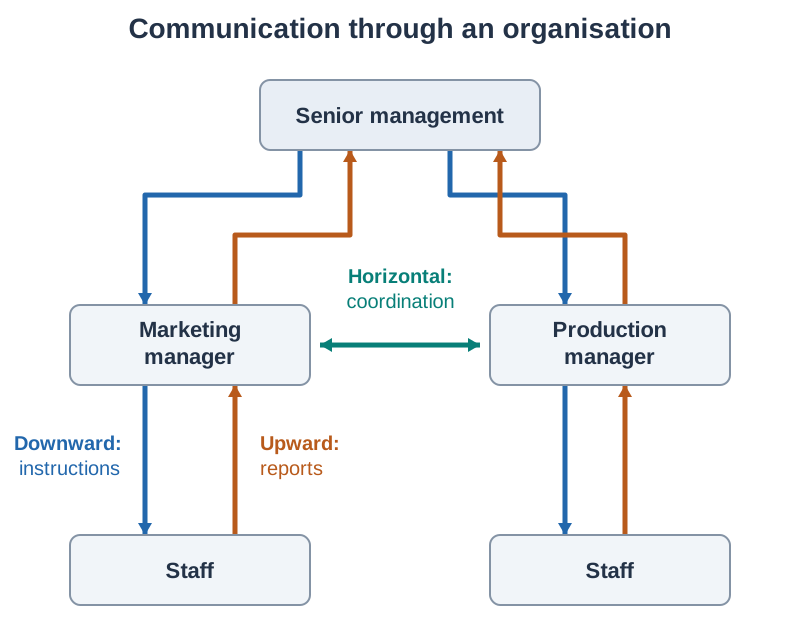
Directional Flows
- Downward communication: Information moves down the chain of command, from senior management to staff on the ground. Typical examples include staff handbooks, company policies, safety briefings, and work instructions. If management relies entirely on one-way downward broadcasts, staff can quickly feel ignored and disengaged.
- Upward communication: Messages travel from frontline workers up to supervisors, managers, and directors. Examples include sales figures, customer complaint logs, suggestion schemes, and health-and-safety alerts. Upward communication provides managers with useful information from the shop floor, but it only functions when staff feel safe to speak honestly.
- Horizontal communication: Information flows laterally between staff or departments at the same hierarchical level. For example, a quality control manager liaises directly with a dispatch supervisor to clear a delayed pallet of goods. This lateral flow resolves day-to-day issues quickly and prevents departments working in isolation.
Formal versus Informal Channels
- Formal channels are the official, planned pathways set out in the organisational structure. Examples include staff meetings, written memorandums, official emails, and audited financial statements. Formal channels create an official record of what was communicated, so everyone knows who said what and when.
- Informal channels (the grapevine) are spontaneous, unofficial conversations among colleagues, such as lunchtime chats or private messaging groups. The grapevine carries news rapidly and builds social bonds, but it can spread harmful rumours if management does not share official facts promptly.
Modes of Communication: Characteristics and Efficacy
An organisation chooses from five primary modes of communication depending on the situation.
| Mode | Definition & Methods | Key Strengths | Operational Limitations |
|---|---|---|---|
| Oral (spoken verbal) | Spoken interaction via face-to-face talks, phone calls, staff meetings, and video calls. | Gives immediate feedback; vocal tone adds warmth; resolves misunderstandings on the spot. | Leaves no written record to check later unless recorded; open to selective memory. |
| Non-verbal | Physical cues such as body language, eye contact, facial expressions, and posture. | Reinforces spoken words; reveals emotional reactions and sincerity; builds rapport during appraisals. | Easy to misinterpret across different cultural backgrounds; unconscious; cannot be filed or audited. |
| Written | Hard-copy letters, formal reports, notices, and emails. | Creates an enduring permanent record; allows careful drafting; satisfies legal compliance. | Feedback is slower; tone can be easily misread; creates information overload if uncontrolled. |
| Visual | Charts, graphs, infographics, floorplans, and diagrams. | Simplifies complex numerical data; overcomes language and literacy barriers; highlights trends quickly. | Lacks detail without an accompanying explanation; requires design skill to prepare accurately. |
| Multimodal | Combining two or more modes at once, such as a spoken briefing accompanied by slides and text hand-outs. | Maximises audience attention and recall; caters to varied learning styles; combines data with personal persuasion. | Demands substantial preparation time, software, and strong presentation skills. |
Factors to Consider When Choosing a Mode
Before choosing a communication method, a manager should weigh up six factors:
- Urgency and speed: Urgent situations demand an immediate mode, such as a direct phone call or face-to-face talk. For example, warning warehouse staff of a chemical spill requires an immediate spoken announcement, not an email.
- Cost: Financial resources matter. A group video call costs very little, whereas flying regional branch managers to Dublin for an annual meeting incurs substantial travel and hotel expenses.
- Confidentiality: Sensitive issues, such as a disciplinary hearing or redundancy discussion, must be conducted privately face to face and then confirmed in writing. They should never be sent over public messaging channels.
- Need for a permanent record: Formal agreements, employee warnings, and business contracts need a durable written record so both parties can verify terms. Under the Terms of Employment (Information) Act, employers must provide staff with a written statement of their core terms of employment.
- The receiver: Consider the recipient's location, language skills, and technical literacy. A visual flowchart suits an international manufacturing crew who do not share a common first language.
- Complexity of the message: Highly detailed data, such as a five-year balance sheet trend, is best communicated in a written report supported by visual graphs, rather than explained over the phone.
Presenting Research Findings to an Audience
The same modes used inside a firm apply when presenting business research, such as in reports and presentations:
- Match the format to the audience: Senior executives prefer a concise written summary with key financial indicators, whereas a general staff meeting benefits from a short oral talk supported by slides (multimodal communication).
- Use graphs and charts: A clean bar chart or line graph makes trends, such as shifting market share, clear at a glance.
- State clear recommendations: Finish with a direct, justified recommendation phrased in precise business terminology.
Digital Transformation in Workplace Communication
Digital technology has transformed business communication. Cloud platforms, team collaboration software (such as Microsoft Teams or Slack), and videoconferencing allow organisations to operate across borders and support blended working.
Technology enables communication across several specific areas:
- Speed: Messages, documents, and project briefs transfer instantly across global offices, removing delivery delays.
- Cost: Digital channels eliminate postage, paper printing, and physical filing costs, while video meetings reduce company travel budgets.
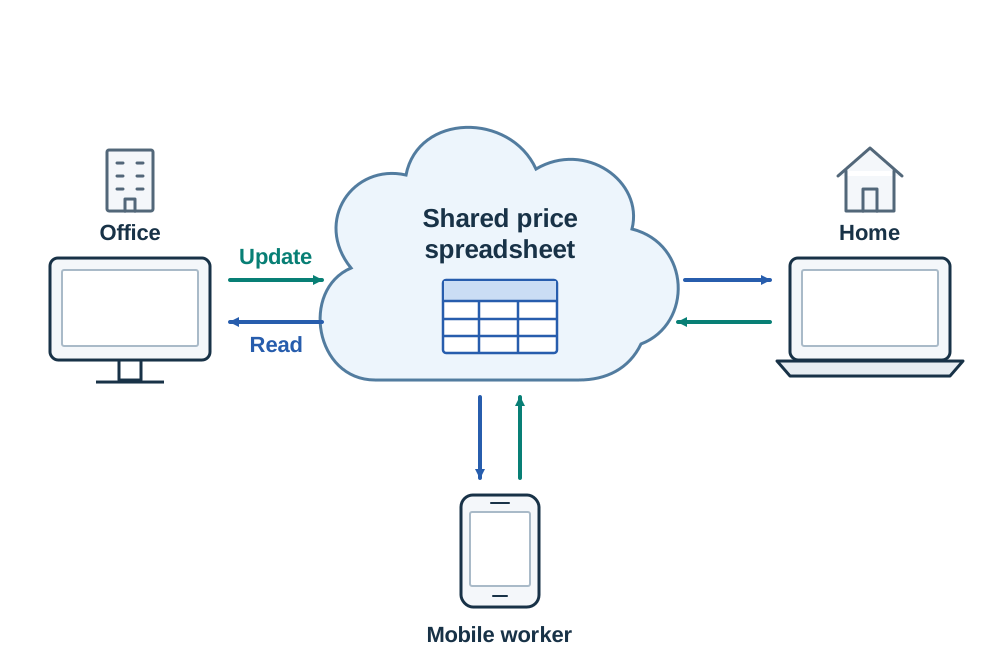
- Access: Cloud-based communication allows employees to retrieve files and join meetings from home or on the road, supporting flexible hybrid working.
- Collaboration: Shared online workspaces allow dispersed colleagues to edit documents together and track project milestones in real time.
- Sustainable business practices: Holding virtual meetings reduces vehicle and air travel emissions, helping organisations meet environmental targets and transition toward paperless offices.
- Productivity: Centralised communication tools cut the time staff spend searching for misplaced emails, chasing updates, or travelling. For example, a sales team that updates a single cloud spreadsheet ensures that everyone quotes current prices to customers without delay.
Challenges and Balance Points
Digital communication also creates risks that managers must control:
- Notification fatigue and productivity loss: Constant message alerts and email notifications fragment concentration. Many businesses now enforce communication boundaries, such as banning non-urgent internal emails outside regular working hours, to protect focus and employee wellbeing.
- Cybersecurity and data protection: Communicating customer or employee data online exposes firms to phishing, hacking, and data breaches. Under the GDPR (General Data Protection Regulation), organisations must keep personal data secure and process it lawfully. In practice, businesses implement measures like strong password controls, multi-factor authentication, and regular staff cybersecurity training to meet these legal duties.
- Loss of personal connection: Relying purely on messaging screens can leave remote workers feeling isolated, weakens team loyalty, and prevents managers from picking up on non-verbal cues of stress or exhaustion.
Barriers to Communication and How to Improve Communication
A communication barrier is anything that distorts, delays, or blocks a message between sender and receiver. Common barriers include technical jargon that confuses non-specialists, information overload where staff receive more emails than they can read, poor timing where critical updates arrive outside working hours, and inappropriate channel choice, such as delivering bad news by text.
Ways to Improve Communication
A manager can improve communication in four practical ways:
- Setting clear goals: Before sending any message, the sender must decide its precise purpose, key actions, and completion dates. Instructions should be short and plain so the receiver understands immediately what is expected.
- Listening actively: Active listening means giving undivided attention to the speaker, noting non-verbal cues, and asking clarifying questions before responding. Managers who listen actively uncover operational problems before they turn into costly disputes.
- Ensuring ongoing engagement: Communication must be a continuous two-way conversation rather than an occasional top-down announcement. Setting up regular feedback routines, such as weekly team huddles and consultative committees, ensures that employees have a voice in workplace decisions.
- Choosing the correct mode of communication: Managers must evaluate which mode fits the message. Urgent operational warnings require direct oral calls; complicated performance metrics demand visual graphs; and formal contract changes require formal written letters.
Key terms
- Communication
- The two-way exchange of information, ideas, and instructions between a sender and a receiver, completed through an effective feedback loop.
- Feedback
- The return message from receiver to sender confirming that the information was received, correctly understood, and ready to be acted upon.
- Downward Communication
- Information moving down the chain of command from managers to staff, such as company policies, task instructions, and safety procedures.
- Upward Communication
- Messages travelling from frontline workers up to management, including sales reports, customer feedback, and suggestions for improvement.
- Horizontal Communication
- The exchange of information between colleagues or departments at the same level in the organisation to coordinate activities and solve problems.
- Grapevine
- The informal, unofficial communication network that exists among employees through casual daily conversations.
- Active Listening
- A communication skill where the listener focuses fully on the speaker, observes non-verbal signals, and asks clarifying questions to verify understanding.
- Information Overload
- A condition where an employee receives more data, emails, and alerts than they can process, leading to missed instructions and poor focus.
- Multimodal Communication
- Combining two or more communication modes, such as spoken words, written text, and visual charts, within a single presentation or message.
- GDPR
- General Data Protection Regulation; European Union law requiring organisations to protect personal data and maintain robust data security.
- Terms of Employment (Information) Act
- Irish employment legislation requiring employers to give workers a written statement detailing their core terms and conditions of employment.
Check yourself
What are the three directions in which communication flows in a business, and what is the difference between formal and informal channels?
The three directions are downward (management to staff), upward (staff to management), and horizontal (between colleagues at the same level). Formal channels are official, planned routes such as reports and company emails. Informal channels (the grapevine) are unofficial daily conversations among staff.
Why should a business put important employment matters, such as a formal warning or an employee's terms of employment, in writing?
A written document provides a permanent, verifiable record that avoids disputes over what was agreed. In some instances it is required by law: under the Terms of Employment (Information) Act, employers must give employees a written statement of their core working terms.
A manager must inform 40 staff members about a change to their contracted hours. Which mode(s) of communication should she use and why?
She should use oral communication in a face-to-face meeting first, allowing staff to ask questions and observe non-verbal reactions, and then follow up with formal written letters to create a permanent record of the contracted changes.
Name four practical ways a manager can improve communication within an organisation.
Setting clear goals, practising active listening, ensuring ongoing two-way engagement, and choosing the correct mode of communication for the situation.
Identify two benefits and one drawback of digital communication for employee productivity.
Benefits: Instant file sharing cuts time spent chasing updates, and cloud workspaces allow teams to collaborate without travelling. Drawback: Constant message alerts and email notifications cause distraction and fatigue.