

Human Capital Management (HCM) treats an organisation's workforce as a strategic asset whose skills, knowledge, and wellbeing drive success. Under the Leaving Certificate Business specification (Strand 3, Section 2), HCM examines how businesses plan, recruit, appraise, develop, motivate, and organise people. This study note covers workforce planning, ethical recruitment, performance appraisal, motivation, ongoing training and teamwork, digital transformation in the workplace, remote working legislation, and corporate wellness initiatives.
Human Capital and the Organisational Environment
In business, human capital refers to the competencies embodied in people, invested in, and developed to help them to be more productive and realise their potential. Older approaches tended to see staff mainly as an operating cost to be controlled. By contrast, Human Capital Management (HCM) views employees as valuable assets whose talents generate long-term competitive advantage.
An organisation's internal environment strongly influences how its human capital develops. When the internal climate is supportive, employees acquire skills faster, share knowledge openly, and take on greater responsibility.
How the Organisational Environment Helps Human Capital Develop
- Organisational culture: A learning culture encourages employees to experiment, innovate, and share insights without fear of blame for honest mistakes.
- Leadership style: Supportive, democratic managers coach, mentor, and empower employees rather than micromanaging them.
- Investment in learning: Allocating dedicated budgets for formal training courses, study leave, and professional qualifications.
- Recognition and reward: Acknowledging extra effort and promoting staff who develop new skills motivates others to upskill.
- Wellbeing and inclusion: A workplace free from discrimination and excessive stress ensures staff feel secure enough to engage in continuous development.
Example: A software company that funds cloud computing certifications and gives engineers dedicated time on Friday afternoons for professional research develops far stronger human capital than a competitor that views training solely as downtime.
Workforce Planning and Ethical Recruitment
Workforce planning involves analysing current staffing levels and forecasting future personnel needs to ensure an organisation has the right number of workers, with the right skills, in the right jobs at the right time.
Workforce planning balances both internal and external factors:
- Internal factors: Business expansion plans, labour turnover rates, retirement projections, skills audit results, and available financial budgets.
- External factors: Demographic changes, labour market shortages, economic conditions, statutory employment laws, and technological developments that make older job skills obsolete.
The Recruitment and Selection Process
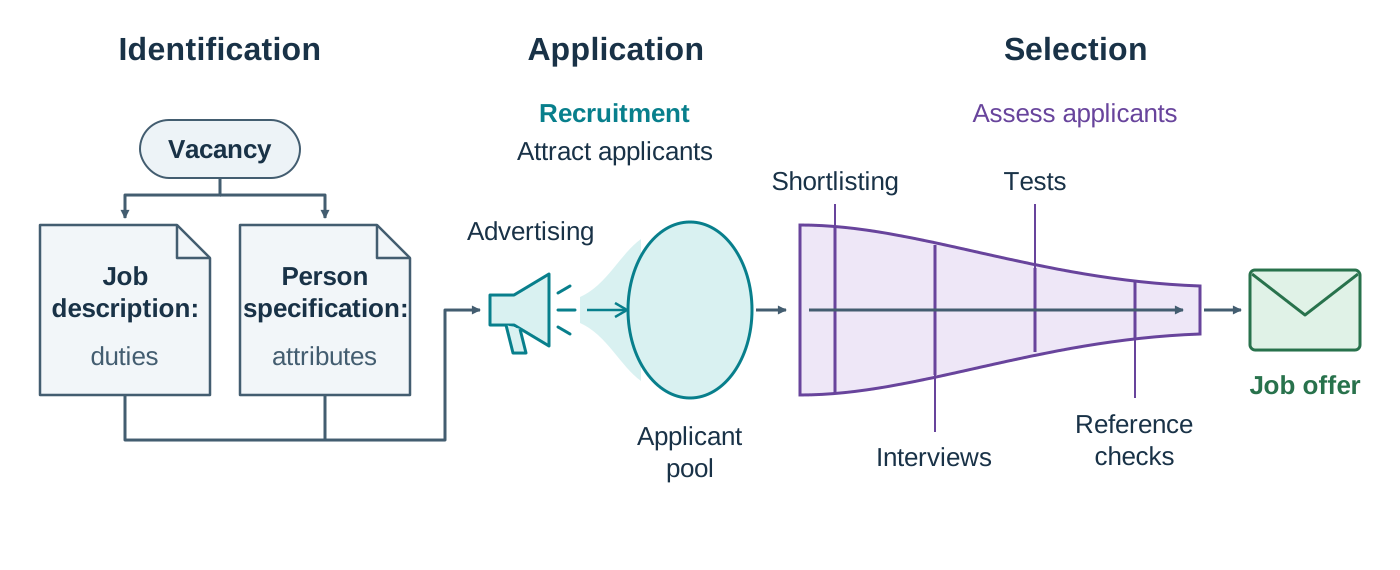
Recruitment is the process of attracting a pool of qualified applicants for a job vacancy. Selection is the process of evaluating and choosing the best candidate from that pool.
- Identification: The business confirms a genuine vacancy exists. It drafts a job description (stating the job title, duties, tasks, reporting relationships, and working conditions) and a person specification (setting out the required qualifications, experience, skills, and personal attributes).
- Application: The position is advertised internally (staff intranet, noticeboards) or externally (recruitment websites, social media, agencies). Standardised application forms or CVs are collected.
- Selection: Management shortlists candidates against the person specification, conducts structured interviews, runs aptitude or skills tests, and completes reference checks before making a formal job offer.
Worked Scenario of the Recruitment Process:
- Job Description: Junior Accountant responsible for bank reconciliations, VAT returns, and monthly payroll processing.
- Person Specification: Essential requirement is an accredited accounting technician qualification; desirable attribute is two years' experience with Sage software.
- Application: Advertised internally first and posted on professional recruitment websites.
- Selection: Candidates are shortlisted against the person specification, attend a structured interview with standardised questions, and provide verified references.
Ethical Recruitment Approaches
Under the Employment Equality Acts 1998–2015, employers cannot discriminate in recruitment, training, or promotion across nine protected grounds: gender, civil status, family status, sexual orientation, religion, age, disability, race, and membership of the Traveller community.
To ensure fair and ethical recruitment, businesses adopt practical measures:
- Blind CV screening by removing names, dates of birth, and postal addresses to eliminate unconscious bias.
- Standardised, structured interview questions scored against an agreed marking rubric.
- Diverse interview panels to prevent personal favouritism or similarity bias.
- Transparent salary ranges and clear role requirements published in job advertisements.
- Reasonable accommodations provided for candidates with disabilities during interviews and assessments.
Digital Technology in Recruitment and the Workplace
Digital developments have transformed recruitment, employee administration, and daily workplace operations.
Recruitment and Selection Technologies
- Applicant Tracking Systems (ATS): Software that automatically scans digital applications for relevant keywords, qualifications, and experience, ranking applicants before human review.
- Artificial intelligence (AI) screening: Automated video interviewing tools and chatbots handle initial screening questions and candidate scheduling.
- Remote interviewing: Video conferencing platforms allow panels to assess candidates nationally and globally without travel expenses.
| Opportunities of Digital Recruitment | Challenges and Ethical Concerns |
|---|---|
| Speed and efficiency: Replaces manual paper handling and significantly cuts hiring timelines. | Algorithmic bias: Screening algorithms trained on historical hiring data may unintentionally filter out qualified women or minority candidates. |
| Wider talent pool: Connects employers with skilled candidates beyond their local geographic area. | Impersonal process: Rigid keyword matching can discard high-calibre applicants who use alternative phrasing. |
| Lower costs: Reduces spending on print advertising, agency fees, administrative hours, and candidate travel. | Digital divide: Job applicants lacking dependable broadband or digital literacy are unfairly disadvantaged. |
Digital Technology in the Wider Workplace
Digital transformation extends beyond hiring into daily operations:
- Positive impacts: Cloud collaboration tools (Microsoft Teams, Google Workspace) allow seamless remote collaboration. Enterprise software automates repetitive administration such as payroll and attendance tracking. E-learning platforms allow employees to complete compliance and professional training at their own pace.
- Negative impacts: Automation can displace routine roles, requiring costly staff retraining. Storing employee data in the cloud creates data protection obligations under the General Data Protection Regulation (GDPR). Constant digital connectivity creates an 'always-on' work culture that leads to staff burnout. Invasive digital monitoring can erode mutual trust.
Performance Appraisal and Employee Motivation
Employee appraisal is the evaluation of an employee's job performance, achievements, and future potential against agreed targets. It should be an open, supportive review that aligns personal development with business objectives.
Approaches to Appraisal
- Formative appraisal: Regular, informal feedback delivered while work is ongoing. It lets employees correct mistakes and develop skills in real time.
- Summative appraisal: A formal review conducted at the end of a specified period (such as annually) to evaluate overall performance against targets, often determining promotions or bonus payments.
- Self-appraisal: The worker assesses their own achievements, strengths, and areas for improvement before meeting their manager, promoting accountability.
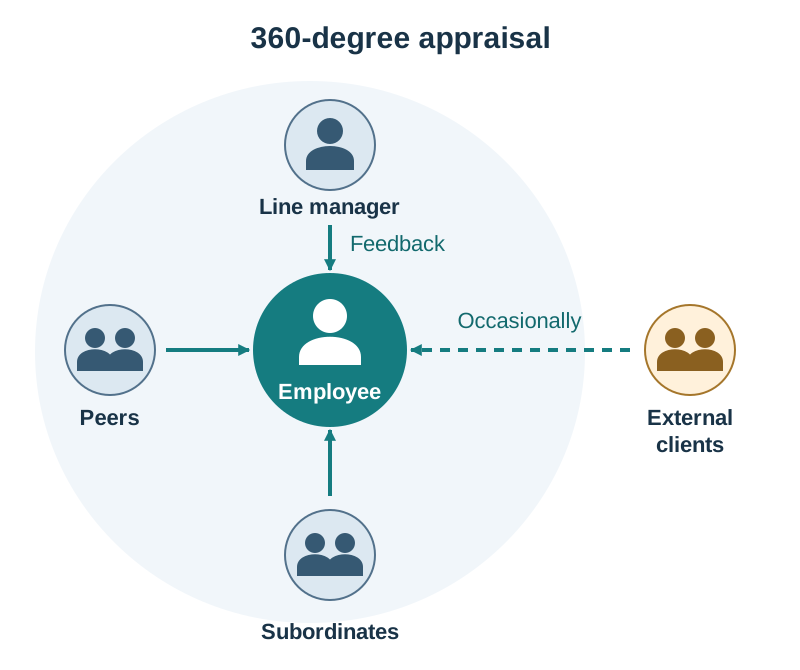
- 360-degree appraisal: Feedback on an employee is gathered from all around them: their direct line manager, peers, subordinates, and occasionally external clients. It provides a well-rounded assessment of interpersonal and leadership skills.
Characteristics of Effective Appraisal
An appraisal is effective when it genuinely drives improvement rather than serving as an administrative tick-box exercise:
- Clear and agreed targets: Goals are established collaboratively in advance using SMART criteria (Specific, Measurable, Achievable, Relevant, Time-bound).
- Fair and objective: Assessments rely on documented evidence of performance rather than personal bias.
- Two-way dialogue: The employee is encouraged to voice opinions, raise difficulties, and suggest solutions.
- Constructive and regular: Praise for successes is balanced with practical advice for improvement, backed by ongoing formative check-ins.
- Action-oriented: Reviews conclude with an agreed action plan detailing future targets and required training.
What Motivates Employees?
Motivation represents the inner drive that encourages staff to commit energy to their work. Key motivating factors include:
- Fair financial rewards: Competitive basic pay, performance bonuses, and pension contributions satisfy basic financial needs.
- Job security: Predictable hours and permanent contracts alleviate anxiety, encouraging long-term loyalty.
- Recognition and praise: Expressing appreciation in team meetings or through performance awards builds self-esteem.
- Career advancement: Clear promotion paths provide staff with meaningful goals to strive towards.
- Empowering job design: Providing autonomy, task variety, and job enrichment makes work satisfying.
Two established management frameworks illustrate these motivational dynamics:
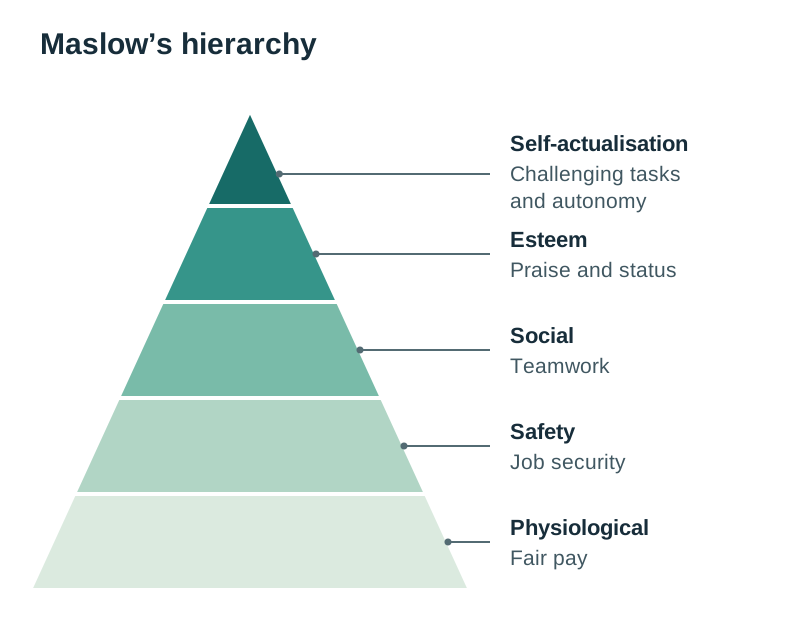
- Maslow's Hierarchy of Needs: Physiological needs are met through fair pay; safety needs through job security; social needs through collaborative teamwork; esteem needs through praise and status; and self-actualisation through challenging tasks and autonomy.
- McGregor's Theory X and Theory Y: Theory X managers assume workers dislike work and require strict supervision, creating poor morale. Theory Y managers believe employees enjoy responsibility and exercise self-direction, creating higher motivation, greater initiative, and lower staff turnover.
Training, Professional Development, and Teamwork
Training gives employees immediate skills to carry out their present job, whereas development is a longer-term investment that prepares an employee to take on greater managerial responsibilities.
Types of Training
- Induction training: A structured welcome programme that familiarises new recruits with company policies, values, health and safety rules, and colleagues.
- On-the-job training: Practical instruction provided at the workstation by experienced staff through job shadowing, coaching, and mentoring.
- Off-the-job training: Specialist courses completed away from the regular work environment, such as external health and safety certifications or management diplomas.
- Multi-skilling: Training workers in several distinct operational roles, giving the business flexibility during peak periods and staff absences.
Why Ongoing Training Matters and Learning from Experience
Ongoing training keeps staff skills aligned with rapid digital changes, raises output quality, reduces workplace errors, and improves retention by showing employees they are valued. It also supports succession planning by developing future internal leaders.
Employees also learn significantly from experience. Formal project debriefs help teams analyse mistakes and record lessons for future tasks. Mentoring by senior staff transfers institutional knowledge, while job rotation across departments gives workers practical commercial insight.
Stages of Team Formation (Tuckman's Model)
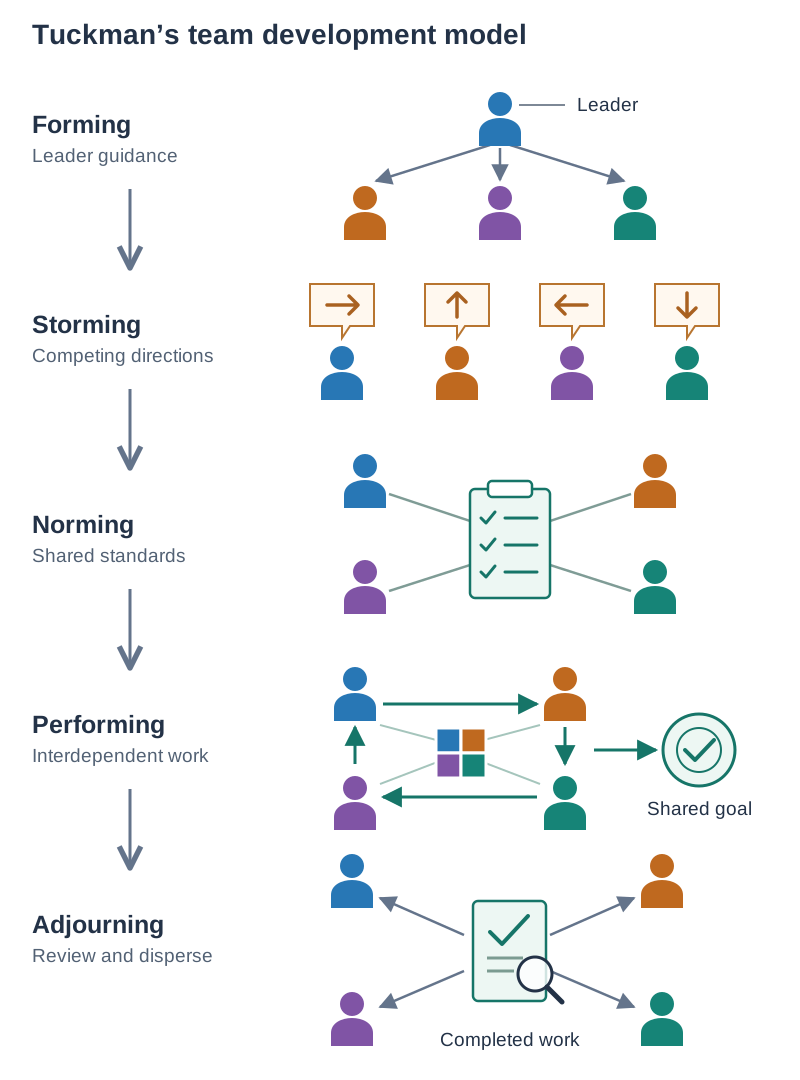
A team consists of individuals working interdependently toward a shared objective. Bruce Tuckman originally identified four stages of team development, with a fifth added later:
- Forming: Members assemble, behave cautiously, and look to the leader for direction.
- Storming: Conflicts emerge over working styles, priorities, and individual roles. Working through this friction constructively is essential.
- Norming: Team members establish shared operating standards, resolve disagreements, and build trust.
- Performing: The team acts as a cohesive unit, achieving goals with high autonomy and shared accountability.
- Adjourning: The task is completed, results are evaluated, and the group disbands or moves to a new project.
Teamwork: Opportunities and Challenges
| Perspective | Opportunities | Challenges |
|---|---|---|
| Employees | Meets social needs and builds belonging; peer learning from colleagues' expertise; shared workload reduces individual stress. | Personality clashes during the storming phase; frustration if some members free-ride; individual contributions may be overlooked. |
| Employers | Synergy enables the group to achieve more than the sum of their individual efforts; better decisions through combined expertise; enhanced creativity. | Decision-making can be slower due to discussions; project delays if conflict is unmanaged; harder to hold a single individual accountable. |
Remote, Blended Work, and Sustainable Workplaces
Remote working means carrying out job duties away from the employer's central premises, typically at home, using digital collaboration tools. Blended working (hybrid working) combines remote working days with scheduled days in the office.
| Opportunities | Challenges | |
|---|---|---|
| Employees | No commute, which saves time and money; more flexibility and better work–life balance; fewer interruptions for focused work | Isolation and loneliness; blurred boundaries leading to overwork; home distractions; poor broadband or equipment |
| Employers | Lower office and energy costs; access to a wider talent pool beyond the local area; better staff retention | Harder collaboration and communication; harder induction of new staff and passing on the company culture; data-security risks; monitoring performance without micromanaging |
Legal Framework for Remote Working in Ireland
Under the Work Life Balance and Miscellaneous Provisions Act 2023, employees have the statutory right to request remote working from their first day of employment. However, an approved remote arrangement cannot begin until the employee completes six months of continuous service with the employer.
The employer must consider the request objectively against business needs and the employee's circumstances. A written reply must be issued within four weeks, though this may be extended by up to eight weeks where operational review requires extra time. Employers may decline a request on reasonable business grounds (such as confidentiality concerns or negative operational impacts). The Workplace Relations Commission (WRC) investigates procedural breaches of the statutory Code of Practice, but does not assess the commercial validity of the employer's business decision.
Health, Safety, and Ethical Considerations
The Safety, Health and Welfare at Work Act 2005 applies to home workstations. Employers must provide ergonomic assessments and ensure suitable display equipment. Under the WRC Code of Practice on the Right to Disconnect, employers must respect personal time, ensuring staff are not penalised for disconnecting outside normal working hours.
Ethical issues include preserving employee privacy against excessive digital surveillance, avoiding 'proximity bias' where office-based staff receive preferential promotions over remote colleagues, and ensuring equity for staff in operational roles that cannot be performed remotely.
Sustainability and the Workplace
Remote and blended working generates environmental benefits by cutting daily vehicle commutes, lowering carbon emissions, and reducing the office heating and electricity footprint. However, home energy consumption rises, and expanding cloud data storage increases electricity usage.
Employers and employees can collaborate to create a sustainable workplace. For example, a joint staff 'green team' can identify practical energy-saving initiatives, while management finances renewable energy installations, digital paperless systems, and public transport subsidies.
Corporate Wellness and Business Leadership
Corporate wellness is an organisational focus on equality, diversity, inclusivity, and the overall wellbeing of the workforce to nurture a diverse, inclusive, and healthy workplace.
Areas of Corporate Wellness
- Mental and emotional wellbeing: Employee Assistance Programmes (EAPs) offering confidential counselling and stress management workshops.
- Physical wellbeing: Ergonomic desk setups, cycle-to-work schemes, and healthy cafeteria options.
- Financial wellbeing: Impartial retirement planning seminars and transparent wage scales.
- Equality, diversity, and inclusion (EDI): Ensuring fair treatment across all nine protected grounds under the Employment Equality Acts, providing reasonable accommodation for employees with disabilities, and creating inclusive mentoring programmes.
Impact on Motivation and Organisational Culture
A genuine focus on corporate wellness directly improves employee motivation. When workers feel safe, respected, and supported, their safety, social, and esteem needs are satisfied. This reduces absenteeism, alleviates burnout, and cuts costly staff turnover.
Wellness initiatives also transform organisational culture. Moving away from blame and overwork towards psychological safety encourages employees to speak up, share creative ideas, and collaborate openly without fear of censure. This supportive climate underpins sustained business innovation.
The Role of Leadership
Corporate wellness fails when treated as a superficial public relations exercise. Leaders must drive wellness through personal conduct and resource commitments:
- Leading by example: Senior managers must respect working hours, avoid sending late-night emails, and take their full annual leave allocation.
- Resource allocation: Management must allocate financial budgets and time for wellness committees, mental health days, and EAP contracts.
- Open communication: Maintaining transparent check-ins and listening to staff feedback creates a culture of mutual trust.
Key terms
- Human Capital
- The competencies embodied in people, invested in, and developed to help them to be more productive and realise their potential.
- Human Capital Management (HCM)
- The strategic approach to recruiting, developing, motivating, and managing employees to maximise their collective contribution to organisational goals.
- Workforce Planning
- The systematic analysis of current staffing and the forecasting of future personnel requirements to prevent labour shortages or surpluses.
- Recruitment
- The process of identifying a job vacancy and attracting a pool of suitable candidates to apply for the position.
- Selection
- The process of assessing and choosing the most qualified candidate from the pool of applicants.
- Job Description
- A written document setting out the title, duties, operational responsibilities, and reporting lines of an employment post.
- Person Specification
- A profile detailing the essential and desirable qualifications, skills, experience, and personal attributes required in an ideal candidate.
- Employment Equality Acts 1998–2015
- Irish legislation prohibiting discrimination in advertising, recruitment, training, and working conditions across nine specified grounds.
- Formative Appraisal
- An ongoing, regular evaluation method that provides constructive feedback while work is in progress to improve performance.
- Summative Appraisal
- A formal evaluation conducted at the end of a specified cycle to assess overall performance against agreed targets.
- Self-Appraisal
- A review process where the employee evaluates their own work achievements, strengths, and areas for development prior to an appraisal interview.
- 360-Degree Appraisal
- A performance review method that gathers confidential feedback on an employee from their manager, peers, direct reports, and sometimes clients.
- Induction Training
- A structured programme designed to introduce a new employee to company culture, policies, colleagues, and safety rules.
- Synergy
- The positive outcome achieved when team members work collaboratively, producing a result greater than the sum of their individual efforts.
- Remote Working
- An arrangement where an employee carries out their job duties from a location away from the employer's premises, usually at home, using digital tools.
- Blended Working
- A hybrid working arrangement that combines remote working days with scheduled days based in the employer's workplace.
- Work Life Balance and Miscellaneous Provisions Act 2023
- Irish statute giving employees the legal right to request remote working arrangements from day one of employment.
- Workplace Relations Commission (WRC)
- The statutory Irish agency responsible for workplace conciliation, advisory services, and adjudicating disputes over employment rights.
- Corporate Wellness
- An organisational focus on equality, diversity, inclusivity, and the overall wellbeing of the workforce to nurture a diverse, inclusive, and healthy workplace.
- Health and Safety Authority (HSA)
- The statutory Irish body responsible for securing health and safety at work, including remote working ergonomic standards.
Check yourself
What is the official definition of human capital in the Leaving Certificate Business specification?
The competencies embodied in people, invested in, and developed to help them to be more productive and realise their potential.
Give two ways in which an organisation's internal environment can help develop its human capital.
1. Fostering a supportive learning culture where employees can innovate without fear of blame. 2. Providing dedicated investment budgets for professional qualifications, mentoring, and study leave.
What are the four core stages of team development identified by Bruce Tuckman, and what fifth stage was added later?
The four core stages are Forming, Storming, Norming, and Performing. The fifth stage added later is Adjourning.
Identify one key opportunity and one key challenge of teamwork for an employer.
An opportunity is synergy, where the team achieves more collectively than individuals working alone. A challenge is that decision-making can take longer due to consultations and internal discussions.
Under the Work Life Balance and Miscellaneous Provisions Act 2023, what is the normal timeframe within which an employer must respond in writing to a remote working request?
The employer must respond in writing within four weeks of receiving the formal request, though this can be extended by up to eight weeks where the employer requires extra time to evaluate operational needs.
State two reasons why ongoing training and professional development is an important aspect of Human Capital Management.
1. It ensures employee skills keep pace with rapid digital and technological change. 2. It boosts employee motivation and retention by demonstrating that the enterprise values its workforce.