
Human sexual reproduction involves male and female sex cells joining to create a new individual that develops in the uterus until birth. For the Junior Cycle exam, you need to identify reproductive organs, explain the menstrual cycle and pregnancy, and discuss related medical, ethical, and societal issues.
Reproductive Systems and Puberty
Sexual reproduction requires two parents who produce specialised sex cells called gametes. At puberty, hormones cause the reproductive organs to mature so they can produce these cells.
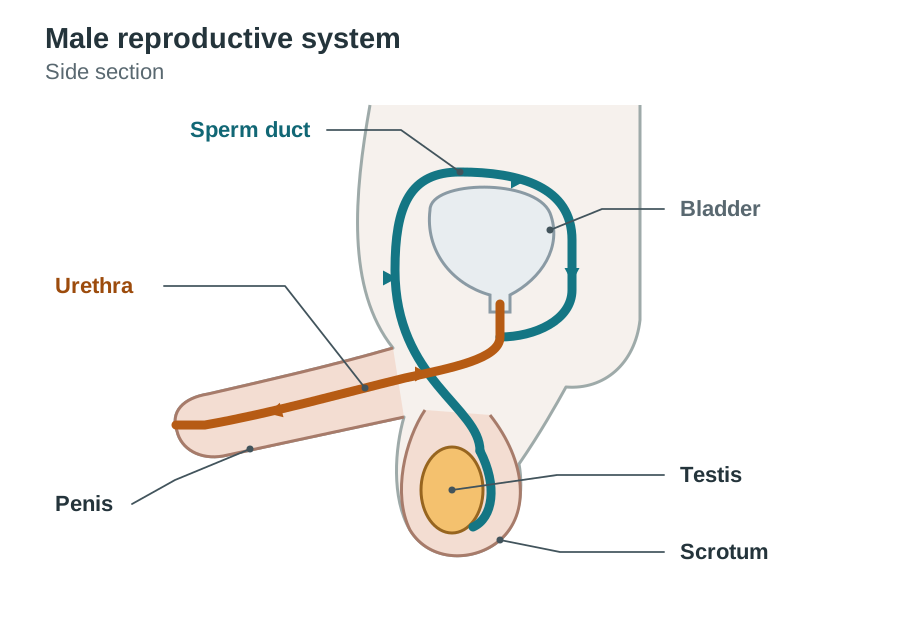
| Male Organ | Function |
|---|---|
| Testes | Produce sperm and the hormone testosterone |
| Scrotum | Keeps testes cooler than body temperature for sperm production |
| Sperm ducts | Carry sperm from testes to urethra; sperm mixes with fluid to form semen |
| Urethra and penis | The urethra carries semen out through the penis into the vagina during intercourse |
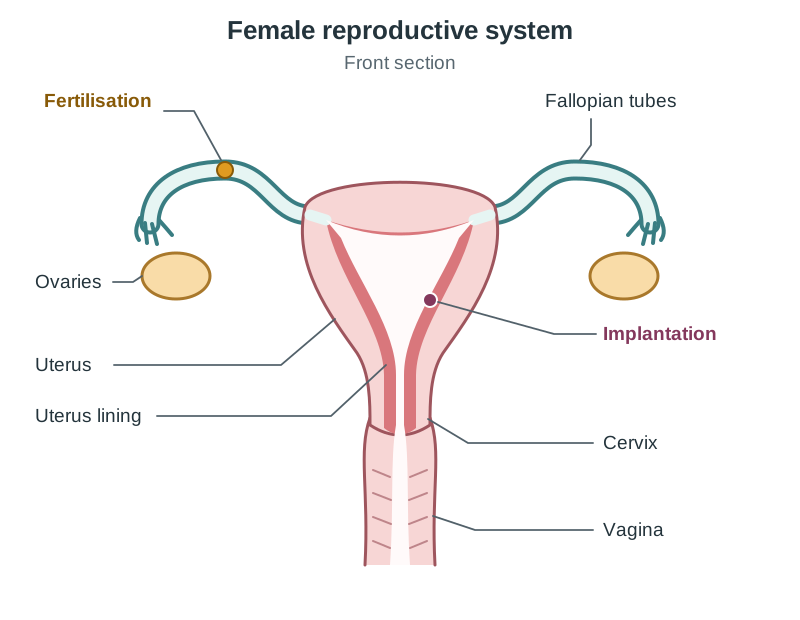
| Female Organ | Function |
|---|---|
| Ovaries | Produce and release eggs and the hormone oestrogen |
| Fallopian tubes | Carry the egg to the uterus; fertilisation normally happens here |
| Uterus | Muscular organ where the embryo implants and the foetus develops |
| Cervix | The neck of the uterus; it widens during birth to let the baby out |
| Vagina | Receives semen during intercourse and forms the birth canal |
During puberty, testosterone causes body hair growth, voice deepening, and sperm production in boys. In girls, oestrogen causes hip widening, breast development, and the start of the menstrual cycle.
The Menstrual Cycle and the Fertile Period
The menstrual cycle lasts about 28 days and prepares the female body for a possible pregnancy.
| Days | Event |
|---|---|
| 1–5 | Menstruation: the unneeded uterus lining breaks down and exits through the vagina |
| 6–13 | The uterus lining rebuilds; an egg matures inside an ovary |
| 14 | Ovulation: a mature egg is released from an ovary into the fallopian tube |
| 15–28 | The lining stays thick; if the egg is not fertilised, the cycle restarts |
Because the egg lives about a day and sperm can survive a few days, intercourse between roughly days 11 and 17 can lead to pregnancy. This window is the fertile period.
Fertilisation, Pregnancy, and Birth
During sexual intercourse, millions of sperm are released into the vagina and swim towards the fallopian tubes.
- Fertilisation: a sperm nucleus fuses with an egg nucleus in the fallopian tube to form a zygote.
- The zygote divides into a hollow ball of cells called an embryo.
- Implantation: about a week after fertilisation the embryo becomes embedded in the thickened lining of the uterus.
- After about two months (eight to nine weeks) the main organs have formed and the developing baby is called a foetus.
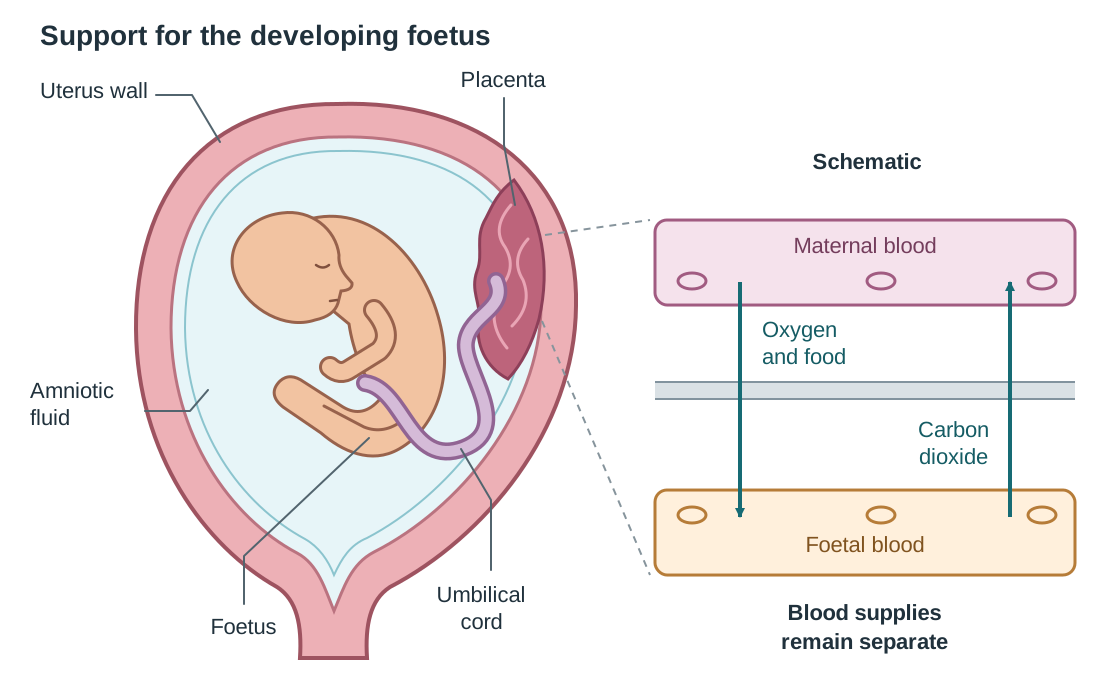
- The placenta allows food and oxygen to diffuse from mother to baby and carbon dioxide to pass back, without the two blood supplies mixing.
- The umbilical cord carries blood between the foetus and the placenta.
- Amniotic fluid surrounds and cushions the developing baby against shocks.
At birth the muscular wall of the uterus contracts repeatedly, pushing the baby through the widened cervix and out through the vagina. The placenta is delivered afterwards.
Contraception and Fertility Issues
Contraception includes any method used to prevent pregnancy.
| Method | Type | How It Works |
|---|---|---|
| Condom | Barrier | Traps sperm to stop them reaching the egg; protects against STIs |
| Contraceptive pill | Hormonal | Changes hormone levels to prevent ovulation; does not protect against STIs |
| Natural method | Behavioural | Avoids sexual intercourse during the fertile period (days 11–17) |
In vitro fertilisation (IVF) helps overcome fertility problems, such as blocked fallopian tubes. Eggs are removed from the ovaries, fertilised with sperm in a laboratory dish, and an embryo is placed into the uterus.
Exam questions often ask you to discuss reproductive issues using balanced arguments:
- Medical issue: IVF allows infertile couples to have a biological child, though it carries health risks like multiple births; contraception prevents unintended pregnancy, and condoms reduce the transmission of STIs.
- Ethical issue: IVF creates surplus embryos that may be frozen or destroyed, which raises disagreements over when human life begins.
- Societal issue: IVF treatments are expensive, which creates unequal access; sex education and access to contraception directly affect public health.
Key terms
- Gamete
- A sex cell (sperm or egg) that carries half the genetic information needed to produce an offspring.
- Fertilisation
- The fusion of a male gamete nucleus with a female gamete nucleus to form a single cell called a zygote.
- Ovulation
- The release of a mature egg from an ovary into the fallopian tube, usually around day 14 of the menstrual cycle.
- Menstruation
- The monthly shedding of the unneeded uterus lining and blood through the vagina when fertilisation has not taken place.
- Implantation
- The process where the developing embryo sinks into and attaches to the thickened lining of the uterus.
- Placenta
- A temporary organ connecting the mother and baby that exchanges oxygen, nutrients, and wastes by diffusion without mixing their blood.
- Contraception
- Any method used to prevent pregnancy, for example by stopping ovulation or stopping sperm reaching the egg.
- In vitro fertilisation (IVF)
- A medical procedure where eggs are fertilised by sperm outside the body in a laboratory dish before being placed in the uterus.
Check yourself
Where in the female reproductive system does fertilisation normally take place?
In the fallopian tube (oviduct).
Which male hormone controls the physical changes seen during puberty?
Testosterone.
Name the structure that carries blood between the foetus and the placenta.
The umbilical cord.
On roughly which day of a typical 28-day menstrual cycle does ovulation occur?
Day 14.
What is the primary function of amniotic fluid?
It cushions and protects the developing foetus from physical shocks.