
The digestive system breaks down large, insoluble food into small, soluble molecules that enter the bloodstream to nourish body cells. In the Junior Cycle exam, you must be able to label digestive organs, outline mechanical and chemical digestion, and explain how digestion links to circulation, respiration, and health.
The Digestive Pathway and Stages of Nutrition
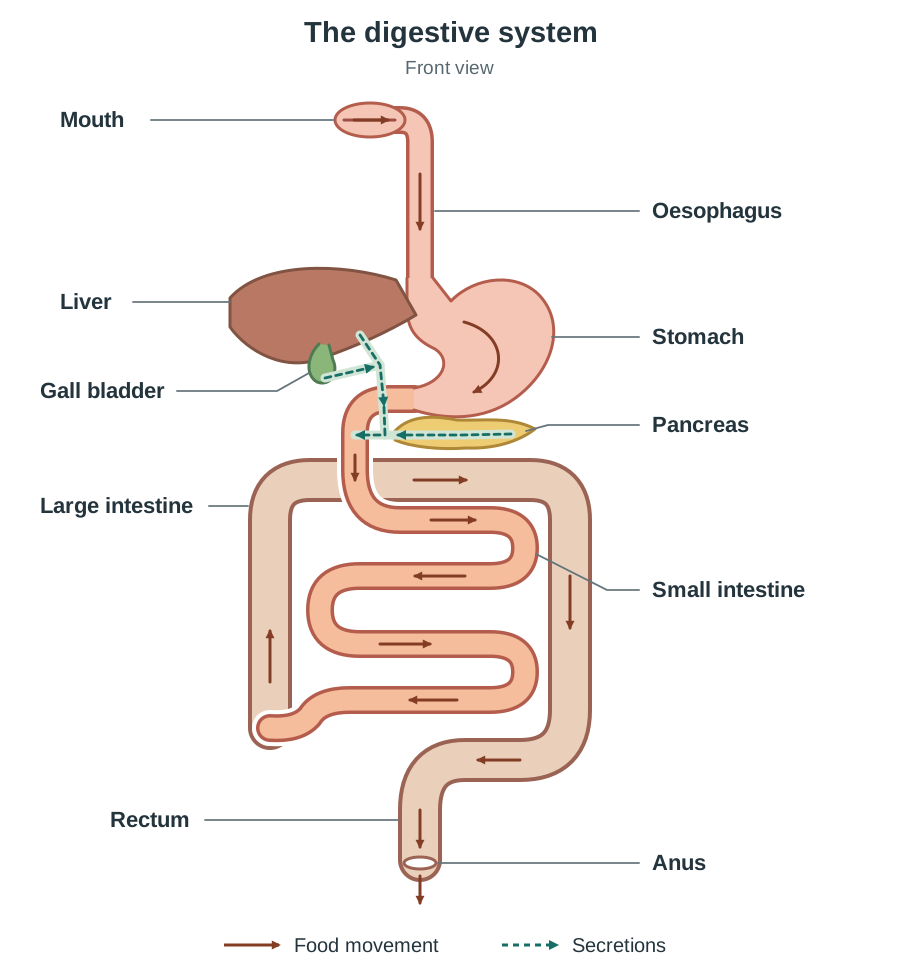
Food travels along a continuous muscular tube in a single direction: mouth → oesophagus → stomach → small intestine → large intestine → rectum → anus.
Nutrition happens across five main stages:
- Ingestion: Taking food into the body through the mouth.
- Digestion: Breaking down large food particles into small, soluble molecules.
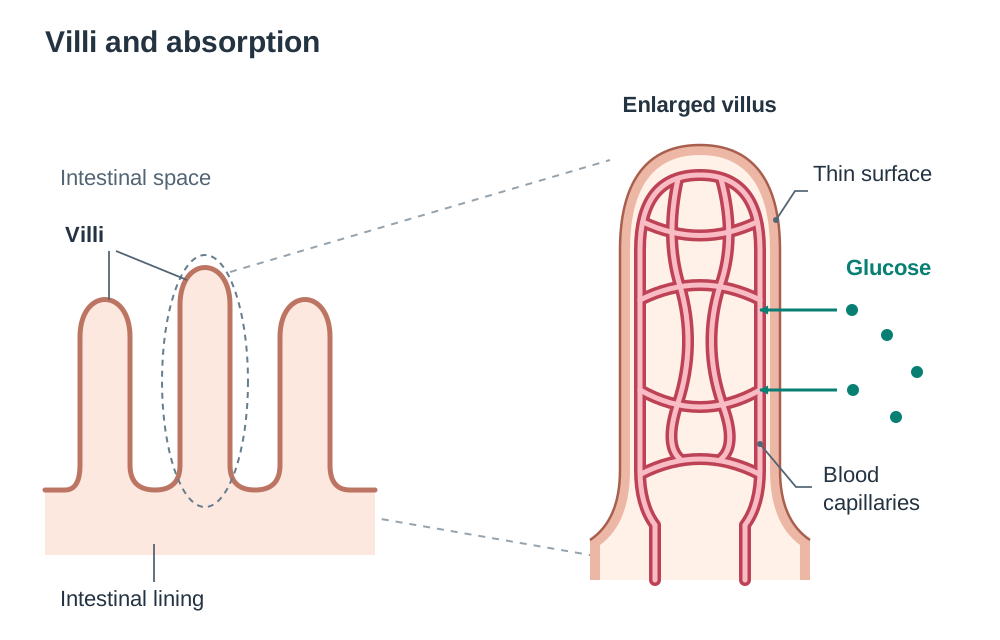
- Absorption: Passing digested nutrients through the wall of the small intestine into the bloodstream.
- Assimilation: Cells use the absorbed nutrients for energy, growth, and repair.
- Egestion: Expelling undigested waste from the body as faeces through the anus.
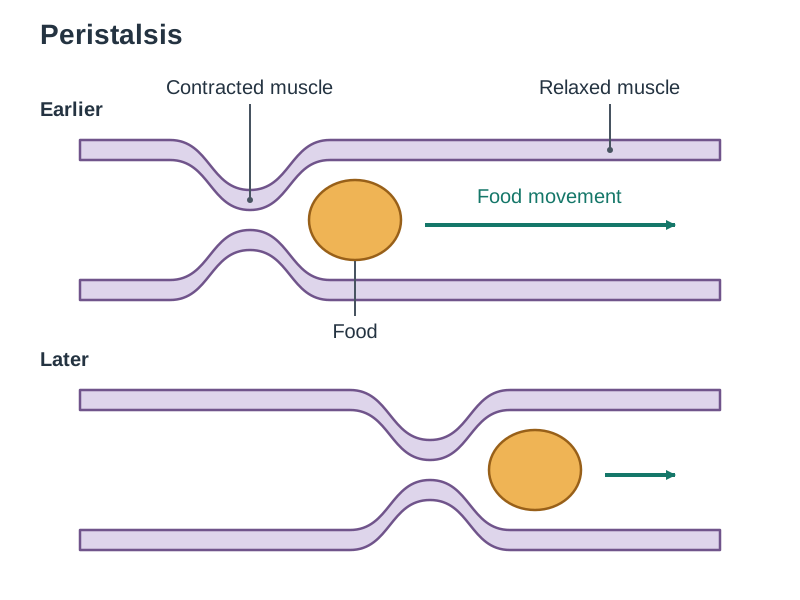
Food moves along this tract by peristalsis, which is the wave-like contraction and relaxation of gut wall muscles.
Mechanical and Chemical Digestion
Your body breaks food down in two ways that work together:
- Mechanical digestion: The physical breakdown of food into smaller pieces to increase surface area, such as chewing with teeth and churning in the stomach.
- Chemical digestion: Using biological catalysts called enzymes to break large food molecules into simple, soluble molecules.
| Food | Enzyme | Broken down into |
|---|---|---|
| Starch (carbohydrate) | amylase | maltose, then glucose |
| Protein | protease (pepsin) | amino acids |
| Fat | lipase | fatty acids and glycerol |
For example, when eating a chicken sandwich, amylase breaks bread starch down to maltose (which is then digested to glucose), protease turns chicken protein into amino acids, and lipase breaks butter fat into fatty acids and glycerol.
To test for starch in food, add iodine solution. It turns from orange-brown to blue-black if starch is present.
Digestive Organs and Secretions
Each organ along the alimentary canal carries out a clear job:
| Organ | Main Function |
|---|---|
| Mouth | Chews food and adds saliva containing amylase |
| Oesophagus | Muscular tube pushing food to the stomach by peristalsis |
| Stomach | Churns food, adds acid to kill bacteria, begins protein breakdown |
| Small intestine | Completes digestion and absorbs nutrients into the blood |
| Large intestine | Absorbs water back into the blood, leaving semi-solid faeces |
The small intestine's lining is covered in millions of tiny, finger-like projections called villi that provide a huge surface area, very thin walls, and a rich capillary network to absorb nutrients quickly.
Two accessory organs deliver fluids to the small intestine: the liver produces bile (stored in the gall bladder) to break large fat droplets into smaller droplets, while the pancreas makes digestive enzymes.
Diet, System Interactions, and Gut Health
A balanced diet provides carbohydrate, protein, fat, vitamins, minerals, fibre, and water in the right amounts. Carbohydrates supply energy, proteins enable growth and repair, and fibre keeps food moving by peristalsis.
Digestion links directly with other body systems to power cells:
- Circulatory system: Blood capillaries in the villi absorb nutrients. The heart pumps this nutrient-rich blood around the body.
- Respiratory system: The lungs bring oxygen into the blood. Living cells take in glucose and oxygen to carry out cellular respiration:
glucose + oxygen → carbon dioxide + water + energy
Huge numbers of helpful bacteria live in the large intestine. They digest plant fibre, produce vitamins B and K, and stop harmful microbes from multiplying.
Key terms
- Digestion
- The breakdown of large, insoluble food molecules into small, soluble molecules that can be absorbed into the blood.
- Peristalsis
- Wave-like muscular contractions of the digestive tract walls that push food along.
- Enzyme
- A biological catalyst that speeds up chemical reactions in living organisms without being used up.
- Amylase
- A digestive enzyme that breaks down starch into maltose.
- Villi
- Tiny, finger-like projections lining the small intestine that increase surface area for nutrient absorption.
- Absorption
- The movement of digested nutrient molecules through the wall of the small intestine into the bloodstream.
- Bile
- A digestive fluid produced by the liver and stored in the gall bladder that breaks fats into smaller droplets.
- Egestion
- The removal of undigested, unabsorbed food waste from the body as faeces through the anus.
Check yourself
What colour change shows that starch is present when iodine solution is added?
It changes from orange-brown to blue-black.
Which organ produces bile, and where is bile stored?
The liver produces bile, and the gall bladder stores it.
Name two structural features of villi that speed up nutrient absorption.
A large surface area and thin walls (a rich network of blood capillaries is also accepted).
What is protein broken down into during chemical digestion?
Amino acids.
What is the primary substance absorbed by the large intestine back into the blood?
Water.