

Sustainable home management involves using resources like energy, water, food, and money responsibly to protect the environment and reduce living costs. In the Junior Cycle examination, you will describe practical conservation actions across specific rooms, apply the waste hierarchy, and evaluate how technology affects personal and family resources.
Contributing to Sustainable Living
Managing household resources responsibly means meeting current needs without compromising the ability of future generations to meet theirs. Every individual and family can adopt habits that reduce environmental impact.
- Individuals can switch off lights when leaving an empty room, take shorter showers, and walk or cycle for local journeys.
- Families can plan weekly meals, cook correct portion sizes, and buy local Irish produce to reduce food miles and shrink the household carbon footprint (the total greenhouse gas emissions caused by a home).
- Households can install attic insulation, sort rubbish into proper bins, and choose durable goods with minimal packaging or ethical marks such as Fairtrade.
Energy Efficiency and Renewable Energy
Energy efficiency means using less power to carry out the same everyday tasks, reducing utility bills and emissions.
- Attic insulation and a lagging jacket on the hot water cylinder stop heat escaping.
- Draught excluders fitted around external doors and windows keep heated air inside.
- Lowering the heating thermostat by 1°C and using timers prevents fuel waste.
- Replacing old incandescent bulbs with energy-saving LED lighting cuts electricity consumption.
- Buying appliances with a high EU energy rating (such as an A rating) lowers running costs.
- Solar panels fitted to the roof capture sunlight to generate electricity or heat domestic water.
- A heat pump extracts warmth from the outside air or ground, providing home heating using far less fuel than oil or gas boilers.
Household Waste Management
Household waste is managed using the waste hierarchy, which prioritises prevention before disposal.
- Reduce: Buy loose fruit and vegetables without plastic wrap. Reduce food waste by shopping with a list, checking use-by dates, and storing perishable food properly.
- Reuse: Refill water bottles, repurpose clean glass jars for food storage, and use leftovers in new dishes or freeze extra portions.
- Recycle: Place clean, dry, and loose paper, cardboard, drink cans, and rigid plastics into the recycling bin (green or blue bin).
- Compost: Place vegetable peelings, food scraps, and tea bags into a home composter or the organic bin (brown bin) to create nutrient-rich soil.
- Disposal: Non-recyclable rubbish goes into the general waste bin (black or grey bin). Return glass to a bottle bank, and bring batteries, paint, or old appliances to a civic amenity site.
Water Conservation Across the Home
Pumping, treating, and heating domestic water consumes large amounts of energy and money. Practical habits across different areas of the home prevent waste.
| Room | Practical Action | Why It Saves Resources |
|---|---|---|
| Kitchen | Wash vegetables and rinse dishes in a basin instead of under a running tap | Stops clean tap water running straight down the drain |
| Kitchen | Boil only the exact amount of water needed in the kettle | Saves tap water and cuts the electricity required to boil it |
| Bathroom | Take a short four-minute shower instead of a bath | Uses significantly less heated water than filling a bathtub |
| Bathroom | Turn off the tap while brushing teeth or soaping hands | Prevents litres of treated tap water being wasted |
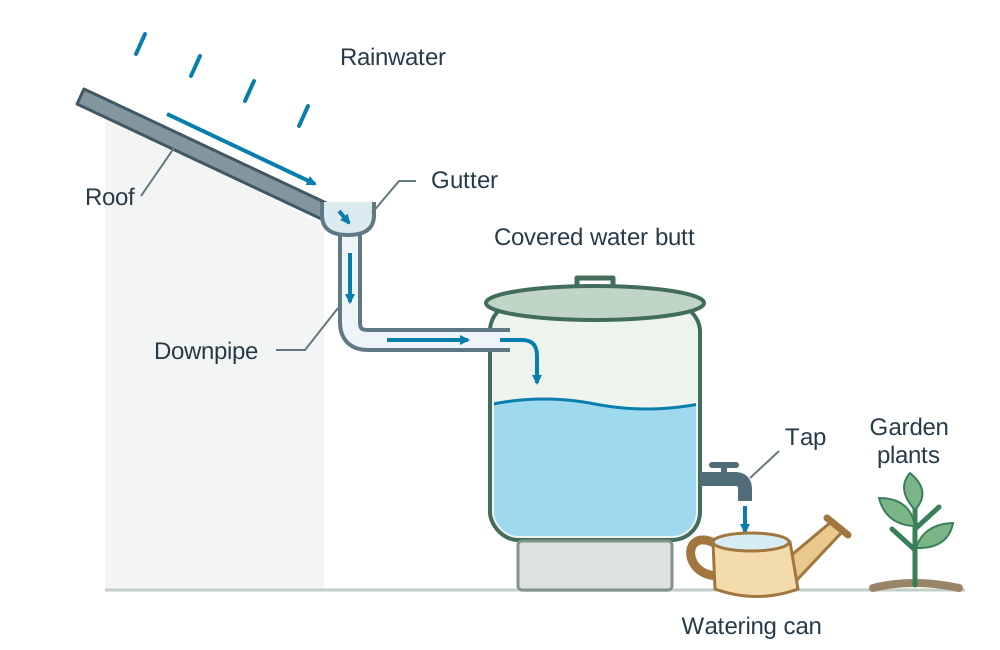
| Garden | Connect a water butt to outdoor downpipes | Collects free rainwater for plants instead of using treated tap water |
Technology and Household Resource Management
Household resources include money, time, energy, and physical goods. Modern technology offers substantial benefits alongside distinct drawbacks.
- Online banking and budgeting apps allow families to track spending, pay bills on time, and avoid penalty fees.
- Labour-saving appliances such as dishwashers and washing machines save time and physical effort.
- Smart electricity meters display live usage and costs, helping families identify power-hungry appliances.
- Smart thermostats allow householders to schedule heating room-by-room and control temperatures from a smartphone.
- Online shopping and quick mobile payments can encourage impulse buying, which wastes family money.
- Leaving appliances plugged in on standby wastes power through phantom load.
- Upgrading devices frequently creates costly electronic waste (e-waste) and adds to landfill.
Key terms
- Sustainable Living
- Meeting present needs without compromising the ability of future generations to meet theirs.
- Energy Efficiency
- Using less energy to perform the same task, reducing fuel waste and household bills.
- Building Energy Rating (BER)
- An Irish energy scale from A to G indicating the energy efficiency and heating performance of a home.
- Phantom Load
- Electricity consumed by electronic appliances while left plugged in on standby mode.
- Water Conservation
- The practice of using water efficiently to avoid unnecessary water wastage in the home.
- Waste Hierarchy
- The order of priority for managing waste: reduce, reuse, recycle, recover, and dispose.
- Composting
- The biological breakdown of organic kitchen and garden waste into nutrient-rich soil improver.
Check yourself
What is the single most effective step in the waste hierarchy?
Reducing or preventing waste before it is created.
Why does fitting a lagging jacket on a hot water cylinder save energy?
It insulates the cylinder to keep water warm for longer, reducing the electricity or fuel needed to reheat it.
Name two renewable energy technologies suitable for domestic homes.
Solar panels and heat pumps.
Give one way technology can save household time and one way it can save household money.
Time: labour-saving appliances like a dishwasher; Money: budgeting apps that track spending and prevent late payment fees.