

Home hygiene and safety covers preventing food poisoning through proper food storage, handling, and cooking, alongside protecting the household from accidents and emergencies. The Junior Cycle examination assesses these practical skills in both the 50% written paper and the 50% practical food skills exam.
Food Spoilage and Temperature Control
Food spoilage is when food goes off. It is caused by enzymes in the food itself or by microorganisms: bacteria, yeasts and moulds. Bacteria need four things to grow: warmth, moisture, food (especially high-protein food) and time. Most also need oxygen, but a few grow without it.
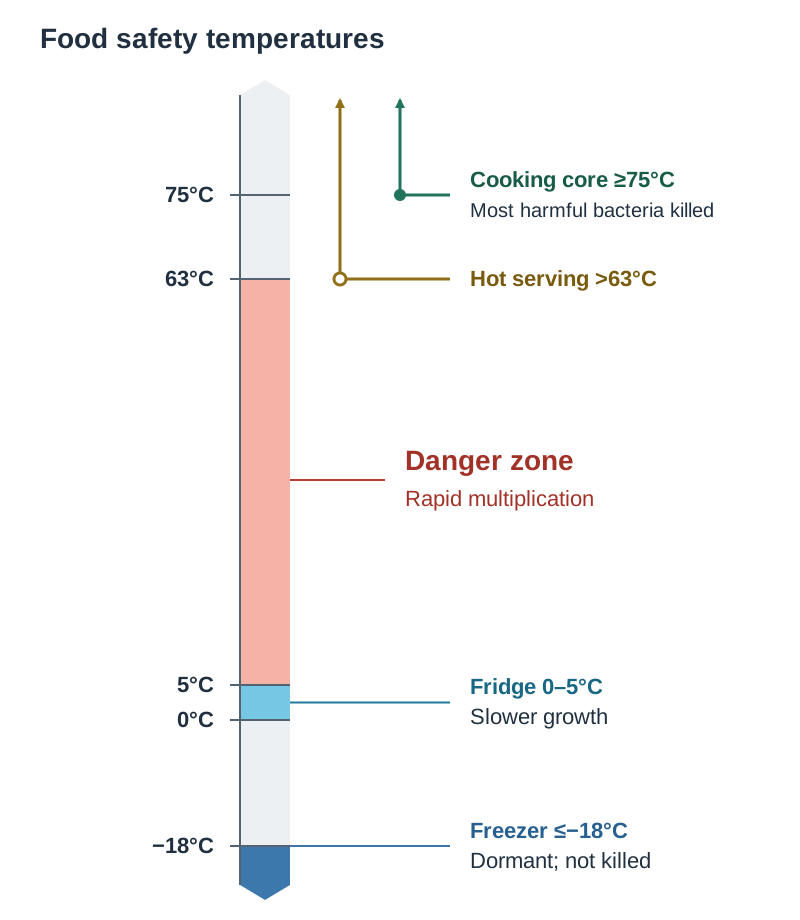
Temperature control prevents bacteria from multiplying to dangerous levels:
- Freezer (-18°C or below): bacteria become dormant, but freezing does not kill them.
- Refrigerator (0°C to 5°C): bacteria grow much more slowly, so food keeps for longer. Aim for 4°C.
- The danger zone (5°C to 63°C): bacteria multiply rapidly in this range.
- Cooking (75°C or above): cooking food to a core temperature of 75°C kills most harmful bacteria.
- Hot serving: keep hot food above 63°C until served.
Food poisoning causes vomiting, diarrhoea, nausea, stomach cramps and fever. Vulnerable groups include babies, young children, pregnant women, older people and the ill. Common causes in Ireland are Campylobacter (undercooked poultry) and Salmonella (raw eggs and meat).
Preventing Cross-Contamination and Safe Storage
Cross-contamination is the transfer of harmful bacteria from raw food or contaminated surfaces onto cooked or ready-to-eat food. It is a leading cause of food poisoning.
Follow these storage and preparation rules to keep food safe:
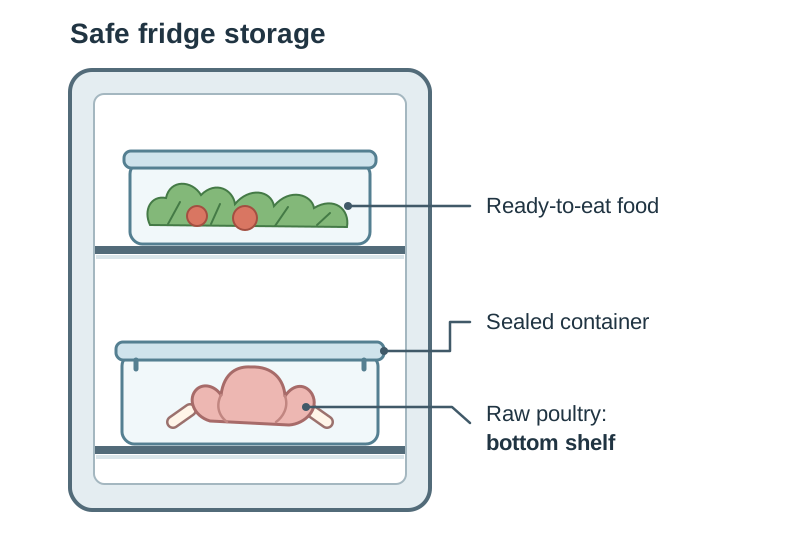
- Store raw meat, poultry and fish covered on the bottom shelf of the fridge so juices cannot drip onto ready-to-eat food.
- Use separate colour-coded chopping boards, such as red for raw meat and green for salad and fruit.
- Check date marks: the use-by date is the safety deadline, so never eat food past this date. A best-before date relates to quality and freshness.
- Thaw frozen meat completely in the fridge before cooking so the core cooks through.
Using and cleaning a refrigerator
When using a fridge, cool leftovers before putting them in, cover all food, avoid overfilling, and close the door quickly. Clean the fridge weekly: empty it, remove the shelves, wash with warm water and bread soda, and dry thoroughly.
Kitchen and Personal Hygiene
Good hygiene stops food handlers and dirty surfaces from transferring bacteria onto meals.
Personal hygiene
- Wash hands with warm soapy water before preparing food and after touching raw meat or bins.
- Tie back long hair and wear a clean apron.
- Cover cuts with a blue waterproof plaster so it is visible if it falls off.
- Never cough or sneeze over food, and taste food using a clean spoon each time.
Kitchen hygiene
- Cleaning removes dirt and grease; disinfecting kills bacteria. Worktops need both.
- Keep separate, clean cloths for washing dishes, wiping work surfaces and drying hands.
- Empty and disinfect kitchen bins regularly to deter pests, and keep pets out of food areas.
- Food businesses must use a HACCP system to identify and control food-safety hazards at every stage.
Home Safety and Emergencies
Most accidents in the home can be prevented with simple precautions.
Preventing accidents
- Choking: keep small toys, nuts and whole grapes away from children under five.
- Child safety: fit stair gates, socket covers, cupboard locks and a fireguard around open fires.
- Burns and scalds: turn saucepan handles inwards on the hob and use dry oven gloves.
- Falls: wipe floor spills immediately and keep stairs clear of clutter.
- Poisoning: store household chemicals in locked cupboards out of children's reach. A skull and crossbones symbol indicates acute toxicity.
- Fire: fit a smoke alarm on every floor, test it weekly, and keep a fire blanket in the kitchen.
Emergencies in the home
- Gas leak: open doors and windows, turn off the gas at the meter, do not touch electrical switches, and call the emergency line from outside.
- Burst pipe: turn off the water at the mains stopcock, turn on cold taps to drain the system, switch off the central heating, and call a plumber.
- Oil or chip-pan fire: turn off the cooker heat if safe, smother the flames with a fire blanket, never move the pan, and never pour water on burning oil.
Key terms
- Danger zone
- The temperature range between 5°C and 63°C where food-poisoning bacteria multiply most rapidly.
- Cross-contamination
- The transfer of harmful bacteria from raw foods or dirty equipment onto cooked or ready-to-eat foods.
- Food poisoning
- An acute illness caused by eating food contaminated with harmful bacteria, toxins, or other pathogens.
- Perishable food
- Food that spoils quickly and requires chilled refrigeration below 5°C, such as fresh milk or raw meat.
- Use-by date
- A legal safety date mark on perishable food; food should never be eaten after this date.
- Best-before date
- A date mark that indicates when food is at its peak quality; food is still safe to eat afterwards.
- HACCP
- Hazard Analysis Critical Control Point; a systematic food safety system that identifies and controls hazards during food production.
Check yourself
What is the temperature range of the bacterial danger zone?
5°C to 63°C.
What temperature must hot food stay above until it is served?
63°C or above.
Which bacteria is the most commonly reported cause of food poisoning in Ireland?
Campylobacter.
What colour plaster must a food handler wear over a cut on their hand?
A blue waterproof plaster.
Where should the household water supply be shut off when a pipe bursts?
At the mains stopcock.