

Shopping involves making informed, budget-conscious decisions about food, household goods, and services while minimising waste. Junior Cycle exam questions regularly test smart shopping strategies, supermarket layout tricks, sustainable food choices, and your legal rights as a consumer in Ireland.
Planning and Smart Shopping Strategies
Good shopping habits start at home before entering a shop. Planning protects the household budget and prevents food waste.
- Check cupboards and the fridge first to plan meals for the week, and work out the cost before shopping to stay within budget.
- Make a shopping list and stick to it strictly to prevent impulse buying.
- Compare the unit price (price per 100 g or per kilogram) printed on the shelf label to find the best value across different pack sizes.
- Choose own-brand goods, as supermarket own labels are usually cheaper than well-known brands and are often of similar quality.
- Avoid shopping when hungry or in a hurry, which easily leads to unplanned spending on convenience foods.
Supermarket Layout and Marketing Techniques
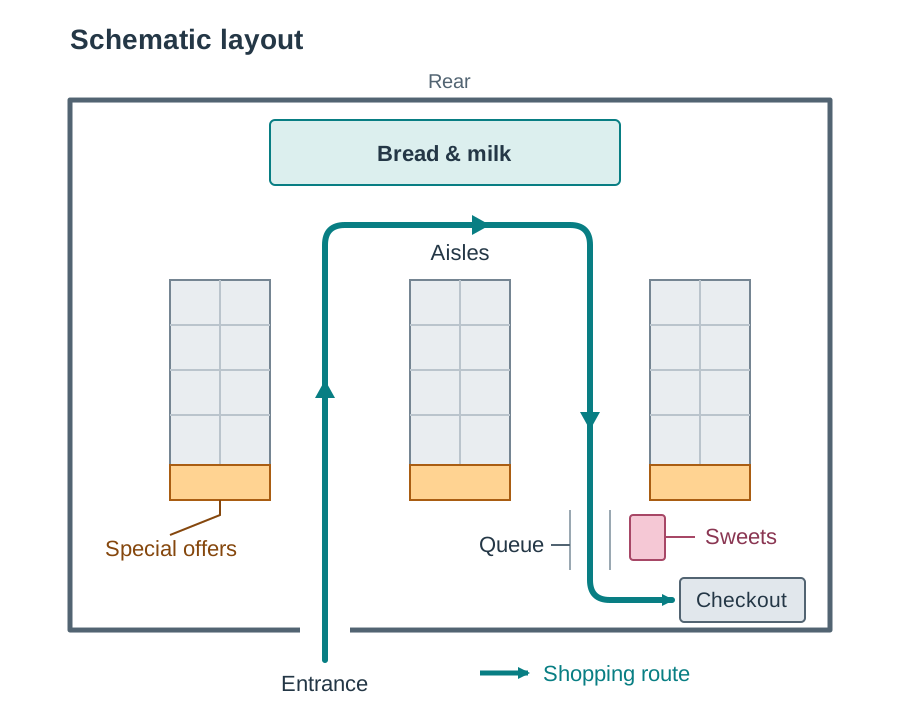
Supermarkets arrange their store layouts deliberately to influence shoppers to spend more money.
- Everyday staples like bread and milk are placed at the rear of the shop so customers must walk past aisles of displays.
- The most profitable items and leading brands sit directly at eye level, while cheaper budget alternatives are placed on top or bottom shelves.
- Sweets and snacks line the checkout queues to tempt shoppers into last-minute impulse buying while waiting.
- Special offers are displayed at the end of aisles to catch your eye, even when the saving is small.
Sustainable and Ethical Shopping
Shopping choices carry direct environmental and social consequences. Making responsible purchases protects resources and supports fair trade.
- Choose loose fruit and vegetables instead of items wrapped in single-use plastic packaging.
- Bring reusable fabric bags to reduce landfill waste and avoid paying the plastic bag levy.
- Buy local and seasonal Irish food to shorten transport distances, reducing food miles and carbon emissions.
- Look for the Fairtrade logo; producers in developing countries are guaranteed a fair minimum price for their produce, safe working conditions, and an extra premium for community projects.
- Select free-range or organic eggs and meat to support animal welfare standards.
Consumer Law, Shopping Methods, and Complaints
Consumers in Ireland have clear legal protections under the Sale of Goods and Supply of Services Act 1980 (now updated by the Consumer Rights Act 2022). Goods must be of merchantable quality, fit for purpose, and as described.
Rights and Redress
- If an item is faulty, the consumer is entitled to redress from the shop — a repair, a replacement, or a refund — agreed with the retailer.
- Consumers have responsibilities too: keep the receipt as proof of purchase, follow care labels, and use goods properly.
- The Competition and Consumer Protection Commission (CCPC) is the statutory body enforcing consumer law, while the Consumers' Association of Ireland is an independent non-statutory body.
Online Shopping and Complaints
- Under EU rules, online shopping provides a 14-day cooling-off period to cancel an order and return goods. Online shopping offers convenience and home delivery, but you cannot inspect items before buying and returning faulty goods by post takes effort.
- When making a complaint, return to the shop promptly with the receipt, speak to the manager calmly, and ask for redress. If unresolved, send a formal letter or email outlining the purchase details, the fault, and the remedy requested.
Key terms
- Impulse buying
- Purchasing an item on the spur of the moment without prior planning or budgeting.
- Unit price
- The cost of an item broken down per standard unit of weight or volume, such as per 100 grams or per kilogram.
- Food miles
- The distance food travels from where it is grown or produced to where the consumer purchases it.
- Fairtrade
- A certification ensuring producers in developing nations receive a guaranteed minimum price, safe conditions, and a community development premium.
- Merchantable quality
- A legal standard requiring purchased goods to be of acceptable quality, safe, and reasonably durable given their price and description.
- Fit for purpose
- The legal requirement that a product must do the specific job it was designed or bought to do.
- Redress
- The legal remedy a consumer is entitled to when goods are faulty — a repair, replacement, or refund agreed with the retailer.
- Cooling-off period
- A statutory 14-day window allowing EU online shoppers to cancel an order and return goods for a full refund without giving a reason.
Check yourself
Name one law that protects consumers when buying goods in Ireland.
Sale of Goods and Supply of Services Act 1980 (or the Consumer Rights Act 2022).
What are the three legal forms of redress available when a purchased item is faulty?
Repair, replacement, or refund.
Give one advantage and one disadvantage of shopping online.
An advantage is convenience with home delivery; a disadvantage is you cannot inspect goods before buying.
State the difference between the CCPC and the Consumers' Association of Ireland (CAI).
The CCPC is a statutory body established by law, whereas the CAI is an independent non-statutory body.