

Leading vs Managing and Leadership Styles
Leadership and management are different sides of running an organisation, but a healthy business needs both.
- Management is about systems and order. A manager coordinates resources, sets weekly rotas, drafts budgets, and monitors daily output. Their main concern is getting current work done smoothly, predictably, and on schedule.
- Leadership is about direction and people. A leader sets out a future vision, builds trust, models values, and carries people through uncertain changes. While managers direct work from behind a desk, leaders motivate staff to want to do the work.
Leadership Styles in Practice
Different business situations call for different approaches to leading staff:
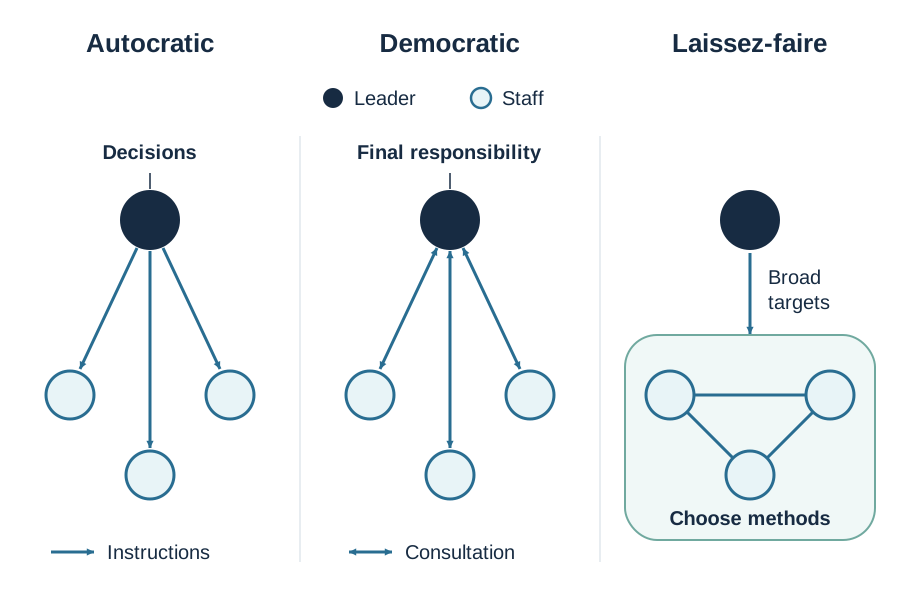
- Autocratic Leadership: The leader holds total decision-making power, issues direct instructions, and expects immediate compliance. Communication flows one way, from top to bottom. It works well during a genuine emergency, on safety-critical sites, or when saving a firm from imminent liquidation. If kept up for too long, it destroys employee morale, causes high labour turnover, and stops staff showing any initiative.
- Democratic Leadership: The leader consults employees, welcomes two-way discussion, and delegates tasks while keeping final responsibility. This style suits knowledgeable, experienced staff because it draws on their insights and makes them feel valued. The trade-off is time: building consensus can slow down urgent commercial moves.
- Laissez-Faire Leadership: The leader sets broad targets and steps back, leaving staff free to decide how they reach those goals. This hands-off method thrives in specialised environments like research laboratories, design agencies, or software teams where experts know their work intimately. The danger is drift and patchy standards if staff lack clear direction or discipline.
- Transformational Leadership: The leader acts as an energetic role model who inspires employees to look beyond immediate targets and buy into an ambitious long-term vision. They encourage team members to experiment and take calculated risks.
- Transactional Leadership: This style treats work as an explicit trade. The manager sets precise targets and rewards employees when they hit them, using bonuses or commissions, while applying penalties or warnings when standards drop.
Organisational Culture and Corporate Wellness
Organisational culture is often described as 'the way we do things around here'. It consists of the shared values, unwritten rules, beliefs, and attitudes that shape how staff behave and treat each other on the job.
The Iceberg Model of Culture
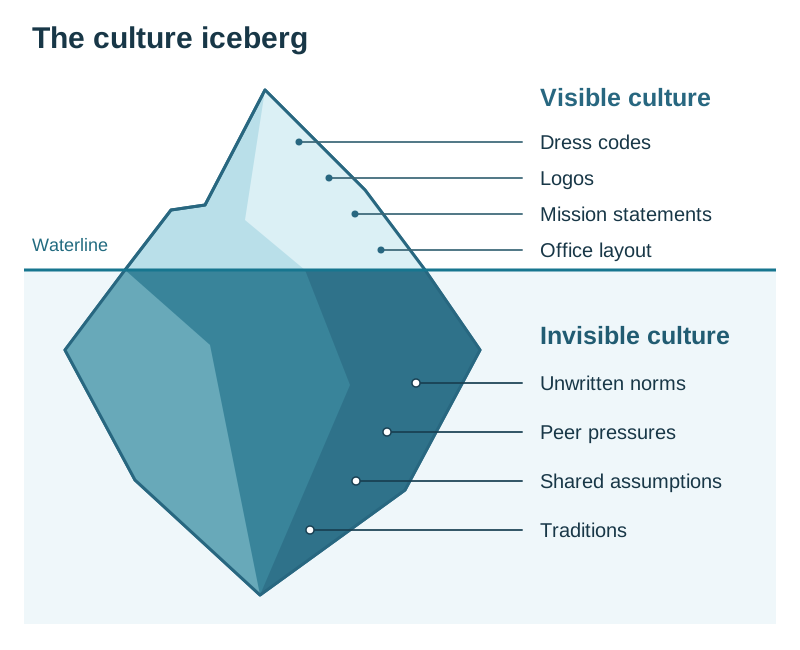
Culture works very like an iceberg, with obvious signs visible above the surface and deeper influences hidden below:
- Visible Culture (Above the Waterline): These are the formal elements anyone can see immediately, including dress codes, company logos, published mission statements, office layouts, and employee handbooks. This reflects the way a firm says work gets done.
- Invisible Culture (Below the Waterline): These are the hidden norms, peer pressures, unspoken expectations, shared assumptions, and workplace traditions that sit beneath the surface. This represents how work actually gets done. Because these attitudes run deep, a new management policy that clashes with invisible culture will almost always fail.
How Leadership Shapes Culture and Innovation
The way a leader behaves every day sets the tone for the entire enterprise:
- Autocratic leaders create a culture of caution. Workers simply wait for orders, so few fresh ideas ever bubble up from the shop floor.
- Democratic leaders build a climate of openness and psychological safety. When staff know their opinions matter, they step forward with intrapreneurial suggestions that solve operational headaches and save money.
- Transformational leaders encourage calculated risk-taking. They treat honest mistakes as learning steps, which keeps the business innovating faster than competitors.
Corporate Wellness and the Role of the Leader
The Leaving Certificate specification defines corporate wellness as an organisational focus on equality, diversity, inclusivity, and the overall wellbeing of the workforce to nurture a diverse, inclusive, and healthy workplace.
Leaders protect wellness by setting healthy boundaries, such as respecting the right to disconnect outside working hours, funding Employee Assistance Programmes (EAPs), and investing in safe, ergonomic workstations. When employees see their wellbeing taken seriously, stress drops, absenteeism falls, and retention improves.