

Climate change means long-term shifts in Earth's temperatures and weather patterns over decades or centuries. In the Junior Cycle exam, you must explain how the enhanced greenhouse effect works, identify natural and human causes, and describe its impacts on Ireland and the wider world.
The Greenhouse Effect
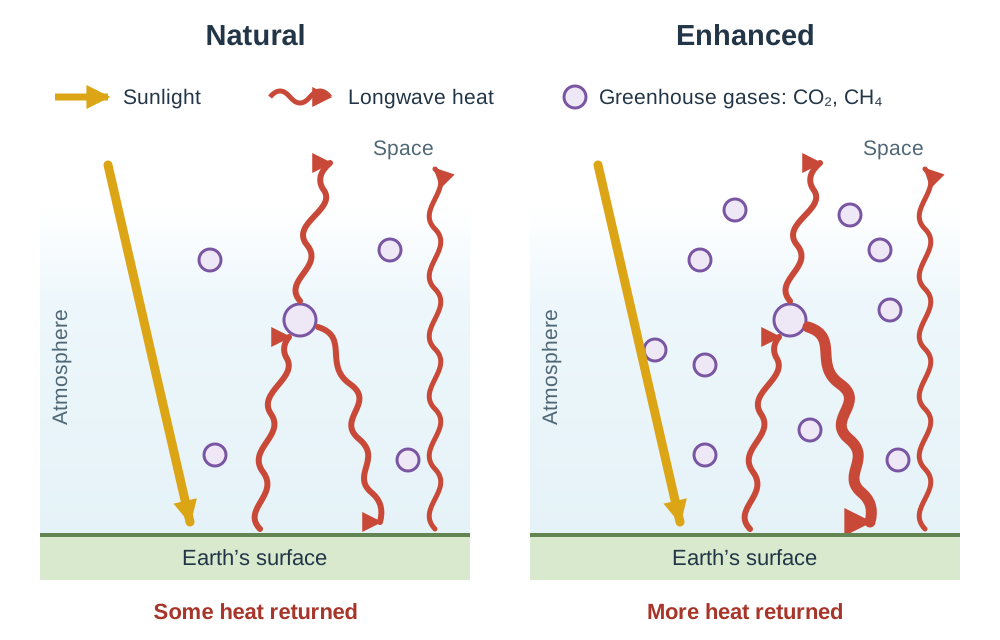
The greenhouse effect is a natural process that keeps Earth warm enough for living things. Extra greenhouse gases from human activity trap more heat, causing the enhanced greenhouse effect.
- Sunlight passes through the atmosphere and warms the Earth's surface.
- The ground radiates heat back out towards space as longwave energy.
- Naturally occurring gases trap some of this outgoing heat, keeping Earth around 15°C.
- Carbon dioxide comes from burning coal, oil, and gas for energy and transport.
- Methane comes from rotting landfill waste, flooded rice paddies, and cattle digestion.
Causes of Climate Change
Global temperatures change naturally over thousands of years, but human actions drive rapid modern warming.
- Volcanic eruptions throw ash and sulphur dioxide into the sky, cooling the planet for short periods.
- Changes in Earth's orbit and solar output slowly alter sunlight levels over thousands of years.
- Burning fossil fuels in power stations, factories, and cars adds large amounts of carbon dioxide.
- Deforestation destroys trees that absorb carbon dioxide, releasing stored carbon when wood is burned or rots.
- Artificial fertilisers and nylon manufacturing release nitrous oxide into the atmosphere.
Global Implications and Desertification
Higher temperatures melt polar ice, raise sea levels, and turn fertile land into dry desert.
- Polar ice sheets and mountain glaciers melt, which adds water to oceans and raises sea levels worldwide.
- In the African Sahel, prolonged droughts dry out the topsoil and trigger severe desertification.
- Overgrazing by farm animals strips away plants, so wind blows dry topsoil away.
- Widespread crop failures cause famine and force families to migrate in search of food.
- Developing countries like Ethiopia must spend emergency funds on food aid instead of schools and hospitals.
Impacts on Ireland and Responses
Ireland faces changing weather patterns, while communities respond by cutting emissions and building defences.
| Climate Challenge | Impact on Ireland |
|---|---|
| Rising sea levels | Greater coastal flooding and erosion in low-lying places like Wexford and Dublin Bay. |
| Wetter winters | Heavy downpours lead to river flooding and waterlogged farmland. |
| Drier summers | Prolonged dry periods cause crop stress and local water shortages. |
- Mitigation tackles the causes, such as building wind farms and planting native woodland.
- Adaptation manages the consequences, such as building coastal flood walls and improving town storm drains.
Key terms
- Enhanced greenhouse effect
- Extra heat trapped in the atmosphere due to human activities adding greenhouse gases.
- Carbon sink
- A natural feature, such as a woodland or ocean, that absorbs and stores carbon dioxide.
- Desertification
- The process where fertile, semi-arid land turns into dry desert.
- Mitigation
- Actions taken to reduce or stop greenhouse gas emissions.
- Adaptation
- Changes made to protect people, towns, and landscapes from the effects of climate change.
- Fossil fuels
- Carbon-rich energy sources like coal, oil, and gas formed from ancient organic matter.
Check yourself
Which greenhouse gas comes from cattle digestion, rice paddies, and rotting landfill waste?
Methane.
What natural feature absorbs and stores carbon dioxide from the atmosphere?
A carbon sink, such as a woodland or ocean.
What is the difference between climate mitigation and adaptation?
Mitigation cuts greenhouse gas emissions, while adaptation protects people from the damage caused by climate change.
Name one low-lying Irish area vulnerable to coastal flooding from rising sea levels.
Dublin Bay or the Wexford Slobs.