

Visual literacy is the ability to read, interpret, and evaluate images and multimodal texts critically. In the Junior Cycle Higher Level exam, you analyse visual techniques in media texts, evaluate moments from your studied film, and use visual prompts for creative writing.
Reading Visual and Multimodal Texts
A visual text uses images to communicate, while a multimodal text blends images, print text, sound, or spoken word. You must distinguish between direct observation and deeper inference.
- Observation names what you can see clearly on the page.
- Inference explains the suggested meaning behind those details.
- Observation: A boy sits alone in an empty hall.
- Analysis: The empty hall highlights his isolation, inviting sympathy from the reader.
- When comparing genres, explain how different text formats alter the message.
- An infographic uses clean icons to teach facts quickly, while a poster uses emotive photographs to persuade.
Composition, Salience, and Colour
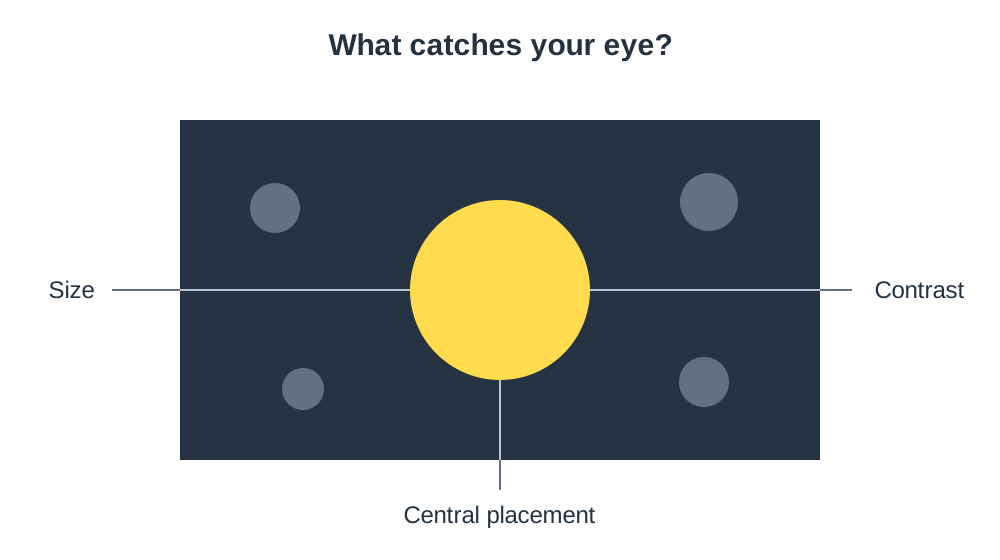
Composition is how visual elements are placed inside a frame to direct your attention. Salience is the first element that catches your eye.
- Large objects carry more visual weight than small ones.
- Central placement can mark an item as important.
- Sharp contrast and bright lighting draw the eye quickly.
- Colour creates mood, but its meaning depends on context.
- Red can signal danger, anger, or warmth.
- Blue often suggests calm, sadness, or cold authority.
- Dark, muted shades can create a grim or serious atmosphere.
Camera Framing and Body Language
Camera shots and body language shape how we judge a subject's power and feelings. When analysing a person, look at their posture and gaze.
- A direct gaze looks straight at you, which can create connection or a clear challenge.
- An averted gaze looks away, which can suggest sadness, fear, or quiet thought.
- Open posture can suggest warmth, while hunched posture can suggest tension.
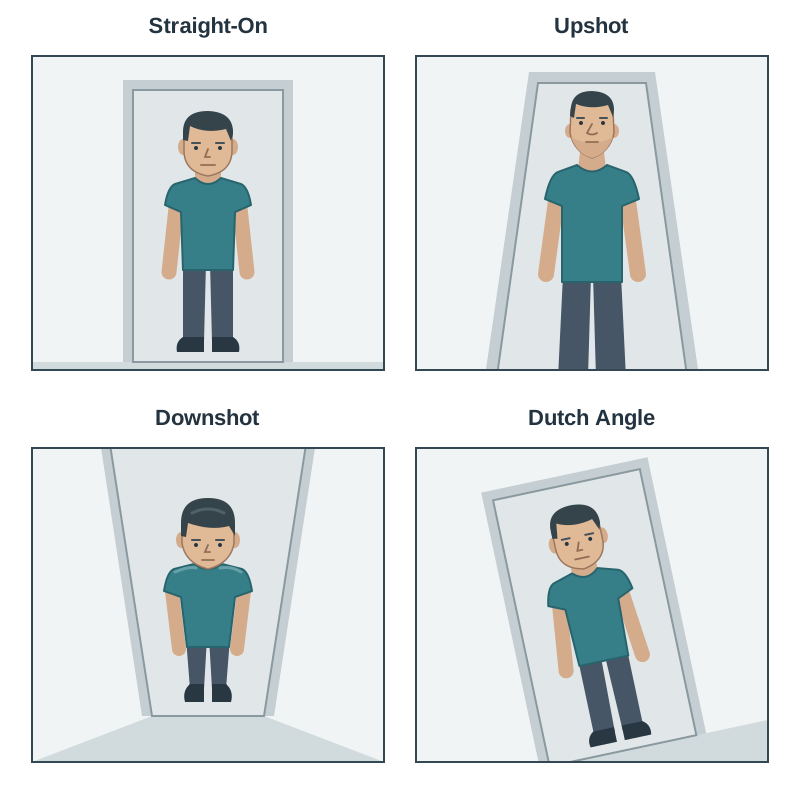
| Camera Shot | Visual Technique | Possible Effect |
|---|---|---|
| Straight-On | Camera sits level with eyes | Can suggest equality or a neutral viewpoint |
| Upshot | Camera looks up from below | Can suggest power, dominance, or threat |
| Downshot | Camera looks down from above | Can suggest vulnerability, smallness, or weakness |
| Dutch Angle | Camera tilts sideways off-axis | Can suggest unease, disorientation, or panic |
Studied Film and Multimodal Writing
Practise evaluating a key moment from your studied film and writing from an image prompt.
- In media texts, check how typography, logos, and slogans support the central image.
- Slogans give a short, memorable summary of the main argument.
- For film questions, name your film and describe one specific scene in detail.
- Explain how lighting, costumes, or camera angles reveal character changes or themes.
- In creative writing tasks, borrow physical details from the image to build authentic setting and character thoughts.
Key terms
- Visual Text
- Any text that shares meaning primarily through images, with or without words.
- Multimodal Text
- A text combining two or more communication systems, such as print, image, and sound.
- Composition
- The deliberate arrangement of visual parts within a frame to shape meaning.
- Salience
- The most noticeable part of an image that captures the viewer's eye first.
- Direct Gaze
- When a subject looks straight into the camera, making eye contact with the viewer.
- Upshot
- A camera angle looking up at the subject from below.
- Downshot
- A camera angle looking down at the subject from above.
- Typography
- The style, size, and layout of printed lettering used to convey a specific tone.
Check yourself
What is the Junior Cycle definition of a multimodal text?
A text combining language with other communication forms, like images, soundtracks, or spoken words.
What is a downshot?
A camera angle looking down at the subject.
How does a creator make an object salient in a frame?
By giving it larger size, central placement, contrasting colour, or focused lighting.
What is the difference between visual observation and visual inference?
Observation identifies visible facts, while inference explains the deeper meaning suggested by those facts.