

Reading comprehension tests how well you understand, analyse, and evaluate unseen written and visual extracts. The Junior Cycle exam asks you to retrieve facts, read between the lines for implied feelings, and explain how an author's language shapes the reader's response.
Active Reading and Finding Evidence
Reading actively means treating an unseen passage like a crime scene where every word offers a clue.
- Skim the passage rapidly first to grasp the gist, genre, and speaker.
- Read every question twice and underline instruction words before returning to the text.
- Scan the lines to pinpoint names, dates, or specific key phrases.
- Literal meaning is stated directly; an inference uses clues to suggest something unstated.
- Use a short, relevant quotation or precise reference; quote enough to preserve meaning and follow the question's instructions.
Handling Command Words with PEE
Command words identify the task and the whole question determines the response.
| Command Word | What You Must Do |
|---|---|
| Identify / Name | Give a direct fact or feature briefly without explanation. |
| Describe | Detail what happens, what someone looks like, or the setting. |
| Explain | Provide clear reasons showing how or why something happens. |
| Analyse | Break down language techniques and show their effect on the reader. |
| Evaluate | Offer a reasoned personal judgement on how successful a text is. |
The PEE structure (Point, Evidence, Explain) is a useful method for analytical answers. State your point, provide a short quotation or precise reference as evidence, and explain what feeling or idea it gives the reader.
Analysing Literary Craft and Syntax
Writers choose figurative devices and sentence structures to build atmosphere and guide your emotions.
- Simile and Metaphor: Similes compare using like or as, whereas metaphors state one thing directly is another.
- Personification: Gives human qualities to something non-human; explain its effect in the passage.
- Imagery: Appeals to the physical senses of sight, sound, smell, touch, and taste.
- Syntax: Sentence length can change pace or emphasis; explain its effect in the particular passage.
When asked to analyse, never spot a technique without explaining its impact. If shadows "creep across the floorboards", state the personification and explain that it makes the house feel alive and threatening.
Non-Literary and Visual Texts
Non-literary texts deal with real-world topics, while visual texts communicate through layout, colour, and typography.
- Identify the text's purpose: whether it sets out to inform, persuade, entertain, or describe.
- Identify the register, such as formal or informal, and the tone, such as serious or humorous.
- Genre means text type: a diary's personal reflections reveal one person's experience.
- Compare texts on the same point, using evidence from both to explain how their forms affect readers.
- Separate verifiable facts from subjective personal opinions.
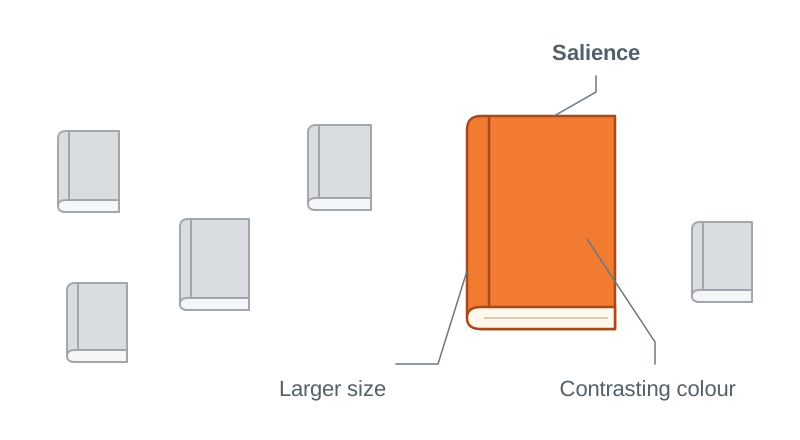
- For visual texts, identify salience, which is the image feature that catches your eye first through its size, colour, or lighting.
Key terms
- Gist
- The general sense or main point of a piece of writing.
- Inference
- Working out implied meaning or emotion from clues rather than direct statements.
- PEE
- Point, Evidence, Explain: a method linking an idea to a short quotation or precise reference and an explanation.
- Syntax
- The arrangement of words and clauses to create sentences.
- Register
- The style and level of formality chosen to suit a specific audience and purpose.
- Salience
- The part of an image or multimodal layout that draws your eye first.
- Tone
- The writer's attitude towards their subject, such as angry, humorous, or sympathetic.
Check yourself
What is the difference between literal and inferential comprehension?
Literal finds direct surface facts, while inferential reads between the lines for implied meaning.
What does each letter in the PEE structure stand for?
Point, Evidence, and Explain.
What effect is created by the short sentences: "He stopped. Nothing moved."?
The short sentences create abrupt pauses and suspense.
What does salience mean when looking at a poster or advertisement?
It is the specific feature that grabs your visual attention first.