

Drama is literature written specifically for performance, using spoken dialogue, action, and stagecraft to bring human conflict to life. In the Junior Cycle Higher Level exam, you may be asked to analyse key dramatic moments, evaluate endings, propose staging choices, or write a short scripted response.
Drama as a Living Performance
A play is written for performance; dialogue, actions, and stage directions help us imagine it when reading.
- At Higher Level, you must study the full text of a prescribed Shakespearean play and a second drama text.
- The second drama text can consist of play extracts and may be Shakespearean or non-Shakespearean.
- Spoken dialogue reveals character relationships, hidden motives, and shifting power balances.
- Stage directions provide instructions for actor movement, vocal delivery, and technical cues.
- The audience interprets meaning through both spoken words and visual actions on stage.
Dramatic Conventions and Building Suspense
Conventions allow playwrights to reveal private thoughts, build tension, and control audience knowledge.
- A soliloquy reveals a character's private thoughts aloud to the audience, usually while alone on stage.
- An aside is a brief remark understood to be unheard by some or all other characters.
- Dramatic irony occurs when the audience knows vital facts that one or more characters do not know.
- Foreshadowing provides early clues that suggest events happening later in the play.
- To explain suspense, identify what creates uncertainty: an unknown outcome, a ticking clock, or dramatic irony.
- Explain what the audience fears or hopes will happen next, supported by a quotation or specific detail.
Stagecraft and Performance Choices
Stagecraft describes the technical methods used to mount a production, while performance belongs to the actor's craft.
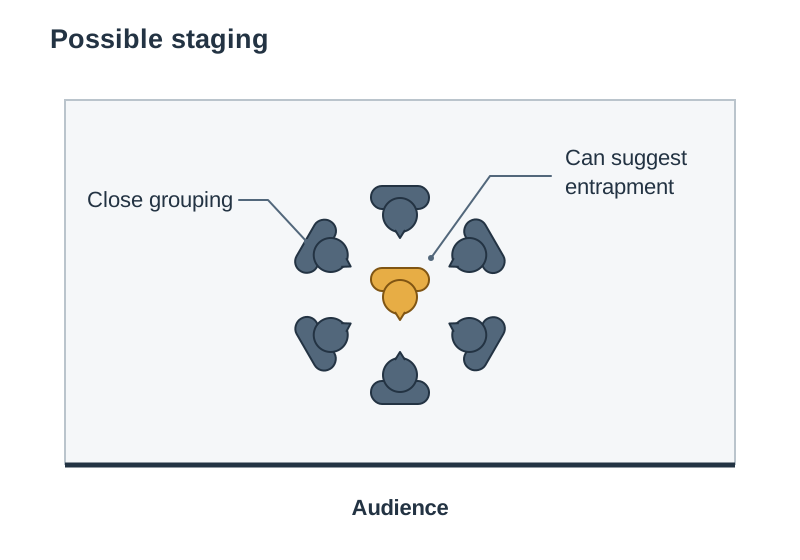
- Proxemics: the deliberate use of physical space and distance between actors to signal power, threat, or intimacy.
- Levels: placing an actor higher can suggest authority.
- Lighting: a spotlight can isolate a character; dim lighting can suggest danger.
- Sound and music: sound effects such as thunder build realism, while background music shapes the audience's mood.
- Actor's craft: vocal volume, tone, pace, facial expression, and gesture reveal emotion beneath the words.
- Always explain the specific emotional effect a staging choice creates for the audience in that scene.
Conflict, Resolution, and Scriptwriting
Conflict creates dramatic tension by placing characters' wishes, duties, or beliefs in direct opposition.
- The climax is the point of greatest dramatic tension.
- The resolution reveals how the play's main action ends; it can be tragic rather than happy.
- When an exam question offers a choice, you may answer on your Shakespearean play or your second drama text.
- For unseen extracts, base all observations directly on the printed text provided.
- When writing a dramatic scene, place each speaker's name before their dialogue.
- Include brief stage directions for physical actions or vocal tone, keeping character behaviour consistent with the play.
Key terms
- Soliloquy
- A dramatic convention where a character speaks their private thoughts aloud to the audience, usually while alone on stage.
- Aside
- An aside is a brief remark understood to be unheard by some or all other characters.
- Dramatic Irony
- A device where the audience knows key information that one or more characters on stage do not know.
- Proxemics
- The deliberate use of physical space and distance between actors on stage to communicate relationships and power.
- Key Moment
- A significant scene that reveals character, develops conflict, or explores a central theme.
- Climax
- The decisive moment of peak emotional tension and highest dramatic stakes in a play.
- Resolution
- How the play's main action ends.
- Stage Directions
- Written instructions in a script indicating actor movement, vocal tone, scenery, or technical cues.
Check yourself
How does dramatic irony create tension in a scene?
It gives the audience key knowledge that a character lacks, creating suspense as the audience waits to see how the character will react upon learning the truth.
What does 'proxemics' mean in the context of staging a play?
The deliberate use of space and physical distance between actors on stage to reveal status, hostility, or emotional closeness.
Does a dramatic resolution have to settle every problem happily?
No. An ending can be tragic or leave some conflicts unresolved; explain your judgement using the play.